

New hospitality and tourism chapter to give ITE and polytechnic students more industry exposure
It is supported by the Singapore Tourism Board, and aims to bridge the gap between education and industry

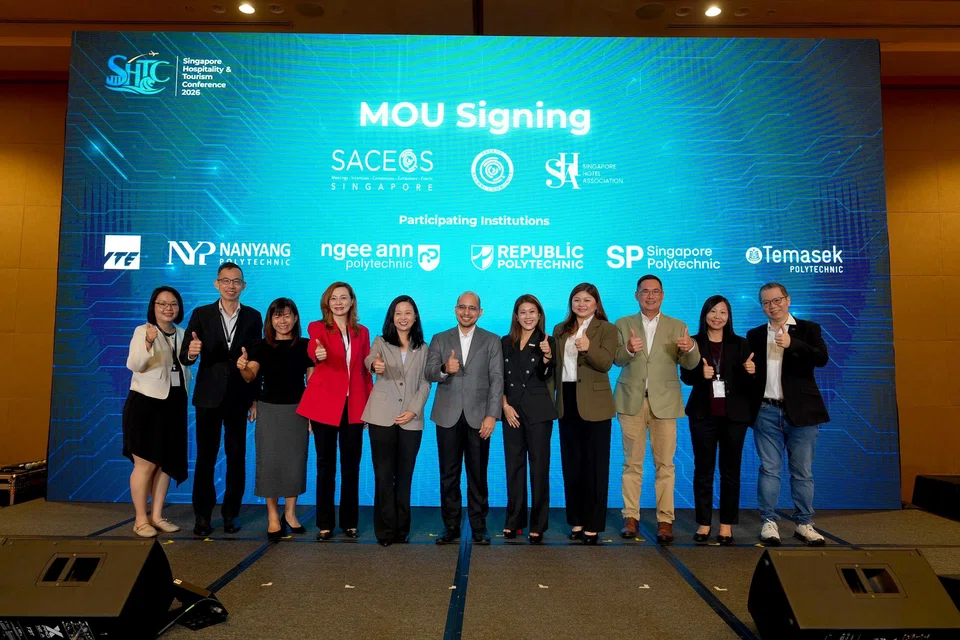
[SINGAPORE] Hospitality and tourism students in Singapore will have more opportunities to connect with industry professionals and gain practical experience before entering the workforce, following the launch of a joint student chapter spanning six institutes of higher learning (IHLs).
The student chapter, which is a partnership between the Institute of Technical Education (ITE) and five polytechnics, aims to strengthen collaborations across institutions.
The chapter was inaugurated at the second Singapore Hospitality and Tourism Conference on Friday (Oct 23).
It is an initiative of the Tourism, Hospitality & Operations Management Sector Coordination Team, which was created by the Ministry of Education in 2015 to strengthen partnerships and engagements between the industry and IHLs.
A memorandum of understanding to formalise the chapter’s launch was signed by the six IHLs, the Singapore Association of Convention & Exhibition Organisers & Suppliers (Saceos) and the Singapore Hotel Association (SHA).
The conference brought together about 480 students, educators and industry partners to discuss developments shaping the sector, including how artificial intelligence can support workers and enhance hospitality experiences.
Ong Huey Hong, assistant chief executive of the Industry Development Group at the Singapore Tourism Board (STB), told The Business Times the chapter allows students to go beyond classroom learning and gain first-hand experience of working in the hospitality and tourism sector.
She cited the conference itself as an example of how students could gain practical experience, noting that they have been involved in planning the event, emceeing and marketing.
STB, Saceos and SHA will work with the institutions to curate more of such opportunities, she said, adding that the chapter’s success would depend on growing student participation and engagement.
The chapter is being launched as the hospitality and tourism sectors adapt to rapid technological change and evolving workforce needs.
Asked what Singapore needs to do over the next three to five years to keep its tourism and hospitality workforce competitive, Ong told BT that students must be prepared to continually learn and experiment with new technologies.
She explained that students need to develop the attitude to learn new things, experiment and work closely with colleagues to deploy these solutions. These capabilities are important not only in tourism, but across the wider workforce.
At the same time, Ong said the growing adoption of AI and other technologies makes human skills even more important.
She said education institutions must look beyond technical capabilities and continue to develop students’ critical thinking and other soft skills.
“We have always been emphasising on that but the adoption of AI and technology makes some of these skills even more critical now,” she said.
AI to complement human touch
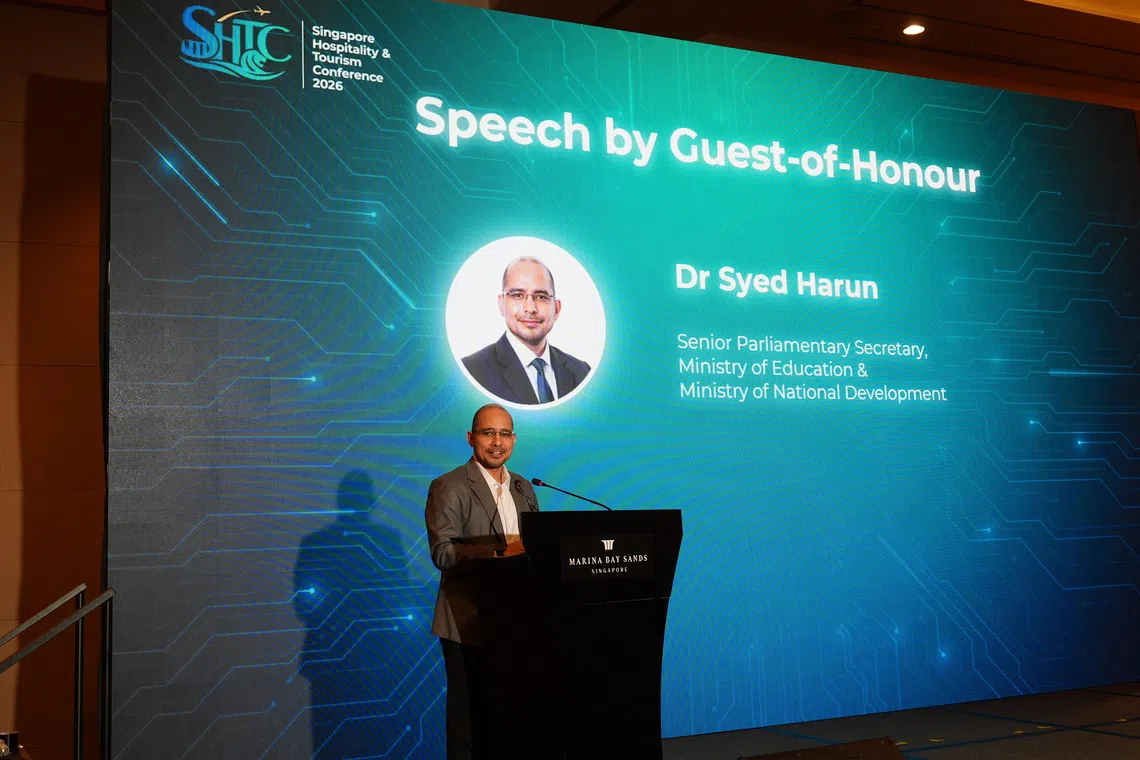
The conference also focused on how AI could help workers spend less time on routine tasks and more time delivering.
Dr Syed Harun Alhabsyi, senior parliamentary secretary for education and national development, who was the event’s guest of honour, said preparing students for an industry undergoing rapid transformation requires a rethink of what it means to be workforce-ready.
He highlighted how education institutions have taken steps to integrate AI into students’ learning journeys through curriculum reviews, new courses and educator training.
One example is a specialist diploma in hotel operations and digitalisation that Nanyang Polytechnic is planning to launch.
He said the programme will teach students to use AI and data analytics tools to forecast demand, identify opportunities and support business continuity planning.
They will also learn to apply these capabilities to practical hotel solutions that improve operations and ultimately the guest experience.
Complementing such efforts from IHLs, Marina Bay Sands is sponsoring a student hackathon involving 40 students, who will explore how AI and the human touch can work together to enhance guest experiences.
The hackathon will give students an opportunity to apply their knowledge to real-world industry challenges, reinforcing the broader push by STB, IHLs and industry partners to develop a future-ready tourism workforce.
Decoding Asia newsletter: your guide to navigating Asia in a new global order. Sign up here to get Decoding Asia newsletter. Delivered to your inbox. Free.
Copyright SPH Media. All rights reserved.
TRENDING NOW
Knight Frank’s Tan Tee Khoon leaves firm, Nicholas Keong takes over auction business
Keppel Energy, Sembcorp Utilities and Tuas Power to supply biomethane in pilot project

GovTech retrenches another 38 staff in second round of layoffs
Take-up of new private homes dives 45% in Q3 as prices accelerate with 1.4% rise

