

Singapore can manage impact of US chip curbs on transhipments: PM Wong
His greater concern is the impact on chips used by Singapore companies and data centres

[MANILA] Singapore expects to be able to manage the impact of new US semiconductor export restrictions on chips passing through the Republic, but is more concerned about the implications for local companies and data centres, Prime Minister Lawrence Wong said on Tuesday (Nov 17).
Speaking to Singapore journalists at the conclusion of the 49th Asean Summit in Manila, he said the government was studying the new measures and their potential impact on Singapore.
His comments came after the US Department of Commerce announced on Monday tighter restrictions on advanced semiconductors, requiring licences for exports, re-exports and transfers to Singapore, Malaysia, Indonesia, Thailand and Brazil.
The measures are intended to prevent China from circumventing US export controls, including by accessing advanced computing capabilities through overseas data centres.
The licensing requirements will not apply to chips destined for companies headquartered in the US, or whose ultimate parent companies are based there, provided certain reporting requirements are met.
PM Wong noted that although Singapore records a high volume of semiconductor sales, many of the chips are not intended for use in the Republic.

A significant proportion of these chips are either transhipped through Singapore or sent directly to other countries, with only a small share destined for local use.
In February 2025, the government disclosed that 22 per cent of US chipmaker Nvidia’s global revenue in the third quarter of 2024 was attributed to customers billed in Singapore. However, products physically shipped to the Republic accounted for less than 1 per cent of its total revenue.
Meanwhile, Singapore’s non-oil re-exports of integrated circuits rose 73.1 per cent year on year in October, Enterprise Singapore data released on Tuesday indicated. The figures cover a broader category of chips than those targeted by the new US controls.
SEE ALSO
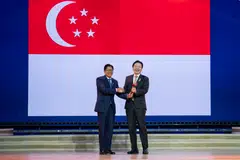
“But I think we can manage that impact,” PM Wong said. “What we are more concerned about, of course, would be the chips that come into Singapore and are used by Singapore companies, by our data centres.”
PM Wong said Singapore tracks how these chips are deployed locally, including their use in data centres.
If US authorities have concerns, Singapore can facilitate checks on companies operating in the Republic.
However, “we are not here to implement or enforce the export controls of other countries”, he stressed. Nevertheless, businesses operating in Singapore must comply with Singapore’s laws and relevant foreign export controls, he added.
Companies that use Singapore to circumvent restrictions or breaking local laws would face “clear and firm action”, he said, stressing the importance of preserving the Republic’s reputation as a trusted business hub.
Earlier on Tuesday, the Ministry of Energy, Trade and Industry and Ministry of Digital Development and Information said they were engaging affected companies and US authorities to assess the impact of the measures and exploring how to facilitate trusted access to advanced semiconductors for Singapore companies.
Conversation with Trump
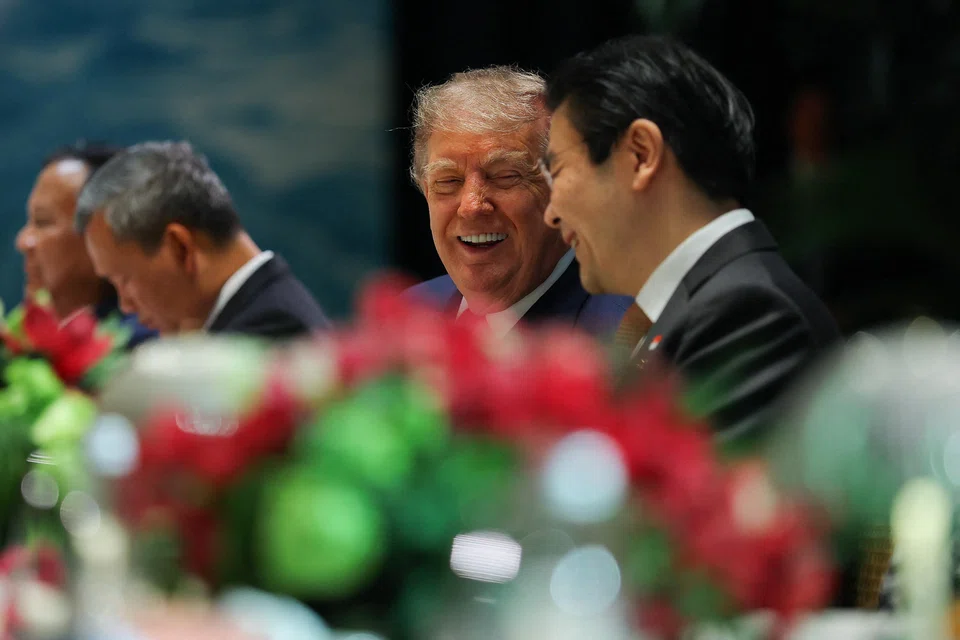
Separately, PM Wong said he had a good conversation with US President Donald Trump, who was seated next to him at a dinner during the Asean-US Special Summit.
He thanked Trump for attending an Asean Summit for the second consecutive year, saying this demonstrated Washington’s continued interest in the region.
“America is a Pacific power,” PM Wong said, adding that the US has enduring security and economic interests in South-east Asia.
American companies have invested substantially in the region and benefited from its economic growth, with further opportunities as South-east Asia continues to develop, he said.
“So we want America to continue to engage South-east Asia, we value the Americans’ presence here in this part of the world, and the fact that the American president takes this commitment seriously.”
“And I think that is good for Asia, good for Southeast Asia,” he said.
PM Wong also reminded Trump that Singapore would assume the Asean chairmanship in 2027, when the grouping marks the 50th anniversary of its relations with the US. Singapore is working with the Trump administration on how to commemorate the milestone, he said.
Decoding Asia newsletter: your guide to navigating Asia in a new global order. Sign up here to get Decoding Asia newsletter. Delivered to your inbox. Free.
Copyright SPH Media. All rights reserved.
TRENDING NOW

South-east Asia has lost Nvidia’s best salesman
UN says Singapore’s Penguin International broke Libya arms embargo; company disputes panel’s findings
Is Singapore still South-east Asia’s headquarters haven?
CapitaLand, Far East, Sing Holdings team up for S$1.82 billion bid for Jurong Lake District site

