Singapore manufacturers stay upbeat on AI demand despite geopolitical clouds
A net weighted balance of 24% of firms expect business conditions to improve between October 2026 and March 2027

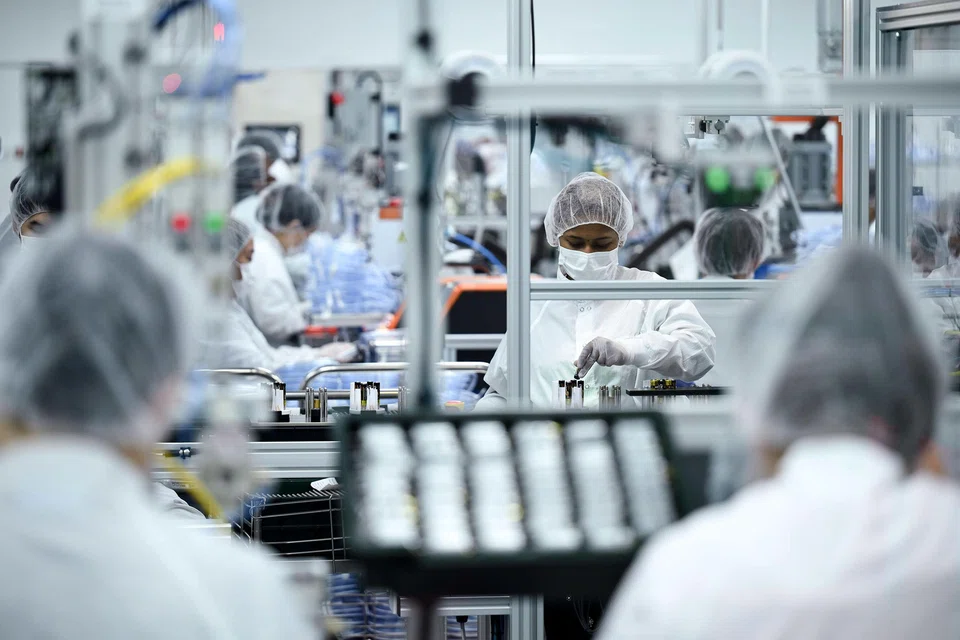
[SINGAPORE] Manufacturers remain optimistic about the next six months, buoyed by strong global demand tied to artificial intelligence, even as geopolitical developments cloud the economic outlook.
A net weighted balance of 24 per cent of firms expect business conditions to be better between October 2026 and March 2027, compared with the third quarter, a survey released on Monday (Nov 2) by the Singapore Economic Development Board (EDB) found.
This is up from a net weighted balance of 12 per cent in the previous survey. A weighted 29 per cent of firms foresee improved conditions, and 5 per cent, a weaker business situation.
On jobs, a weighted 72 per cent of manufacturers expect employment levels in the fourth quarter to remain broadly similar to the third quarter.
All clusters except biomedical manufacturing and transport engineering project larger workforces. Overall, the net weighted balance for employment is 14 per cent.
By cluster, precision engineering is the most upbeat (+48 per cent), supported by semiconductor-related equipment makers that expect global AI-related investment to keep expanding.

The electronics cluster (+42 per cent) also expects a strong outlook, driven by robust orders for semiconductors used in AI applications.
Biomedical manufacturing (+14 per cent) and general manufacturing (+7 per cent) are also positive.
Firms in transport engineering (+1 per cent) expect broadly similar conditions, and cite rising costs of, for example, materials, fuel and freight, and overseas competition as key headwinds.

The chemicals cluster is the most pessimistic (-13 per cent). Firms in the petroleum segment (-28 per cent) remain concerned about persistent uncertainty over crude oil feedstock supply.
For the fourth quarter, a net weighted balance of 34 per cent of manufacturers expect output to rise from the previous quarter. Electronics (+55 per cent) and precision engineering (+54 per cent) lead the way.
In electronics, the semiconductors and computer peripherals and data storage segments expect higher production to cater to buoyant demand from AI data centres.
Precision engineering firms foresee higher output of semiconductor-related equipment, bonding wires and metal precision components.
Biomedical manufacturing (+19 per cent) firms expect to produce more active pharmaceutical ingredients and life science instruments.
General manufacturing (+10 per cent) is also positive, with every segment except printing projecting higher output.
The food, beverages and tobacco segment expects stronger export demand for milk and beverage products.
Output expectations in transport engineering (0 per cent) are mixed. While the aerospace and land segments anticipate higher activity, the marine and offshore engineering segment expects lower production of oil and gas-field equipment as geopolitical uncertainties weigh on orders. Chemicals (+5 per cent) is the weakest cluster.
On export orders, a weighted 23 per cent of firms anticipate challenges in securing orders in the fourth quarter. The top two factors cited are price competition from overseas rivals, and political or economic conditions abroad, including geopolitical developments, tariffs and inflationary pressures.
The EDB survey was conducted between September and October 2026. Of 397 manufacturing establishments surveyed, 83 per cent responded.
Decoding Asia newsletter: your guide to navigating Asia in a new global order. Sign up here to get Decoding Asia newsletter. Delivered to your inbox. Free.
Copyright SPH Media. All rights reserved.