
Shopee, Lazada are laying the ground for AI shopping agents. Is a brutal price war looming?
Summarise
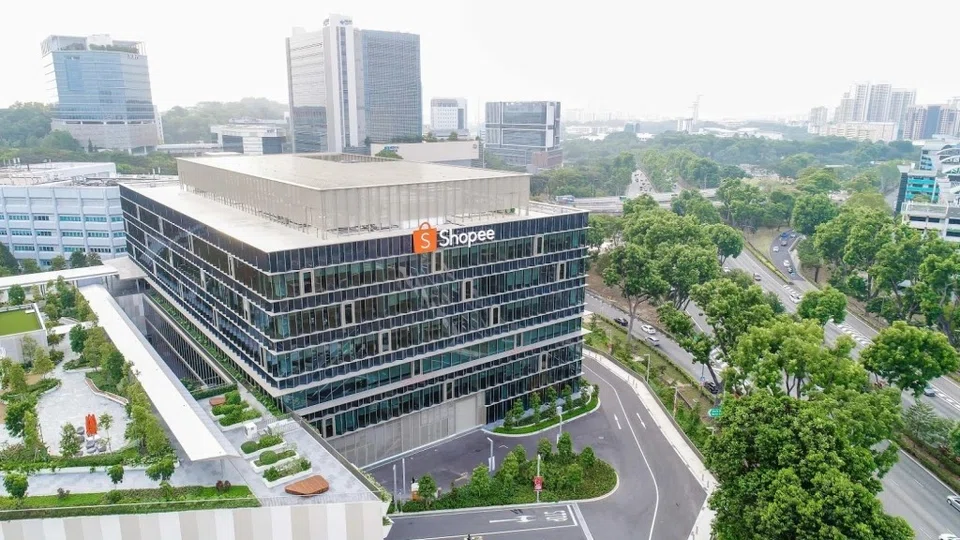
    • Shopee’s office in Singapore
    • Shopee’s office in Singapore PHOTO: SHOPEE
    Published Fri, Dec 26, 2025 · 02:40 PM

    RELYING on artificial intelligence (AI) for gift selection this holiday season may be a stretch, but the e-commerce industry’s move towards AI shopping agents now looks inevitable as OpenAI, Perplexity, Google and Amazon race to build their own.

    South-east Asia doesn’t have a fully fledged AI shopping agent yet, but companies are already laying the groundwork.

    Shopee has been working with OpenAI since early this year to explore how AI agents could be used on its platform. Lazada, meanwhile, claimed that its AI chatbot, Lazzie, has already helped drive sales.

    Paul Srivorakul, co-founder and CEO of e-commerce enabler aCommerce, believes AI shopping agents will “gradually” become mainstream in the region. He expects a phased rollout, starting with simpler tasks – such as re-orders and finding deals – before moving on to more complex and higher-value purchases.

    “Think of AI agents as the new search bar,” Srivorakul says. “Eventually, every platform needed search; now, every platform needs an agent.”

    However, many marketplaces are under pressure to become – and remain – profitable, and investments in AI agents don’t come cheap. If consumers increasingly depend on these tools to hunt for the best deals, it will be hard to avoid the risk of renewed price competition.

    Tech in Asia reached out to Shopee and Lazada for this story but did not receive a response, while TikTok declined to comment.

    Who’s leading the charge?

    Srivorakul says an AI shopping agent must be deeply integrated into a platform’s back end – spanning inventory, delivery and returns – to deliver better recommendations, faster service and ultimately, higher sales.

    He adds that Shopee has an advantage in the race to build AI shopping agents, thanks to its scale of data and mature APIs (application programming interfaces). AI agents require vast data sets to learn pricing patterns and evaluate logistics reliability. As at 2024, the company controls about 52 per cent of South-east Asia’s e-commerce marketplace.

    Srivorakul also points out that while “Lazada has better structured data with LazMall” – which asks sellers to provide detailed product information upon joining – “Shopee has the volume agents needed to predict availability and pricing trends accurately”.

    However, Simon Torring, co-founder of insights firm Cube Asia, disagrees. He argues that Lazada may be better positioned than Shopee, having adopted AI features earlier and more aggressively. Cube Asia recently released a report on authenticity-driven e-commerce sponsored by Lazada.

    Torring says Lazada can draw on the existing AI capabilities of its parent company, Alibaba Group, including product-search assistants and recommendation systems.

    Shopee, on the other hand, would need to fund much of that development on its own, he adds. Even if it eventually rolls out AI agents through a partnership with OpenAI, it may still have to pay commission or usage fees to the AI company.

    Still, Torring doesn’t think the advantage Lazada and TikTok get from their parent companies “is a huge one” since the AI features most relevant to e-commerce “are not so foundational in nature”.

    As for TikTok Shop, aCommerce’s Srivorakul does not expect it to be especially competitive when it comes to AI shopping agents. Many product descriptions are embedded in videos or captions, making them harder for text-based AI systems to process.

    He thinks that if TikTok blocks external crawlers such as Google’s or OpenAI’s agents, it risks becoming invisible to high-intent searches where users prompt, “Find me the best price for X.”

    AI agent or AI feature?

    It’s too early to predict the outcome of this AI shopping agent race, but shoppers will care only if the tools help them find better deals, Cube Asia’s Torring notes.

    “Price, at least for the foreseeable future, has to be competitive, and then the AI tools can be a nice complement on top,” he says.

    Brands interviewed by Tech in Asia also share that, for now, they are placing greater emphasis on AI tools that can make their product details clearer.

    Kevin Wijaya, director of CyberAgent Capital’s Indonesia office, says some direct-to-consumer startups like Claude have more pressing needs for AI tools like virtual fitting features that allow customers to try on items online.

    CyberAgent also backs several other consumer brands, including Coolmate, Jago Coffee, and Yoona. Wijaya adds that the investor does not necessarily push its portfolio companies to adopt AI shopping agents.

    “We don’t force it because a brand’s main focus is usually on increasing exposure and sales,” he explains. “AI shopping agents are not a primary selling point and tend to play more of a supporting role within the ecosystem.”

    Meanwhile, dog wellness brand Dr Shiba says it’s very open to AI solutions and wants to explore shopping agents “cautiously.” Founder and CEO Philipp Renner shares that the brand would need an agent that acts more like a “vet assistant” rather than a generic sales bot.

    “If the AI can genuinely help understand a dog’s specific health and dietary needs and recommend the right solution, then yes,” he says. “If it just pushes products indiscriminately, it isn’t for us.”

    It’s also worth noting that brands, especially small ones, could face margin pressure because of AI agents. If marketplaces deploy AI shopping agents built with third-party providers, brands worry that platforms could introduce new fees or commissions to offset these costs.

    Mom-and-baby brand Tropee Bebe “almost can’t” cut ad spending without hurting its sales performance, says e-commerce lead Rezky Rahmansyah. He also fears that brands would have to pay even more advertising dollars to appear in AI-driven recommendations in the future.

    “If AI shopping agents really take off and the opportunity looks real, brands will follow,” Rahmansyah says. “But only after calculating whether the margins are safe and the investment makes sense.”

    Another price war coming?

    In South-east Asia, where shoppers are highly price-sensitive, dependence on AI agents for bargain-hunting could revive brutal discount wars in a new form.

    Cube Asia’s Torring warns of such a scenario.

    “There isn’t that much spare profit dollars in the e-commerce value chain right now that could be released as additional discounts,” he says, adding that everyone in the ecosystem is “kind of somewhat tight.”

    However, Artem Prokofyev, co-founder of the International Digital Retail Forum (IDRF), expects AI shopping agents to have only a limited impact on South-east Asia in 2026.

    He notes that in western markets, shopping via platforms like Amazon or Walmart is often seen as a utilitarian task that makes consumers more willing to rely on automation.

    The dynamic is different in South-east Asia. The region is mobile-first and heavily shaped by social commerce and livestreaming. Moreover, e-commerce is as much about leisure and engagement in this part of the world as it is about completing a transaction.

    “Data consistently shows that consumers in South-east Asia spend more time shopping than users in many other regions,” says Prokofyef. “They enjoy the process.”

    The region’s e-commerce market remains highly fragmented as well, complicating efforts to roll out AI shopping agents at scale.

    In the US, companies such as Amazon and Walmart can develop, test, and monetise new features within a single, unified infrastructure, says IDRF’s Prokofyef.

    But in South-east Asia, e-commerce is split among platforms such as Shopee, TikTok Shop, and Lazada, alongside a mix of local players across countries. Building a profitable AI shopping agent would then require deep integration across multiple ecosystems – a far more complex undertaking.

    Ultimately, Cube Asia’s Torring says consumers are unlikely to want to automate much of their shopping, which many still find engaging and entertaining. Purchases are also seen as high-stakes, given that they involve spending money.

    AI shopping agents, he adds, are more likely to gain traction for repeat or routine purchases, such as daily or monthly essentials, rather than for buying new products.

    “I don’t think we’ll find ourselves in a utopia where we’re not really shopping anymore,” says Torring. TECH IN ASIA



