



OpenAI grapples with surging startup demand in Apac even as it expands Singapore team
It will commit more than US$300 million in the Republic, including over 200 roles, in the next few years

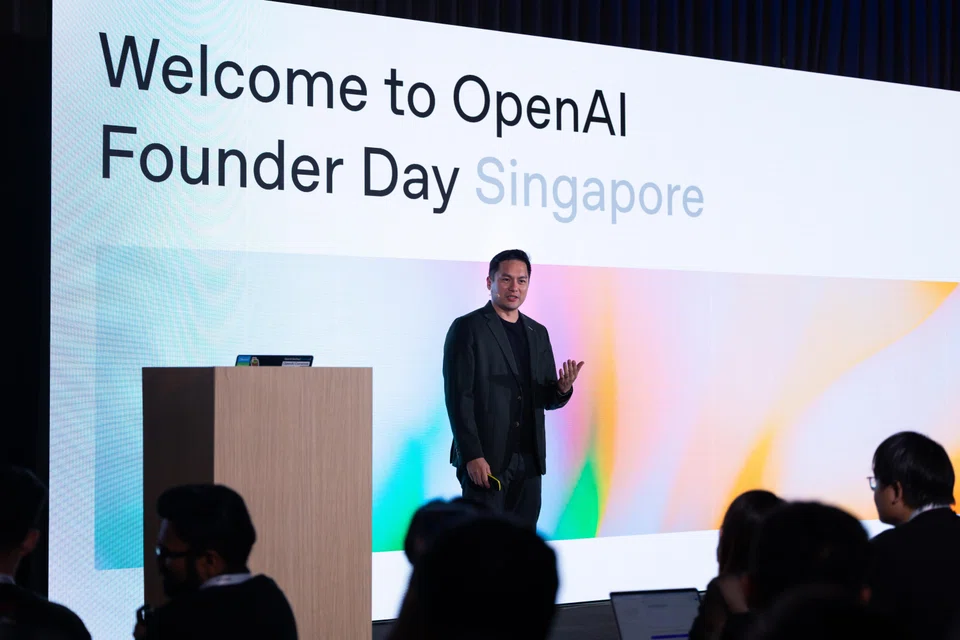
[SINGAPORE] Managing demand from startups across the Asia-Pacific has become the biggest challenge for OpenAI’s head of startups for the region, Thomas Jeng, as companies race to adopt AI.
“We have so much demand that a lot of my day is spent triaging and re-prioritising,” he told The Business Times. “I stepped away from work for a week, and there were... 800 e-mails in my inbox.”
While artificial intelligence can help with sifting through the e-mails, human judgement is still needed at the end of the day, he noted. OpenAI is looking to grow; Jeng’s team, which has over 10 members, is expanding.
The company inked a partnership with the Singapore government in May to commit more than US$300 million here, including over 200 roles, in the next few years.
Rather than rely on sales pitches or branding, Jeng prefers to let the tech speak for itself, with his team focusing on demonstrating the performance of its model directly with startups to engage them.
“What we do is spend time with them, make sure they have access to the latest models, run side by side comparisons, and when that happens, they end up adopting our models,” he said.
That process has helped OpenAI win more customers in recent months, he added. Although he declined to disclose figures, Singapore has become a top-five market globally for its coding agent Codex.
“Adoption has grown something like 17 times since we’ve released Codex towards the end of last year,” said Jeng. “I’ve never seen traction quite like this over the course of my career.”
Building an ecosystem
Some of OpenAI’s engagement with startups come through venture capital (VC) firms and working with their portfolio companies.



The company also runs workshops and community events, which include technical and road map discussions about AI models. Participants are able to spend some time using the models OpenAI has.
“I personally take pride in making sure we... create an ecosystem; it’s not about OpenAI at the centre, but rather, we are an enabling layer for startups to go out and build,” said Jeng.
There are a number of ways OpenAI supports startups in using their AI models, the most scalable being the credits programme. This programme distributes these credits via VCs and accelerator programmes.
This was recently set up with a pre-defined budget of several million dollars worth of credits as well as other offers, said Jeng. OpenAI also sponsors hackathons and other events offering credits or subscriptions to Codex.
The company has extended more than US$30 million in token credits through VCs and in-person hackathons across Apac so far.
OpenAI also offers technical support for startups looking to build with its model. Some startups that have tapped into OpenAI’s technical expertise include wealth platform Endowus.
“For those who want to work more closely with us, we do have dedicated teams for this in Singapore and throughout the region to engage with them,” said Jeng.
This support also includes potentially linking up startup founders with potential customers, investors and partners, as well to showcase their products.
Beyond that, the company is also connecting startup founders with startup ecosystems in other markets, bringing those from South-east Asia to opportunities in Japan and US.
Availability over competition
Startups currently pay for more than one subscription to an AI model, a recent survey by fintech Aspire showed. Rather than competing for a bigger slice of the startup pie, Jeng is focusing on availability for startups and founders looking to access OpenAI’s models.
“Our goal is to make sure that AI is readily available to every individual and organisation, whether it’s through our first-party offerings or through our startup partners and those using our tech,” he added.
As part of making AI available, OpenAI has released its Codex harness, an engineering layer that helps to run AI agents, he said. There is also an effort to ensure the AI models are cost-efficient while still performing well.
OpenAI also makes it a point to not just recommend the latest and greatest models to all customers. Instead, the model recommended will be based on the capabilities that the customer needs.
“We’re very cognisant of the need to manage cost performance,” said Jeng.
The fear of larger AI companies coming in to eat your lunch is an unspoken fear that many startups face as they potentially see their business model gone with a launch of a new AI model or module. Jeng noted that there are concerns of companies like OpenAI using the data that startups trained the model with to build such features.
“I think the reality is pretty far from this perspective,” he said.
OpenAI does not train on the data that comes through the application programming interface, which companies use to access AI models. Jeng said that OpenAI has no access to the input or output coming out of the model.
The focus is on building AI models, and the reality is there is not much bandwidth or resources to go into the use cases that startups are building. Founders should continue to feel empowered as there is still a lot they can accomplish, Jeng said.
“There’re plenty of things that they can build that we are just not going to go and build because of our own limitation,” he added. “We can only sustain so many product services at once.”
Decoding Asia newsletter: your guide to navigating Asia in a new global order. Sign up here to get Decoding Asia newsletter. Delivered to your inbox. Free.
Copyright SPH Media. All rights reserved.
TRENDING NOW

LTA proposes combining car COE categories, adding rebate-surcharge system

StarHub to acquire MyRepublic’s mobile business amid ongoing telco consolidation

DBS, OCBC, UOB rout lops billions off STI as inflation, rate concerns spook investors

Grab CEO’s wife Chloe Tong on life with Anthony Tan and finding her purpose

