
Retrenched at 22: What it’s like to be laid off in your first job

Straight to your inbox. Money, career and life hacks to help young adults stay ahead.
[SINGAPORE] In 2023, 22-year-old H Wong was relocated to her company’s New York office, excited to grow her career in a new city.
Four months later, she was retrenched. She had been working as an associate consultant at the firm for a year and a half – her first job out of university – and her role was made redundant after her team was restructured.
Six months later, she secured a new role as a business strategy associate. But after a year and eight months, she was laid off once again. She declined to give her full name while discussing her previous layoffs.
“Funnily enough, I had been joking with my colleagues about getting retrenched since layoffs in other companies were making headlines back then,” says Wong, now 25.
“It was quite a letdown since I had just gotten promoted and I really loved my manager.”
Many fresh graduates don’t usually consider the possibility of being retrenched so early in their careers, often assuming it’s something that happens later in their careers.
So when layoffs happen within their first year or even months into the job, it can feel like they’ve been pushed back to square one, suddenly re-entering the job market with limited experience and little preparation.
For J Ong, 23, the retrenchment notice came less than a year into her first full-time job as an associate consultant at a logistics company.
“I was devastated, I cried for 10 days,” says Ong, who declined to share her full name. “I was satisfied with my salary and really liked my colleagues. It was basically my dream job.”



Despite how often headlines of layoffs pop up, retrenchments remain relatively uncommon in Singapore.
In the first quarter of 2026, there were 3,700 retrenchments, or about 1.5 retrenchments per 1,000 employees. This figure has remained broadly stable from previous quarters.
Still, getting laid off remains a very real possibility for young workers entering an increasingly volatile job market.
Ong was initially reluctant to re-enter the job market during the off-cycle hiring period with her limited work experience.
That anxiety is common among early-career workers, especially those worried that short stints may reflect badly during interviews.
Wong felt doubly anxious about her layoff, having to navigate being retrenched in a foreign country.
“It was really tough,” she said, adding that she had just let go of the lease for her home in Singapore before flying to the US.

Unexpected upside
But not everyone experienced retrenchment entirely negatively.
For Sarah (not her real name), getting laid off from her first job at Amazon after 10 months as an account development representative came as an unexpected relief.
“I was definitely in shock at first since mass layoffs in the tech industry weren’t as common back then,” says Sarah, who was 23 at the time. “But the more I thought about it, the more the layoff felt like a blessing in disguise.”
She had already been considering leaving her job but hesitated out of worry that leaving less than a year into her first job would look bad on her resume.
“And there’s the whole issue about working for Big Tech firms where they can be seen as golden handcuffs. It looks great on your resume but when do you leave a place like that?”
Her initial plan was to stick it out in her role for another year but the layoff created a clean exit from the company.
Similarly, Wong says she was considering a career pivot into tech and her first retrenchment gave her the push she needed.
Bouncing back
Despite the emotional shock, all three workers eventually found new roles within months.
Ong landed another associate consultant role two months after being laid off, though not without significant effort.
“I had coffee chats with about 20 people in the first three weeks after being laid off. It also helped that my previous boss was kind enough to introduce me to his contacts,” she says.
Wong’s path back into employment after her second retrenchment was even quicker because an industry contact reached out after news of her firm’s closure spread. She currently works as a senior business operations associate.
Meanwhile, Sarah – now 26 – secured a new role as an account executive four months after leaving Amazon.
Despite their initial worries, both Lim and Ong say interviewers were generally understanding about their retrenchments since they were company-wide exercises rather than performance-related dismissals.
For Ong, the experience changed how she viewed work.
“It was a good reminder not to idolise my job and to be more proactive about growing my network. My previous connections definitely helped during my job search,” she says.
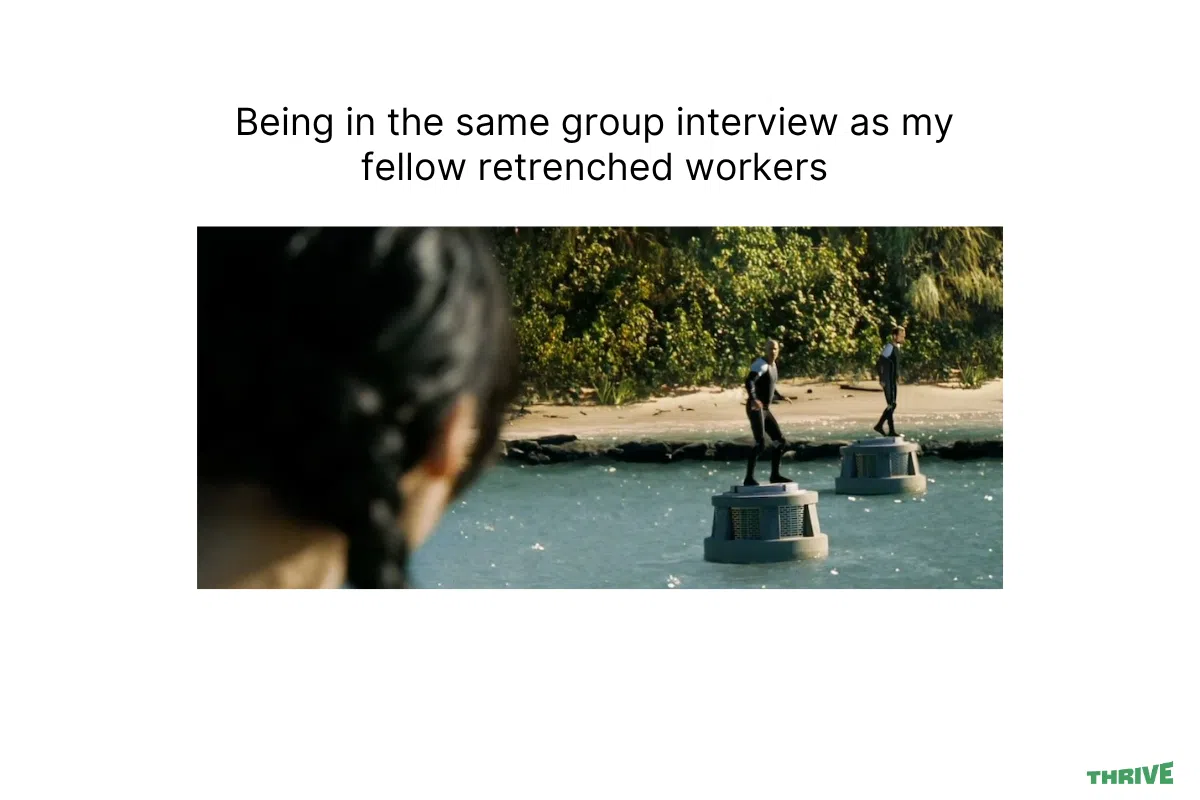
How do you deal with a layoff?
The idea that retrenchments only affect older workers is both inaccurate and harmful, says Shub Faujdar, CEO and chief career coach at JobS-ME.
“The reality is that no career stage, industry, or seniority level offers a guaranteed shield anymore,” she says.
Younger workers might feel their lack of experience makes them vulnerable, but data suggests otherwise.
According to Faujdar, Gen Zs and millennials who face retrenchment typically take less time finding a new role than older workers.
The key difference, she says, is that younger candidates should focus on demonstrating potential rather than positioning themselves as experienced hires.
When faced with a layoff, Faujdar recommends:
- Knowing your financial runway
- Updating your resume and being transparent about the retrenchment
- Reaching out intentionally to your network
- Connecting with someone relevant to the job you want
- Upskilling visibly through certifications
Can you even prevent retrenchment?
The short answer: not entirely.
However, Faujdar says that workers can still control how “retrench-proof” they are by actively upskilling and building their reputation through connections within the workplace.
The upside is that recruiters increasingly recognise that retrenchments are not necessarily a reflection of poor performance. That shift in perspective makes it easier for workers to move forward with less stigma.
Despite facing back-to-back layoffs after graduation, Wong says she no longer dwells on them.
Instead, she credits the experience for pushing her towards a more fulfilling career today.
“I understand now that layoffs will always be part of the job market,” she says. “But it helps to be positive if it ever happens to you.”
Decoding Asia newsletter: your guide to navigating Asia in a new global order. Sign up here to get Decoding Asia newsletter. Delivered to your inbox. Free.
Copyright SPH Media. All rights reserved.
TRENDING NOW

LTA proposes combining car COE categories, adding rebate-surcharge system

StarHub to acquire MyRepublic’s mobile business amid ongoing telco consolidation

DBS, OCBC, UOB rout lops billions off STI as inflation, rate concerns spook investors

Grab CEO’s wife Chloe Tong on life with Anthony Tan and finding her purpose


