
When your parent becomes your business partner

Straight to your inbox. Money, career and life hacks to help young adults stay ahead.
[SINGAPORE] Even at 36, Desleen Yeo still gets nagged by her mum about keeping things clean.
Not at home, but at her clothing boutique – YeoMama Batik – where she works with her mother.
“To my mum, it’s almost like managing a household when she comes into the office,” Yeo says.
During our interview, the mother and daughter bicker as they recount the tiffs they’ve had over what needs cleaning or which hangers are better.
Perhaps some things don’t change even when you’ve grown up or have become your own boss.
But going into business with a parent can change the relationship. For the three parent-and-child duos I spoke to, it has brought its fair share of friction, but also brought them closer.
Girl, want to sell batik?
Yeo had just left her full-time job in events and was recovering from an ankle injury when her mum, Wenny Tan, called while on holiday in Indonesia.
“How’s your ankle? I saw a lot of batik here. You want to sell batik?” Tan asked.
Yeo ran with her mum’s suggestion and brought to life the now well-loved batik apparel brand, YeoMama Batik, in 2018.



Yeo’s first physical shop was tucked away in a rather unusual place for an apparel store: a hair salon that her dad frequents.
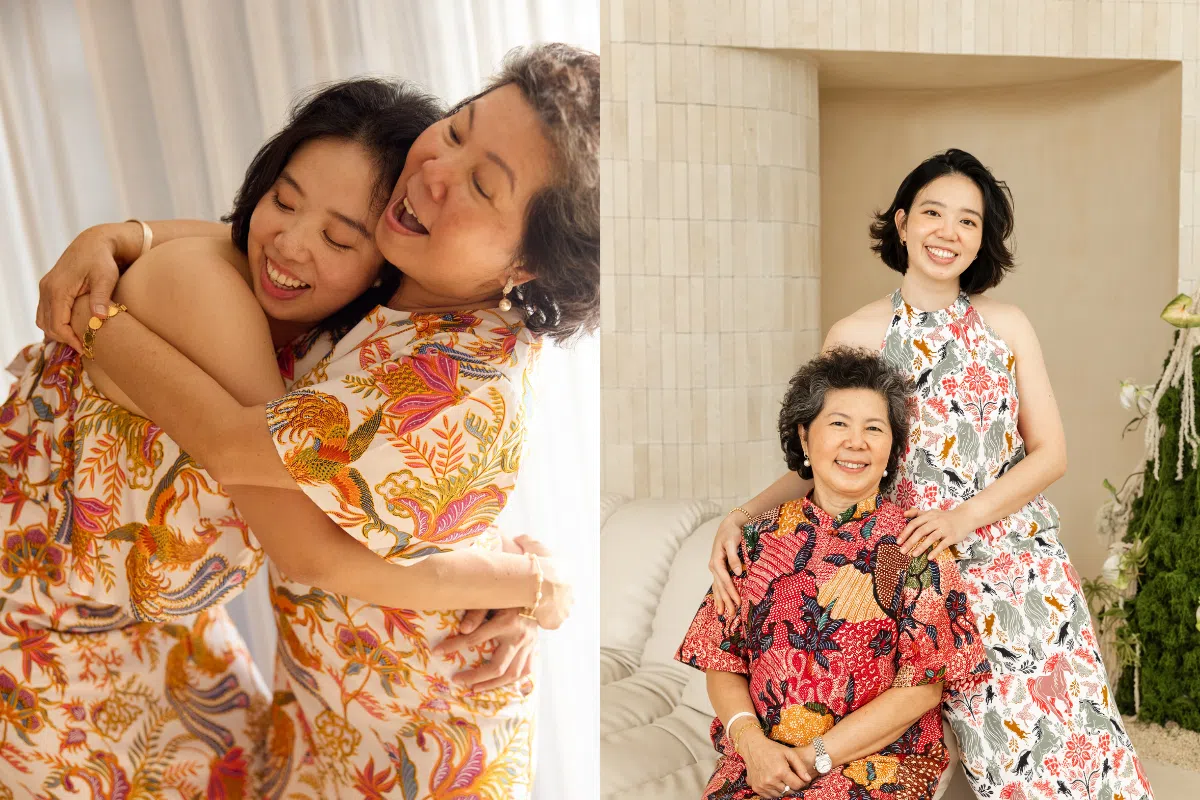
Today, the business has two physical outlets, a retail store in Raffles City and a boutique studio in Ubi, along with a website. Together, they bring in seven figures in annual revenue.
Yeo manages a team of about 15 full-time and part-time workers, and oversees the main business operations.
While not as heavily involved in the day-to-day operations, her mum – a homemaker – still has advice to offer, especially when it comes to negotiating and turning down suppliers.
When she isn’t playing the cleanliness inspector, Tan, who is 64 this year, is the main model for the brand.
“I think she’s a very relatable auntie. Not very tall, not very skinny,” Yeo says teasingly, adding that customers often ask what size and style Tan wears.
“She’s more relatable than a very perfect-looking model,” Yeo adds.
For Yeo, working with family is still easier than with friends. “I won’t go into business with a friend… I don’t even want to hire friends in the company because of my strongheadedness and my stubbornness,” she says.
At least with the current arrangement, Yeo takes the lead in the business. That’s until her mum wants the shop wiped down.
Converting his kopi-loving mum into a barista
After Esmond Toon, 29, was let go from his fintech consulting job in 2023, he decided to open a cafe.
His mum, Mary Chan, who had just retired after working across procurement and sales for over 40 years, decided to invest between S$100,000 and S$150,000 as a “gift” to Toon. Together, they opened Bullock Cart Coffee in 2024.
But Chan, a Nanyang coffee lover, neither liked nor knew much about speciality coffee.
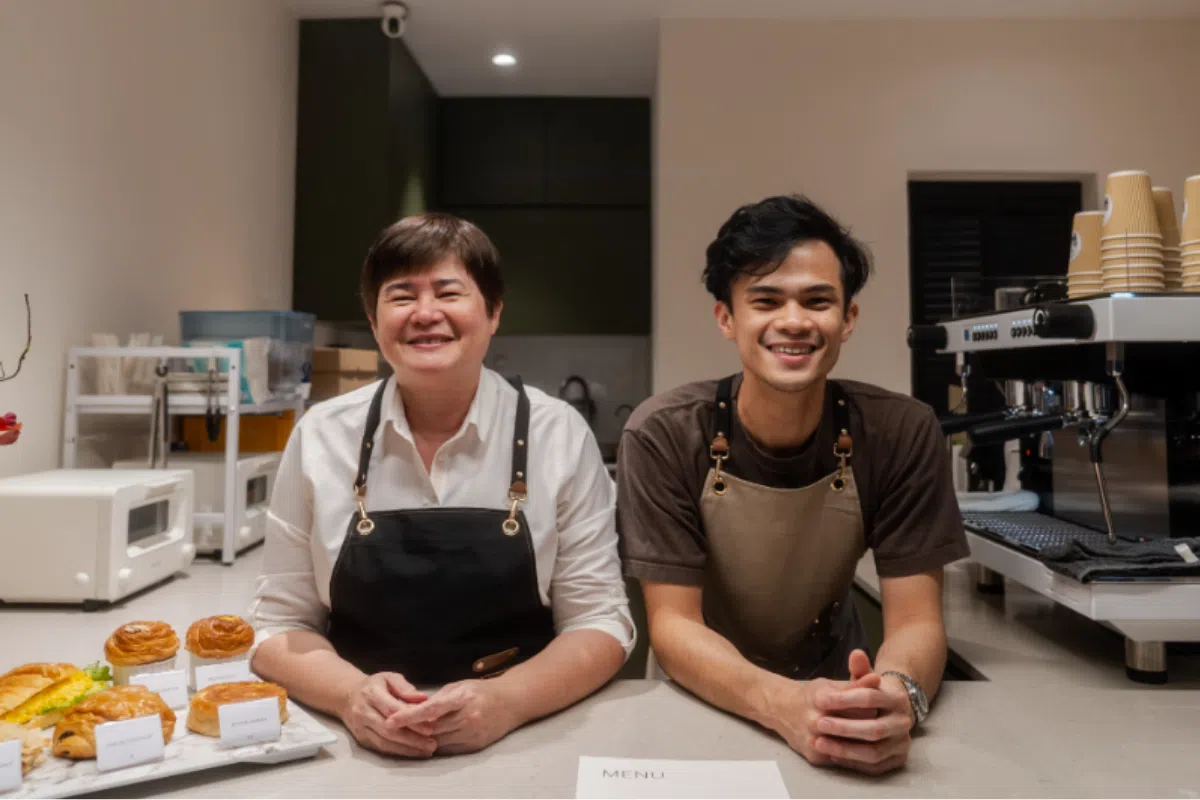
In the early days, Chan would prepare the shop, grind some beans, then hop over to the nearby hawker centre to get her own cup of kopi o – even though she has unlimited free coffee at her own cafe.
Until one day, a customer complained to Toon that the coffee Chan made in the morning was too acidic.
“Acidic? What’s that?” Chan said.
“You mean you didn’t drink the coffee?” Toon replied.
Chan had simply followed the cafe’s standard operating procedure: put the beans in the hopper, grind, then extract. “The SOP (standard operating procedure) didn’t say I need to taste the coffee,” the 59-year-old said.
Since then, Chan has sampled every batch of coffee she makes for the cafe.
In a small reversal of the usual parent-child dynamic, Chan, who spent years raising her son, has had to lean on Toon in recent years to learn the ropes of speciality coffee.
And while Toon and Chan are no longer behind the counter together as often, coffee and the business still find their way into their everyday text conversations, which have become the new normal for the mother and son.
A sous-chef from young
Haris Ahmad, 31, grew up accompanying his mum to wet markets and helping out in the kitchen.
So when he dropped out of Singapore Institute of Technology after a semester, he decided to start a food business, serving customers a taste of the food he grew up eating.
Haris started small, with a food stall named Indo Java at Singapore Polytechnic in 2018, selling Indonesian food with his mum, Wati Abdul Khamid.
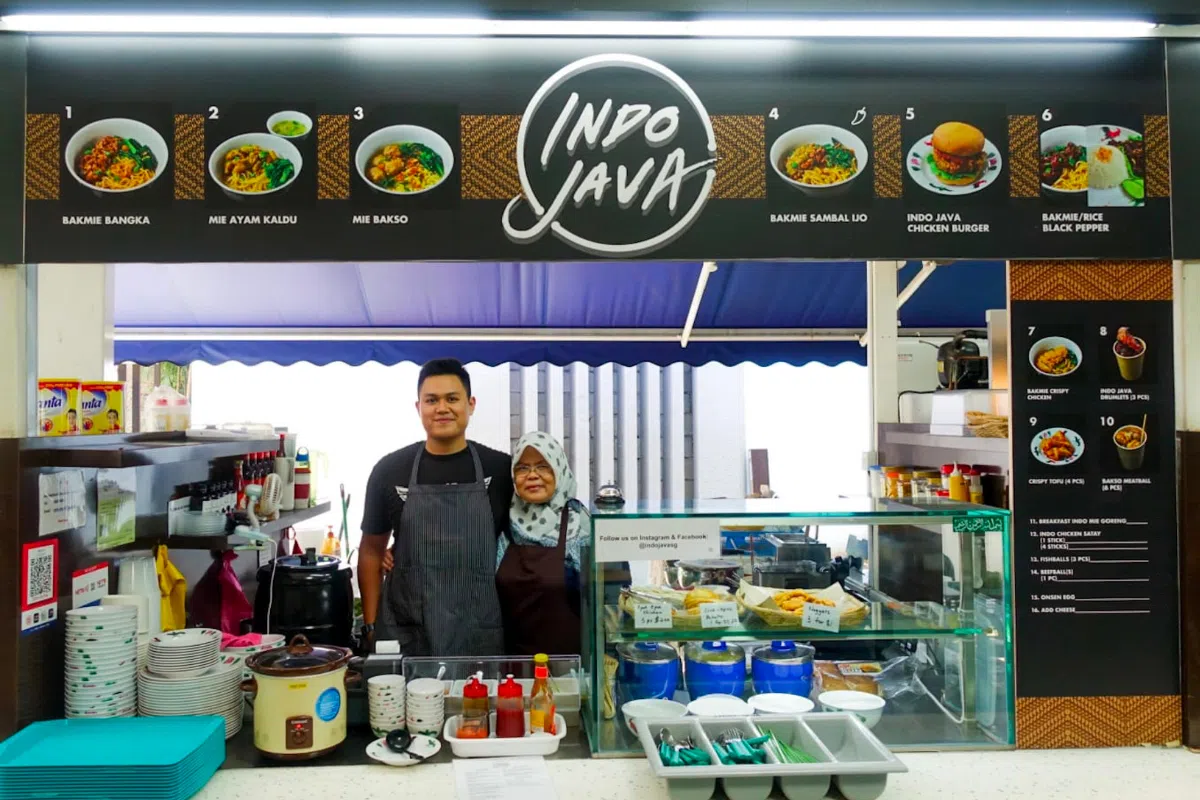
Wati says she was initially concerned about the long hours and financial pressures of running a food and beverage business.
“I also wondered whether we would be able to disagree professionally and still go home as mother and son,” the 61-year-old says.
Their disagreements never grew big enough to strain their relationship, and the mother and son opened their first standalone restaurant, Kulon, in 2020. The pair co-developed the menu, taking inspiration from recipes passed down from Haris’ grandmother.
In 2024, they opened Ono Ramen, a restaurant selling Indonesian-style ramen. And as a side project, Haris recently started Harko Coffee, a coffee brand housed within Ono Ramen.
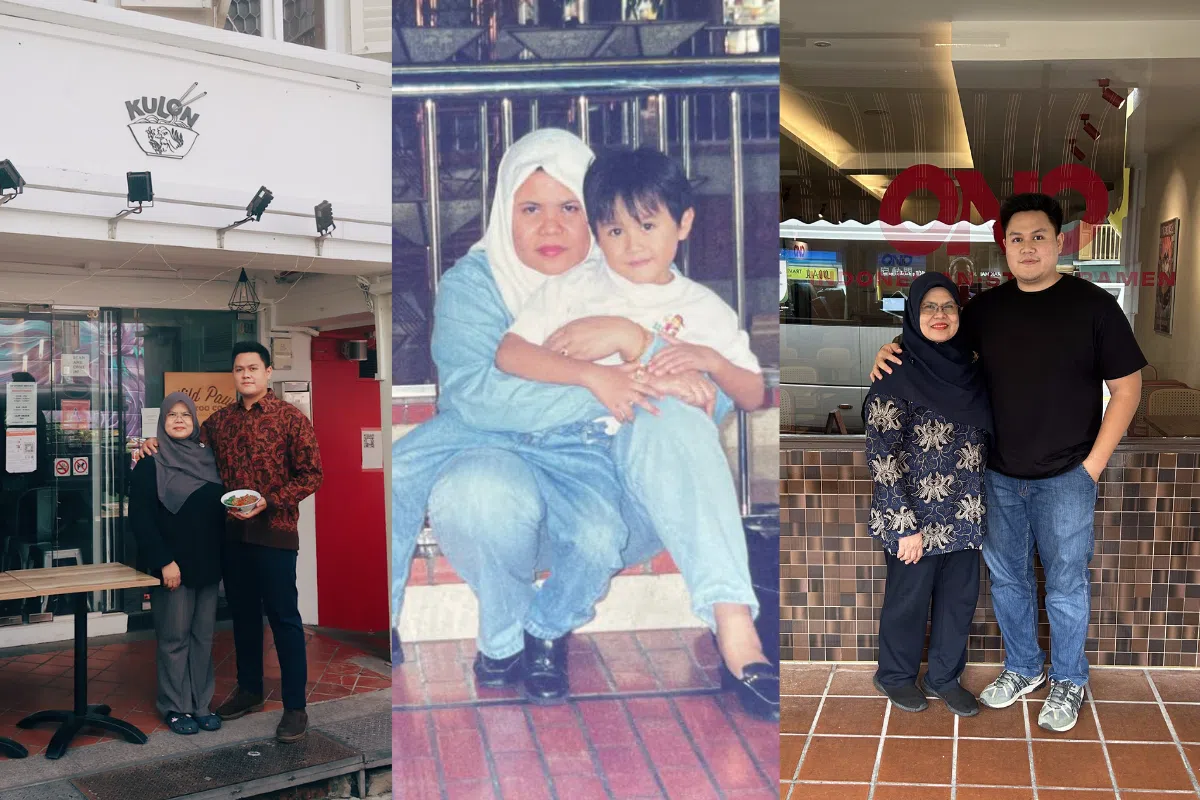
When working with family, arguments are unavoidable, Wati says.
“The funny part is that because we are mother and son, we know exactly which buttons to push,” she adds.
While small arguments may happen occasionally, they make it a point to settle disagreements by the end of the day. After all, you can only argue so much with your mum, Haris says.
Haris tells me he would never go into business with anyone other than his best friend and the best cook he knows, Wati.
For Wati, working together has also changed how she sees her son. She has come to appreciate the risks he takes and the responsibilities he carries.
“At the end of the day, he is still my son, but now he is also someone I work alongside and respect professionally,” she says.
Decoding Asia newsletter: your guide to navigating Asia in a new global order. Sign up here to get Decoding Asia newsletter. Delivered to your inbox. Free.
Copyright SPH Media. All rights reserved.
TRENDING NOW

DBS, OCBC, UOB rout lops billions off STI as inflation, rate concerns spook investors

Grab CEO’s wife Chloe Tong on life with Anthony Tan and finding her purpose

OCBC sheds S$8 billion in value as shares close nearly 6% down; analysts cautious on banks

Deal between tycoon friends sparks scrutiny of Philippine power sector


