
Buying toys with grown-up money

Straight to your inbox. Money, career and life hacks to help young adults stay ahead.
[SINGAPORE] I remember marvelling, as a kid, at figurines of Studio Ghibli characters the first time I stumbled upon them at a Kinokuniya bookstore. The hefty price tags were way out of my budget.
More than a decade later, I found myself in an official store of the famed animation studio in Japan – this time armed with a heavier wallet.
My friends had to intervene at my sixth purchase, stopping me before I spent the last of my travel budget, drunk on the freedom of adult money and nostalgia.
Christen Teo has experienced the same nostalgic pull. Growing up, she loved squishies but could not afford the squeezable foam toys on her pocket money.
Now, with a steadier income, the 26-year-old freelance creative spends about S$20 every two months buying squishies, Pokemon cards, blind boxes, or any toys that catch her attention.
“When you’re younger, you (have to) save up for that one thing… now it’s just a percentage of my pay,” she says.
There’s a label for Teo and me: kidults.
The business of kidults
Kidults aren’t a new phenomenon, says Dr Hannah Chang, associate professor of marketing at Singapore Management University. Just look back at the Hello Kitty craze of the 1970s and the explosion of Beanie Babies and Pokemon in the 1990s.
The trend has had a resurgence in recent years, alongside a wave of Disney children’s film remakes, collectable crazes and a broader cultural appetite for nostalgia.



In the US, adult-only households accounted for the majority – 55 per cent – of toy sales, according to market research group Circana.
Brands have increasingly been targeting adults as consumers, rather than just as parents buying for their children, Dr Chang says. Products from Disney’s Star Wars and Marvel franchises, as well as Lego’s 18+ age category, are some examples.
“From a marketing strategy perspective, this makes sense,” she says. “It assures adults – the segment with more purchasing power – that these products are designed for you too.”
Why are adults buying?
David Law, a 26-year-old engineer, sets aside a monthly budget to buy Pokemon cards.
Part of the reason is profit. He has made more than S$1,000 from buying cards, grading them, and selling them to collectors.
As a long-time fan of Pokemon, Law also buys the cards as a way to relive his childhood.
Similarly, John H says collecting childhood toys is an enjoyable way to spend his income. Once a month, the 26-year-old psychologist buys gacha toys, action figures, or Lego sets.
He declined to disclose his full name while discussing his spending habits.

For Teo, she feels like she is reclaiming something she missed out on as a child whenever she buys a toy as an adult.
“(My younger self) would be happy to know that I’m able to buy this for myself.”
She also enjoys watching reviews of squishy stores, which help her discover new places to shop.
The social media push
Dr Chang says what distinguishes today’s kidult trends is how big and quickly a specific toy can take off.
“This is largely due to social media…(which) helps consumers discover new toys, see what others are buying, and join a trend almost instantly and visibly.”
Take squishy toys, which have been around for years, but have exploded in popularity this year.
One of the brands benefiting from the virality is NeeDoh, produced by American toymaker Schylling. Kevin Kwok, director of Kids Village Asia, the official distributor of NeeDoh in Singapore and Malaysia, says that inbound trade and retailer enquiries have risen by nearly 20 times from the same period last year.
This was after celebrities started showcasing NeeDoh on their social media platforms.
He adds that a growing share of sales appear to be from adults who are buying for themselves.
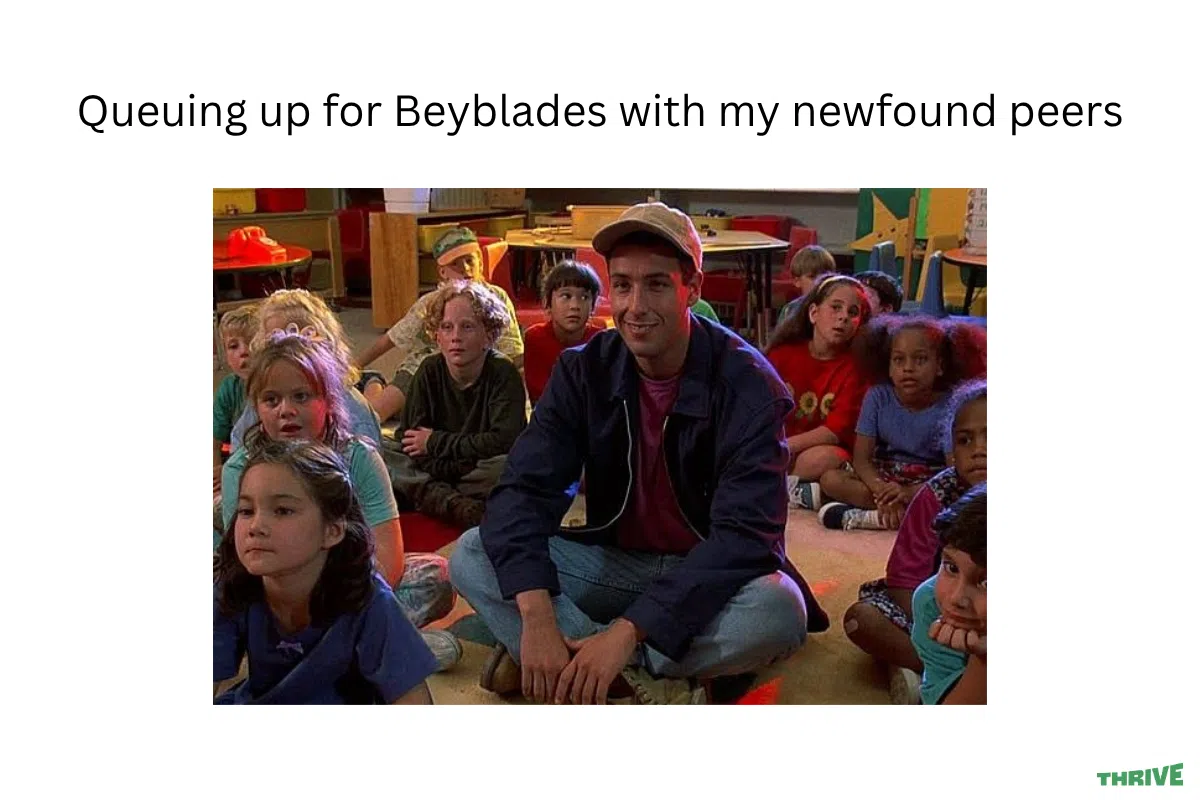
Charlene Yap, 24, an avid fan of Beyblades, says she discovers new models of the spinning-top toys each month through social media platforms.
Being an adult may change the fun
For some young adults, their newfound purchasing power – and the financial responsibility that comes with it – has changed their level of enjoyment with toys.
John budgets S$30 a month to buy Lego products, but says buying sets on such a frequent basis has diminished the anticipation and excitement he used to once feel.
“Last time, it was more special (to receive a set) since I only got them on rare occasions, like if I did well for my exams or it was my birthday,” he says.
“But now that I have an income, I buy stuff more often, so the build-up and perceived value isn’t as high.”
When he exceeds his monthly budget, however, he pauses purchases the following month.
Likewise, Audrey Wang has had to rein in her purchases when it comes to toys.
The 32-year-old designer owns about 30 Pop Mart figurines but has stopped buying more, preferring to spend on essentials such as food and transport.
A disciplined wallet
Some may baulk at spending S$100 on a Totoro music box, but I have no regrets splurging on the (probably overpriced) item now sitting proudly on my dresser.
But that doesn’t mean I spend recklessly. I stick to my monthly budget, making room for toy purchases by skipping drinks and more expensive meals.
As Law points out, nostalgic purchases can offer relief from the stress of adult responsibilities.
“Having the excitement of getting something that brings back memories can just be how some of us take the edge off,” he says.
So if a S$100 toy makes me happy and it fits within my budget, I see no problem with treating myself.
Decoding Asia newsletter: your guide to navigating Asia in a new global order. Sign up here to get Decoding Asia newsletter. Delivered to your inbox. Free.
Copyright SPH Media. All rights reserved.
TRENDING NOW

DBS, OCBC, UOB rout lops billions off STI as inflation, rate concerns spook investors

Grab CEO’s wife Chloe Tong on life with Anthony Tan and finding her purpose

OCBC sheds S$8 billion in value as shares close nearly 6% down; analysts cautious on banks

Deal between tycoon friends sparks scrutiny of Philippine power sector


