Is a personal text still genuine if AI wrote it?

Straight to your inbox. Money, career and life hacks to help young adults stay ahead.
[SINGAPORE] Some time ago, a friend shared that he uses artificial intelligence to reply to his dating app matches.
His routine goes something like this:
He gets a match, and if a conversation starts, he screenshots the message, uploads it to ChatGPT and asks: “How do I respond to this?”
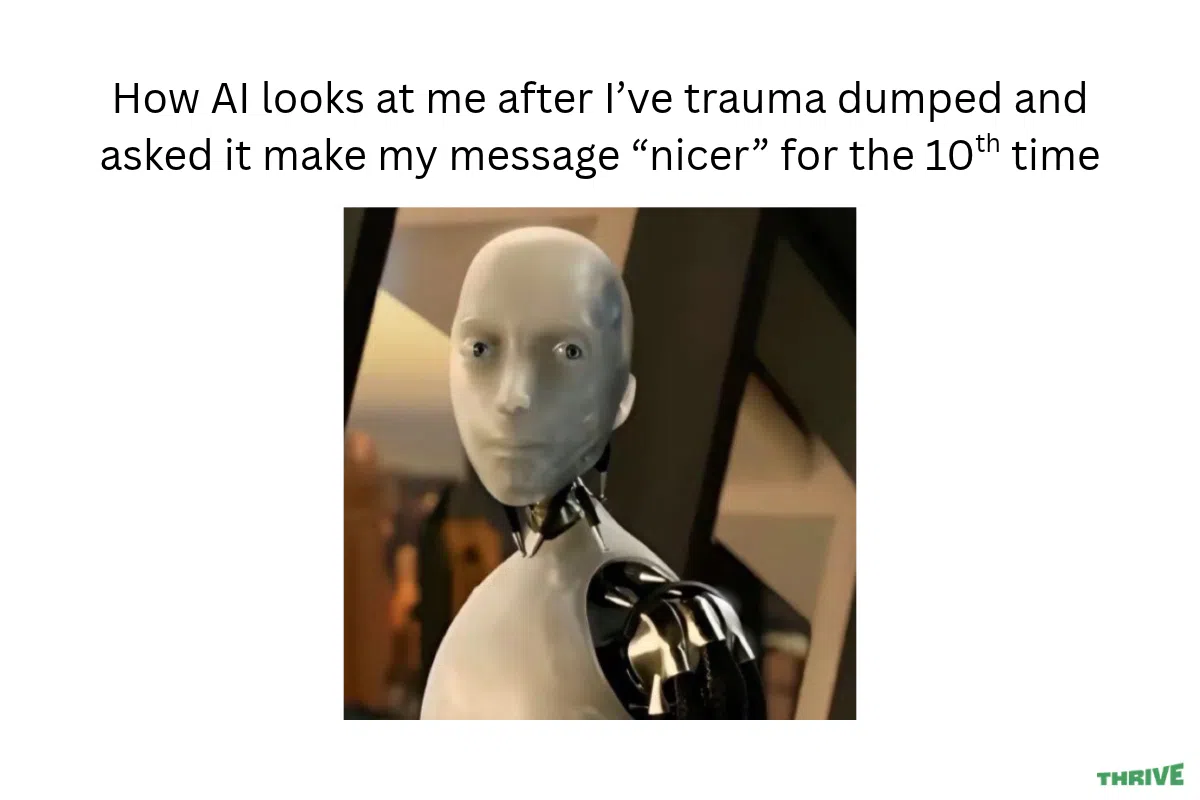
Then, he sends a second prompt, asking AI to make it sound nicer or more supportive.
So far, AI has landed him more than 10 dates.
But in-person conversations haven’t been quite as successful. He’s still single.

My friend’s experience belongs to a broader pattern that researchers call “social offloading”: the act of using AI to navigate interpersonal situations.
A quick search online leads me to social media posts and Reddit threads – such as r/mildlyinfuriating and r/isthisAI – where others have shared their experience with either sending out or receiving AI-generated texts to dates and even friends.
A growing number of young people are reportedly outsourcing hard conversations to AI, from drafting confrontational messages to mediating their dating lives and even scripting in-person conversations.



Have we become so afraid of saying the wrong thing that we’d rather let AI speak for us?
Drawing the line
On the one hand, I understand the appeal. My friend, for instance, sees AI as a “filter” to soften potentially harsh wording in his messages and uses it as a tool to help keep conversations engaging.
I’ve also watched a friend feed ChatGPT a frustrated rant about someone before forwarding its polished version to the recipient.
Another tells me that she consults AI before sending messages to her boss, to avoid sounding rude.
I think there is nothing wrong with wanting to communicate better, and especially when emotions run high, finding the right words can be difficult.
Yet learning that people around me are using AI for something as personal as texting felt strangely inappropriate.
Perhaps there may be a degree of discomfort as it touches on a question of authenticity. “Am I relating to you, or to a carefully generated version of you?” Annabelle Chow, clinical psychologist at Annabelle Psychology, tells me.
Texting is ultimately an exercise in connection, and we assume that personal messages reflect a person’s emotional effort in making and maintaining that connection, she adds.
We may attach meaning to the words someone uses, their abbreviations and even the punctuation one chooses to use.
I’ve definitely spent an embarrassing amount of time deciding how many “o”s to include in “helloo” or whether I should capitalise my “haha”s.
To me, it is these quirks and the messiness of texting that make it feel personal.
I understand the need to remain professional and neutral when navigating workplace conflicts, and AI may help temper the emotions in our words.
In those instances, I think it’s fine to write a draft, then turn to AI for text refinements, as long as your core message is retained.
But completely outsourcing difficult conversations in our personal lives feels disingenuous to me.
I question if the person has bothered to reflect on the conflict or is simply forwarding the best generated response they think would assuage me.
I’d rather hear someone’s unfiltered thoughts, even if they offend me, than receive a watered-down version of their opinion. At least then, I’d know how they truly feel.
Risks of outsourcing hard conversations
By repeatedly outsourcing hard conversations to AI, young people may skip out on opportunities to practice emotional regulation and tolerance needed for difficult conversations, clinical psychologists and a counsellor I spoke to say.
Emotional growth continues throughout adulthood, be it through navigating criticisms and disagreements at work or emotional ruptures in our personal lives.
Take an apology, for example.
A beautifully written apology generated using AI can sound emotionally mature without the person having developed the emotional maturity behind it, says James Chong, principal counsellor at The Lion Mind, which offers counselling and psychotherapy services.
“The words may be appropriate, but the personal reflection and accountability that should accompany them may still be missing,” he adds.
When young people frequently outsource their words and emotional discomfort to AI, they may also lose the confidence to navigate difficult situations independently.
“While (AI) provides immediate relief, the person may become increasingly convinced that they cannot communicate adequately without assistance,” says Karen Pooh, clinical psychologist at Alliance Counselling and adjunct faculty at University College London.
“The next interaction then feels equally, if not more, intimidating,” she adds.
There is also the risk that AI may reinforce perfectionism, creating the impression that every message can and should be optimised to avoid criticism and rejection, Dr Pooh notes.
Yet human interactions aren’t supposed to be perfectly scripted. Misunderstandings happen, and we may inevitably say things we regret.
“The ability to express oneself imperfectly, tolerate another person’s reaction and work through misunderstandings is not a weakness to be outsourced; it is a life skill to be developed,” Dr Pooh says.
And in my experience, the strongest relationships I have are ones that have lasted through bitter conflicts.
A middle ground?
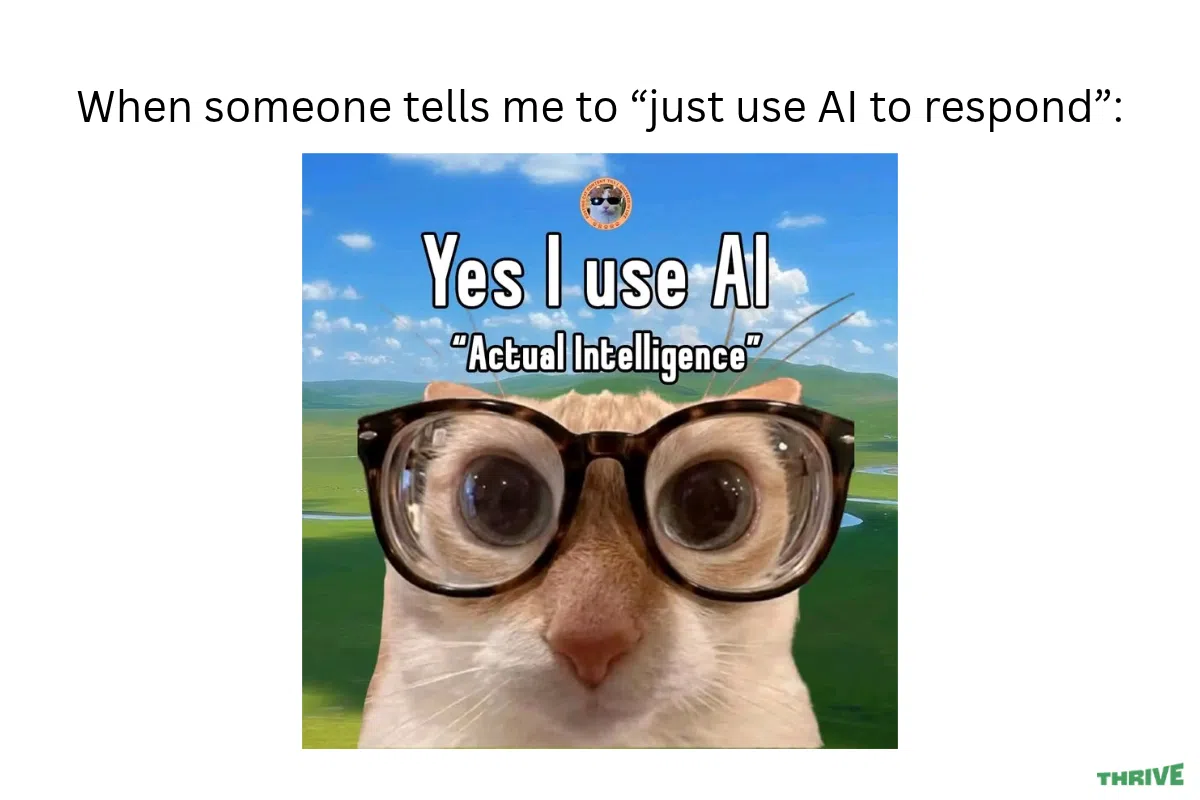
As with any use of AI, the experts I spoke to advise against relying on it as our primary source of advice.
They suggest writing our own first drafts before turning to AI for refinements, or using chatbots for personal reflections and to explore other perspectives.
A part of me would still rather keep personal conversations AI-free.
Then again, at the rate that AI is advancing – with it embedded in our search engines, spellcheckers and social apps – AI-assisted communication may soon become so commonplace that nobody thinks twice about it.
Perhaps in time, I’ll get used to receiving messages that are partly written by humans and partly by machine.
Until then, clumsy text messages are welcome.
Decoding Asia newsletter: your guide to navigating Asia in a new global order. Sign up here to get Decoding Asia newsletter. Delivered to your inbox. Free.
Copyright SPH Media. All rights reserved.