

‘Twin engines of impact’: DBS Foundation aims to tackle demographic shifts
Efforts focus on helping purpose-driven businesses scale, and strengthening social and financial resilience
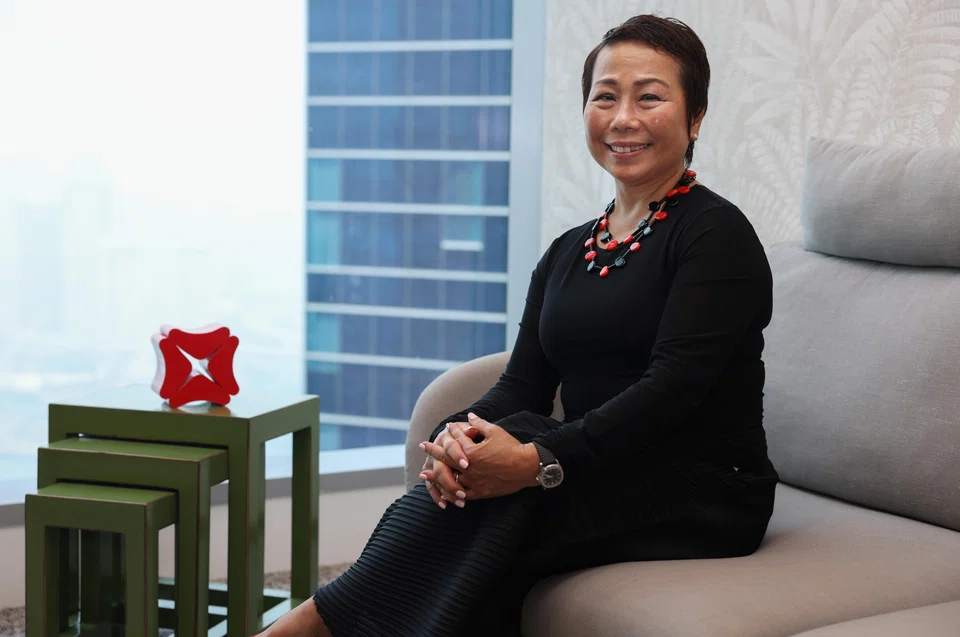
[SINGAPORE] When DBS Foundation was set up in 2014, its scope was straightforward: to support social enterprises.
Over time, its remit has expanded to helping purpose-driven businesses scale, as well as more focused efforts with community partners to build resilience.
This is in response to demographic shifts in society, where people are living longer lives, said Karen Ngui, managing director and head of DBS Foundation, in an interview with The Business Times.
“These twin engines of impact are what differentiates the foundation,” she said. “Philanthropy isn’t just about giving funds. It has to be funding with the explicit purpose of creating a better cycle for generations to come.”
The foundation aims to tackle demographic shifts by looking at “all life stages” and health more holistically, from physical health and mental health, to social health and financial health.
Twelve years ago, DBS Foundation started off with a S$50 million commitment to champion social entrepreneurship. In 2022, it committed a further S$100 million to various community programmes due to “greater needs” on the ground. And in 2024, the foundation pledged up to S$1 billion over the next decade.

Supporting social enterprises
DBS’ support for social enterprises predates the foundation’s establishment. It first offered a social enterprise banking package in 2008, providing fee waivers and preferential rates. Ngui noted that DBS was the first bank here to offer such a package.
“Social enterprises are often misunderstood. Sometimes people think they are charities or businesses, but the truth is they are purpose-driven businesses. Hence the term ‘social enterprise’,” she added.
From the early days, Ngui, who previously helmed the bank’s group marketing and communications for two decades, was very much involved in the foundation.



In those years, it focused on developing and nurturing the social enterprise sector. Ngui noted that many social enterprises do not have access to funds, making it hard for them to grow their business.
“In our case, social enterprises are a means to an end,” she said. “In the past, there’s this sense that businesses make money and charities do social impact, and are on two extreme ends of a spectrum.”
She added, however, that “they should both gravitate towards the middle, whereby businesses start to become more purpose-driven, and charities – in order to do good on a sustainable basis – need to find a way to continue funding what they are doing”.
DBS Foundation gives grants of up to S$250,000 and awards of up to S$1 million to purpose-driven businesses in the markets the bank operates in. It targets those providing essential needs or fostering financial inclusion.
It also provides capacity-building programme depending on businesses’ needs, with employees volunteering to run workshops.
“We work with businesses for impact – be it social enterprises or small and medium-sized enterprises – to help them grow and scale, especially innovative businesses,” Ngui explained. “It’s about trying to creatively address problems in society today.”
For example, Neurowyzr, a 2025 DBS Foundation Impact Beyond Grant recipient, said receiving this funding was a “major milestone”.
The Singapore-based healthtech company aims to democratise brain care by making brain health screening more accessible. It monitors early cognitive decline using clinically validated tools.
Pang Sze Yunn, co-founder and CEO of Neurowyzr, said: “With DBS Foundation’s support, we are empowering and training community care organisations in Singapore to reach vulnerable communities, and launching a community-based validation study. Early detection is crucial in addressing the brain health needs of Asia’s ageing population.”
Ngui noted that many of the enterprises DBS Foundation has supported have become repeat grantees or scaled to become programme partners.
“It’s very fulfilling to see how we’ve been able to help nurture this ecosystem,” she said. “Based on the amount of grants we have given, they have collectively gone out to raise 10 times more funding on their own.”
Building resilience among communities
The Covid-19 pandemic marked a turning point for the foundation, Ngui said, as it decided to “double down” on its ability to support communities.
It started co-creating programmes with community partners to provide essential needs and build financial and digital literacy. These skills provide beneficiaries with better pathways to employability.
“Providing access to essential needs is important to shore up greater social resilience, but that alone in itself does not help (beneficiaries) break out of that cycle of disadvantage. This is where financial inclusion and resilience comes in,” she said, adding that the foundation wants to go from “relief to resilience”.
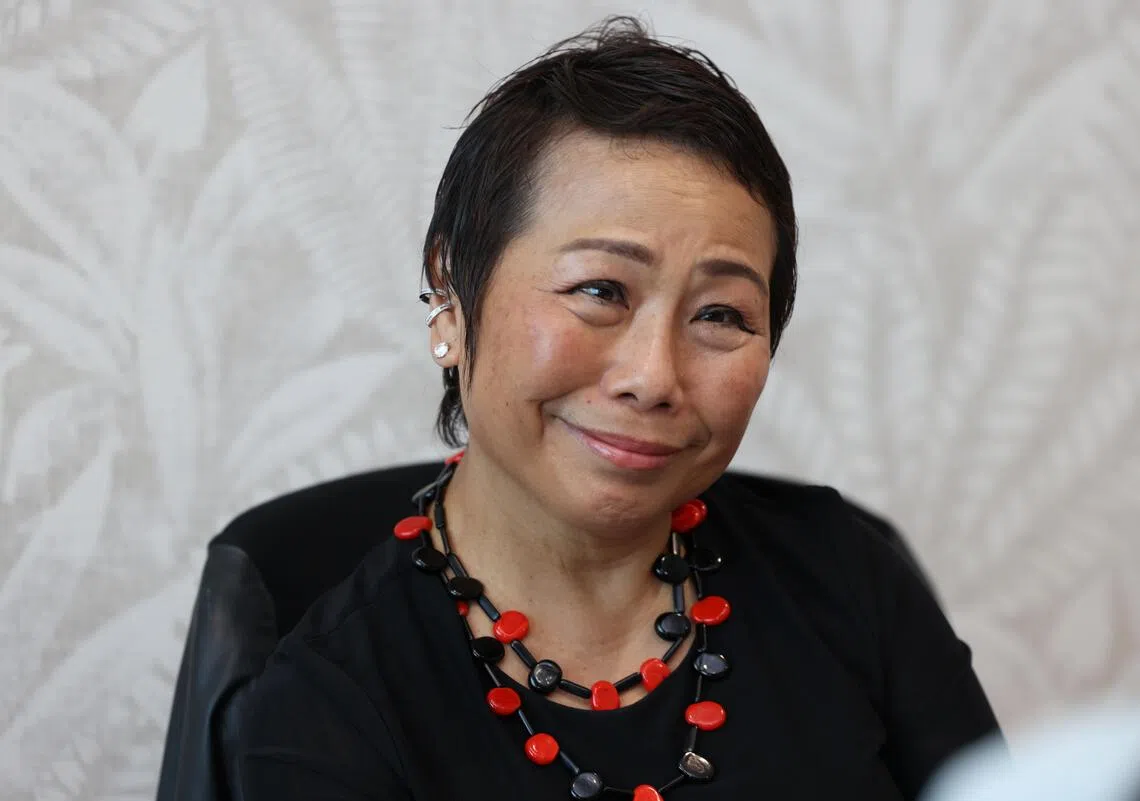
Ngui noted that demographic shifts are not just about helping ageing communities, but also helping younger generations become more digitally and financially prepared.
For example, Coding Camp, a collaboration between DBS Foundation and Dicoding Indonesia, is a technology training programme that aims to broaden access to tech education and financial literacy among university and vocational high school students.
Narenda Wicaksono, the CEO of Dicoding Indonesia, said: “As artificial intelligence and automation reshape Indonesia’s technology sector, many vocational students risk entering the workforce without the technical, workplace and financial skills employers now demand.”
Coding Camp has so far reached 229,000 beneficiaries, with the majority from second and third-tier cities in Indonesia.
DBS Foundation is now in its second decade, or what Ngui calls “Foundation 2.0”, with a focus on inequality and demographic shifts.
This year, she decided to focus fully on leading the foundation. “I had the opportunity to help set up DBS Foundation, so this was a very natural conduit,” she said. With the foundation’s greater corpus to create social impact, I think it needed a bit more focus.”
Decoding Asia newsletter: your guide to navigating Asia in a new global order. Sign up here to get Decoding Asia newsletter. Delivered to your inbox. Free.
Copyright SPH Media. All rights reserved.
TRENDING NOW

Ex-Nvidia CEO Jensen Huang carried a secret for more than a year. It led to his downfall

Higher rates, weaker spending: Is the Philippines entering stagflation?

As Indonesia picks new vice-president to succeed Gibran, investors see risks and opportunities

Singapore to inherit South China Sea code talks with key issues unresolved

