

Beyond the assembly line – Can Malaysia climb the semiconductor value chain?
The conditions to produce the next generation of local semiconductor companies appear better today than ever
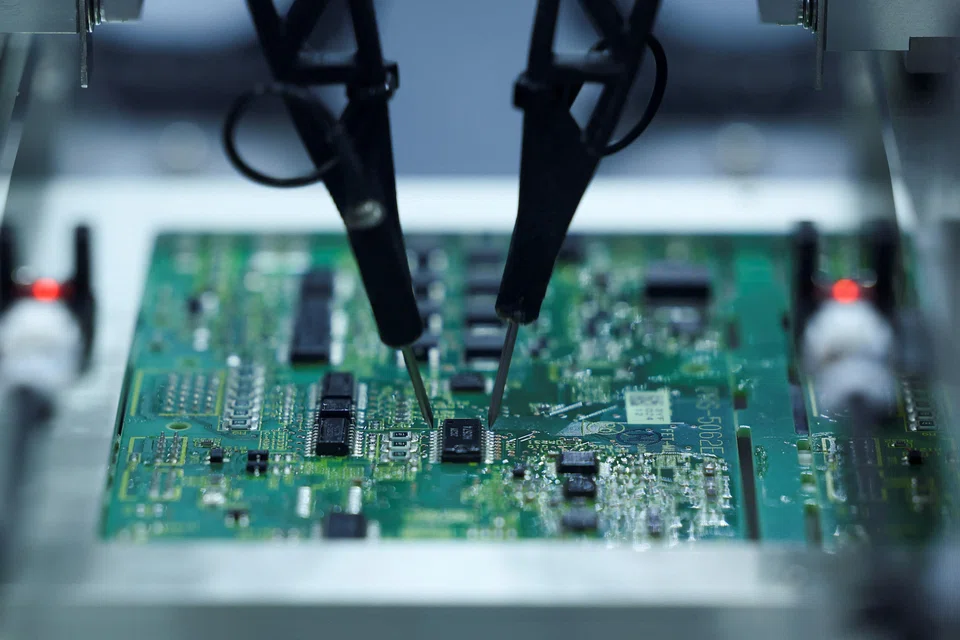
IN 1972, Intel sent a team to a patch of muddy paddy field in Penang. The plan was modest: a 5-acre (2-hectare) assembly plant, the chipmaker’s first manufacturing facility outside the US, capitalising on Malaysia’s cheaper labour and the newly gazetted Bayan Lepas Free Industrial Zone.
By 1975, the plant employed roughly 1,000 people and had become a crucial part of Intel’s manufacturing chain. AMD, HP and Hitachi followed. A semiconductor cluster was born – not by grand design, but by the logic of cost arbitrage.
Fifty years on, that act of assembly-line pragmatism has compounded into something substantial. Malaysia now accounts for nearly 13 per cent of the worldwide market for the outsourced semiconductor assembly and test (OSAT) sector, which makes up around 40 per cent of the nation’s export output.
It is, by any measure, a global semiconductor power. However, the question remains whether Malaysia can only be a great assembly house, or whether it can move up the value chain and build local champions like what Taiwan did. As a venture capitalist, that is the question I often ponder.
The trap of incumbency
Malaysia’s dominance in OSAT is real, and the country has developed sizeable homegrown OSAT companies such as Inari and MPI. But the economics are less forgiving.
Traditional packaging such as wire bonding is a commoditised, labour-sensitive business. Amkor Technology, one of the largest OSAT players globally, reported gross margins of roughly 15 per cent in recent quarters. These are not technology margins. They are manufacturing margins, earned through scale, discipline and relentless cost control.
For decades, that was the only opportunity available. Global supply chains were engineered around a single overriding logic: efficiency. So long as geopolitics was a background hum rather than a structural force, cost-optimised production in a stable corner of South-east Asia was the only thing clients would consider.
However, that equilibrium has now shifted.
Two disruptions, one window of opportunity
The first disruption is geopolitical. US-China export controls on advanced semiconductors, accelerating tariffs and the spectre of Taiwan Strait risk have shattered the assumption that supply chains can be optimised for cost alone.



The 2021 Covid-induced chip shortage that led to idled car plants taught procurement managers a hard lesson on supply chain resilience. As a result, corporations are now willing to pay a premium for some geographic diversification. Malaysia, outside the main theatre of US-China tension and with a proven manufacturing base, sits in a newly advantageous position.
The second disruption is technological, and arguably more durable.
Moore’s Law (that the number of transistors on a microchip doubles roughly every two years, while the cost of computers is cut in half), has been the engine of semiconductor progress for half a century through the shrinking of transistors. But it is now approaching its physical limits. Increasingly, performance comes not from a smaller transistor but from how you stitch separate chiplets of logic and memory into a single package.
That is advanced packaging: the art of combining multiple chiplets into a single, high-performance package using techniques such as 2.5D silicon interposers, Intel’s Foveros 3D stacking or TSMC’s CoWoS.
Today, advanced packaging already accounts for approximately 50 per cent of total IC packaging revenue while making up only 5 per cent of unit volume. The advanced packaging market is projected to grow at a 26 per cent compound annual growth rate to reach US$80 billion by 2030.
More importantly, the margins are a different conversation entirely. Advanced techniques command up to 50 per cent gross margins and grow at double-digit rates, driven by AI chips, 5G and automotive. This is a meaningful step up from the sub-20 per cent margins earned by traditional OSAT companies.
Malaysia’s right to compete in advanced packaging
Malaysia has something that cannot be easily replicated: an inadvertent endowment of human capital. In 2021, Intel announced Project Pelican, a RM30 billion (US$7.3 billion) advanced packaging complex in Penang that was to be its first overseas facility for 3D chip packaging.
Approximately 600 engineers and technicians, the majority new to advanced packaging, were sent to Intel’s New Mexico and Oregon plants for two years of training. These were not trainees on a factory tour. They were immersed in Intel’s most sophisticated packaging operations, learning the tacit knowledge of process intuition, failure analysis and yield optimisation. Such knowledge cannot be extracted from a textbook.
When Intel froze the project in 2024 amid its own issues, much of that cohort was relocated, laid off or left to support remotely. Intel is now restarting Pelican, but it will not reabsorb the entire cohort, and the knowledge has already diffused into the wider ecosystem.
That is the window, and it will not stay open indefinitely. The deeper point holds: Malaysia has, for the first time, a base of engineers who have actually run advanced packaging at scale. Micron’s die-stacking work in Penang and Johor adds further depth to the pool. The accumulation of process knowledge across these plants is not trivial.
Recognising the moment, the Malaysian government has acted. The National Semiconductor Strategy earmarks at least RM25 billion in public funding and aims to train 60,000 engineers, with advanced packaging named as a priority.
In May, the science ministry awarded a RM92 million matching R&D grant to the Malaysia Advanced Packaging Consortium, a group of five local companies, topped up by RM93.8 million from industry, for a total of RM185.8 million over 24 months.
The framing could not have been clearer: the aim is for local companies to develop their own intellectual property rather than rely on multinationals.
Government capital at this stage serves a specific function: it de-risks the early stage for private investors who cannot yet rely on revenue to justify the capital expenditure.
Four tests for investors
For investors evaluating startups entering this space, the analysis has to go beyond the headline tailwind. Four questions matter.
The first is whether the structural demand is real and durable, and whether there is supply chain concentration. Today’s advanced packaging is artificial intelligence-driven and concentrated in Taiwan. But the more durable driver is the exhaustion of Moore’s Law, which will push automotive, the Internet of Things, and consumer electronics towards heterogeneous integration over the coming decade. Startups that serve the broadening demand curve, not just the current AI spike, are building on firmer ground.
The second is intellectual property and tacit knowledge. Advanced packaging does not reward shortcuts. Running a plant at global cost competitiveness, at the yields, throughput and defect rates that a tier-1 manufacturer demands requires engineering depth that geopolitical tailwinds cannot substitute for. The real test is whether the team has people who have done this before.
The third is whether a startup can borrow credibility it has not yet earned. Advanced packaging is a trust business, and no customer hands a pre-revenue company a production allocation on faith. Strategic partnerships with global research institutes, tier-1 OSATs, or equipment suppliers act as credibility proxies and open up qualification pipelines that would otherwise take years to build.
The fourth is capital access. A single advanced packaging line requires US$100 million to US$200 million in equipment, with delivery timelines of 12 to 18 months. The capital expenditure profile demands patient capital: government grants, development finance institutions and strategic investors who understand that returns are measured in years, not quarters.
Applying these tests ourselves is what led us to back FusionAP, a Malaysian advanced-packaging startup led by Intel and TSMC veterans, and we are watching peers such as Silicon Connect pursuing the same opening.
The harder work ahead
Malaysia’s semiconductor moment is real. The conditions to produce the next generation of local semiconductor companies appear better today than they have been in a long time. The talent is here, the geography is advantageous, the policy intent is clear, and the technology cycle is turning in the country’s favour.
That said, investing in Malaysia’s advanced packaging still carries significant execution and financial risk that transcend simple geopolitical advantages. Companies face substantial capital intensity, requiring massive upfront investments and patient capital to cover high equipment costs and long lead times. Furthermore, companies must ensure that they can develop a long-term global competitive edge, and not just rely on the fact that they are not in Taiwan.
Nevertheless, our bet is the odds are favourable that this decade will produce notable Malaysian advanced-packaging champions of real scale. The binding constraint will not be the market opportunity, but rather the intensity of founder ambition and the unwavering patience of the capital backing it. That is the harder work, and it is the part no tailwind can do for them.
The writer is executive director, investment at Vertex Ventures South-east Asia and India
Decoding Asia newsletter: your guide to navigating Asia in a new global order. Sign up here to get Decoding Asia newsletter. Delivered to your inbox. Free.
Share with us your feedback on BT's products and services
TRENDING NOW

DBS, OCBC, UOB rout lops billions off STI as inflation, rate concerns spook investors

Grab CEO’s wife Chloe Tong on life with Anthony Tan and finding her purpose

OCBC sheds S$8 billion in value as shares close nearly 6% down; analysts cautious on banks

Deal between tycoon friends sparks scrutiny of Philippine power sector

