

Looking beyond the headlines in Singapore’s property market
GDP growth and private residential price growth have shown a meaningful correlation
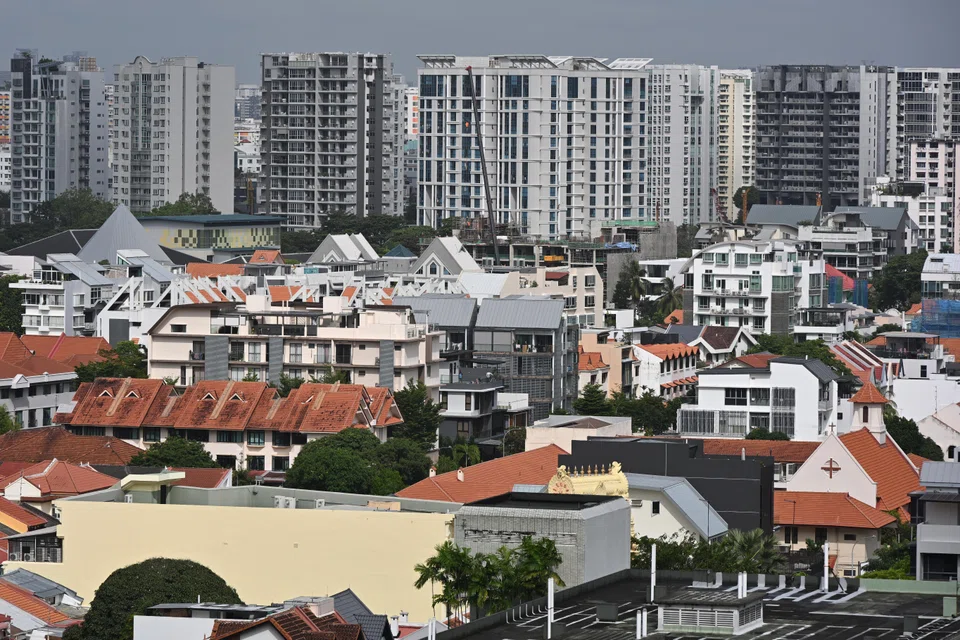
IN A year marked by volatility, the Singapore residential property market has remained relatively stable.
In the private housing market, home prices rose 0.5 per cent quarter on quarter in Q2, moderating from the 0.9 per cent increase in Q1, bringing cumulative private residential price growth to 1.4 per cent since end-2025.
While headlines on softer transaction volumes and the decline in Housing & Development Board (HDB) resale prices for the second consecutive quarter have attracted attention, these developments risk overshadowing the market’s more important story: The structural fundamentals underpinning Singapore’s housing market remain intact.
Importantly, Singapore’s macroeconomic backdrop remains supportive, driven by strong artificial intelligence-related exports and technology demand, leading the Ministry of Trade and Industry to recently upgrade its 2026 gross domestic product growth forecast to 4.5 to 5.5 per cent.
While economic growth alone does not determine property prices, history suggests it matters. Over the past two decades, GDP growth and private residential price growth have shown a meaningful correlation.
Healthy household balance sheets
Perhaps the strongest pillar of support for Singapore’s property market today is the financial strength of Singapore households.
As at Mar 31, aggregate resident household net worth stood at S$3.34 trillion, representing a 67.5 per cent increase from pre-pandemic levels. This substantial wealth accumulation has strengthened the ability of homeowners to weather economic uncertainty and higher borrowing costs.
At the same time, interest rates remain manageable. Although Singapore Overnight Rate Average has rebounded to 1.39 per cent, borrowing costs remain well below levels that many households had prepared for during the recent monetary tightening cycle.
This combination of healthy balance sheets and manageable financing costs reduces the likelihood of widespread distress selling. Unlike previous downturns, homeowners today are entering periods of uncertainty from a position of relative financial strength rather than vulnerability.



Supply constraints rather than demand weakness
Strong household finances also provide an important lens through which to interpret recent transaction data.
In H1, private residential sales by developers fell 9.4 per cent year on year to 4,154 units in H1, while total private residential transactions declined 6.7 per cent year on year.
At first glance, these figures may appear to signal a slowdown in demand. However, one of the reasons driving this decline was on the supply side, as new project launches fell 22 per cent over the same period.
We project private new home sales to range between 8,000 and 9,500 units in 2026, representing a decline of 12 to 26 per cent from 2025 levels. This expected moderation should not be mistaken for a collapse in demand. Rather, it reflects a more limited pipeline of launches and a smaller pool of units available for sale.
This is key because a decline in transaction volumes driven by weakening demand typically signals a deterioration in market fundamentals, which does not appear to be the case here.
In fact, the relatively modest decline in sales in H1 compared with the much sharper fall in new launches suggests that buyer demand has remained broadly resilient despite ongoing market uncertainty.
New initiatives were announced during the National Day Rally, comprising the higher income ceilings for subsidised public housing and additional Build-To-Order ballot chances for first-timer families with children or expecting a child.
While the initiatives could moderate demand for HDB resale flats and private residential properties, particularly in the Outside Central Region or mass-market segment, we view the measures as part of the government’s calibrated efforts to improve housing accessibility and affordability.
Therefore, we do not expect a material shift in underlying market demand and supply dynamics. We maintain our forecast for private home prices to increase by 1 to 3 per cent in 2026, which we view as a healthy and sustainable pace of growth.
Rising completions do not equate to oversupply
Another concern among investors is the increase in the residential supply pipeline.
Physical completions are projected to rise 8.2 per cent to 6,623 units in 2026 (excluding executive condominiums), followed by a further increase of 27.4 per cent to 8,440 units in 2027 and 16.8 per cent to 9,856 units in 2028.
However, even with completions expected to rise over the next few years, completion volumes will remain below the 10-year average of 10,779 units recorded between 2016 and 2025.
More importantly, the indicator to also look at is inventory. Unsold inventory with planning approval fell 7.2 per cent quarter on quarter to 15,057 units at end-Q2, marking the sixth decline in the past eight quarters.
Current unsold inventory levels are 45 per cent below the historical average since 2008 and remain far below the roughly 44,000 units seen during the Global Financial Crisis.
Viewed in that context, the projected increase in completions looks less like a looming oversupply issue and more like a necessary replenishment of an undersupplied market. Consequently, the risk of a severe supply-driven correction appears relatively low, even in the event of an economic slowdown.
Listed developers reinforce property sector’s relative strength
Beyond market-level indicators, the recent results of Singapore developers provide additional evidence of the country’s property resilience.
The H1 results from UOL Group and City Developments Limited (CDL) reveal a growing divergence between the performance of Singapore assets and many overseas markets.
While both developers continue to benefit from resilient residential demand and strong occupancy across their Singapore office and retail portfolios, their overseas assets, particularly in the UK and Australia, face ongoing occupancy pressures and capital recycling challenges.
This contrasting performance of domestic and overseas assets highlights a broader trend. Singapore’s property market continues to benefit from stable occupier demand, limited supply, transparent regulation and a supportive economic environment.
These structural advantages have become increasingly valuable as many overseas property markets continue to adjust to changing office demand patterns and tighter capital market conditions.
Rerating catalysts could unlock shareholder value
We remain positive on both UOL and CDL and believe there are potential rerating catalysts on the horizon.
Both developers have a healthy residential launch pipeline of at least 2,200 units in Singapore scheduled for launch from Q4 through 2027.
Given the resilience of Singapore’s residential market and a supportive interest rate environment, we expect sales momentum to remain healthy, barring any material deterioration in the macroeconomic outlook.
For UOL, we believe the proposed rejuvenation of Marina Square could provide a meaningful uplift to its revalued net asset value. For CDL, we expect its ongoing strategic review to provide greater clarity on its future strategic direction, capital allocation framework and value creation road map for shareholders.
Fundamentals matter
Singapore’s property market is not immune to economic cycles, but it enters the current period of uncertainty from a position of considerable strength.
The operating performance of leading developers suggests that the country’s structural advantages continue to support occupancy, rental growth and residential demand, even as several overseas markets face greater headwinds.
For investors, this should provide reassurance that Singapore’s property market can withstand volatility. The real question now is whether its resilience and long-term earnings potential are fully reflected in current valuations.
The writer is senior equity research analyst, OCBC
Decoding Asia newsletter: your guide to navigating Asia in a new global order. Sign up here to get Decoding Asia newsletter. Delivered to your inbox. Free.
Share with us your feedback on BT's products and services
TRENDING NOW

DBS, OCBC, UOB rout lops billions off STI as inflation, rate concerns spook investors

Grab CEO’s wife Chloe Tong on life with Anthony Tan and finding her purpose

OCBC sheds S$8 billion in value as shares close nearly 6% down; analysts cautious on banks

Deal between tycoon friends sparks scrutiny of Philippine power sector

