

Should you sell your losers when the market dips?
When evaluating a stock, focus on business performance rather than falling share prices
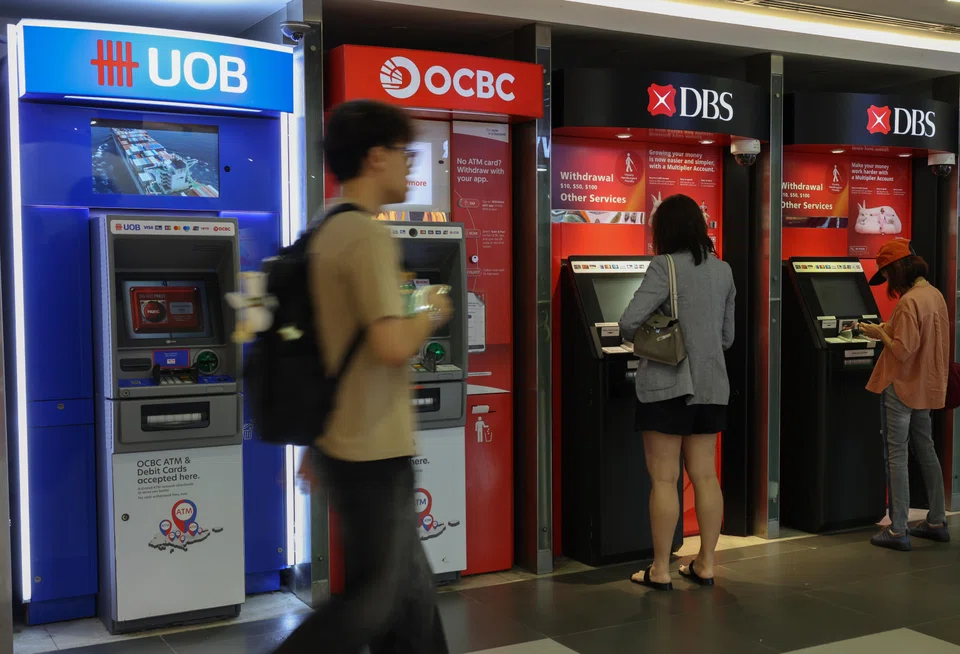
ON OCT 7, Citi downgraded OCBC to a “sell”, and the reaction was swift.
By the end of last week, shares of OCBC and UOB had fallen to around 11 per cent below their 52-week highs. Meanwhile, DBS was down by slightly more than 7 per cent. The Straits Times Index was around 7.3 per cent lower than its peak over the past year.
While the decline was quick, it was not a market correction; that would have been a decline of 10 per cent or more. Still, the mood has shifted just as quickly.
A week ago, I reckon many Singapore bank shareholders were wondering how much higher their shares could go. Now, they are wondering how far their shares could fall.
Here is the truth: The banks’ operations have not changed in a week. So why does a modest dip feel so unsettling?
Pain of loss overwhelms the joy of gains
Imagine this: You open your brokerage account and see two stocks. One is sitting on a S$1,000 paper gain, and the other is sitting on a S$1,000 paper loss.
In theory, there is no difference between the two. The gain cancels out the loss, and your portfolio has not moved a single cent.
But in practice, there is a difference. The joy of gains is often overwhelmed by the dread of losses. Which one will your eyes keep going back to? I bet it is the loser.
It’s not just you; it’s how we are wired.
Psychologists Daniel Kahneman and Amos Tversky called this “loss aversion”, which is when losses loom larger than gains of the same size. In Thinking, Fast and Slow, Kahneman noted that losses typically weigh 1.5 to 2.5 times as much as equivalent gains.
That is why last week’s dip may have felt far bigger than 7 per cent.
Loss aversion is not new. It was there all along, even when stocks were rising. It simply asks a different question about our losers, depending on which way the market is moving.
Are you scared or embarrassed?
When share prices fall, risks move to the forefront. Risks which were already present become the centre of discussion.
When prices rise, the focus changes. Your losers are not collapsing. They simply are not keeping up; the few counters that have declined stick out like a sore thumb among the many gainers.
So, you ask: Why is my stock not keeping up? Therein lies the danger. Fear is loud. As last week showed, you know when you are feeling it.
Embarrassment, on the other hand, is quiet; it does not feel like an emotion at all. Instead, it feels like an opportunity loss, that your money is not working as hard as it should.
In my view, that makes it the more dangerous of the two. It quietly nudges you to sell your losers and put the money into the stocks that have done really well. It looks like discipline.
But more often than not, it is the pain of loss looking for an exit. Yet, few investors who make this swap would call it embarrassment. Most would call it opportunity cost.
The seductive logic of opportunity cost
The idea behind opportunity cost is simple. Every dollar stuck in a lagging stock is a dollar that is not compounding in a winning stock.
To be fair, these investors are not wrong about the concept. But an accurate concept does not guarantee an accurate execution.
There is nothing wrong with the intention. Most of us want our portfolios to squeeze out every bit of return. The trouble starts when optimising becomes the driving force behind every decision.
More often than not, that urge comes from the nagging sense that you are falling behind.
And, an investor who feels he has fallen behind becomes prone to mistakes: trading too often, chasing stocks that already had a bull run and giving up on good businesses too soon.
Here is the paradox: If you want better returns, stop optimising for returns; optimise for your peace of mind instead.
A sound mind makes better decisions which, compounded over years, lead to better performance. Economist John Kay calls this obliquity: Some goals are best reached indirectly.
Get smart: Ask a better question
What should you do the next time a counter that has dropped catches your eye? Start by changing the question.
“Why have shares fallen?” is about the scoreboard. The better question that works in any market is this: Is the business performing the way it should?
Take the banks for example. Nothing has changed in the financial figures they reported in August. The share price movements since then have been driven by sentiment.
To answer the question, revisit why you bought the stock. If you keep an investing journal, check the reasons you wrote down and the risks you flagged.
Then try the fresh-cash test: Would you buy this stock today, at today’s price? If the answer is “no” because the business has deteriorated significantly, sell – whether the stock is showing a gain or loss.
But if it is “yes”, the share price decline is just noise.
Remember the two stocks at the start? In theory, they are the same. In practice, they never will be.
You cannot switch off loss aversion, but you can stop letting it ask the questions. Your losers may embarrass you. Just don’t let them make your decisions.
The writer owns shares of DBS, OCBC and UOB. He is co-founder of The Smart Investor, a website that provides investor education, stock commentary and market coverage.
TRENDING NOW

Malaysian king buys stake in Singapore-listed mining firm expanding into rare earths

Grab CEO’s wife Chloe Tong on life with Anthony Tan and finding her purpose

Once staunchly pro-China, Malaysian Chinese businesses are now distancing themselves from Beijing

Longer wait times expected as S’pore healthcare institutions report system disruptions

