

Sticky inflation amid easing oil prices: What investors should do now
They should position for rates staying high, watch for when cheaper energy prices reach the consumption basket
HEADING into the US Federal Reserve’s Federal Open Market Committee meeting in October, the question was how quickly the Fed would follow up on September’s rate rise. It chose not to.
The Fed held the Fed funds rate at 3.75 to 4 per cent, but the vote was 10-2.
Governor Lisa Cook and Cleveland Fed president Beth Hammack both preferred an immediate increase.
After October’s inflation report, the markets now think a December rise is likely.
Some investors will read the pause as the top of the cycle, and the recent fall in oil prices as confirmation. Both readings are premature.
Hiring has rebounded sharply since the meeting, and October’s inflation report showed core prices rising 0.3 per cent for a third consecutive month.
What has improved is the energy picture; that improvement is real but narrow.
How far it spreads will matter more for portfolios than the December decision itself.
What has changed since
The Fed’s reasoning in October was straightforward. Inflation was uncomfortable: Consumer prices rose 3.7 per cent in the year to September, up from 3.4 per cent, with petrol driving more than half of the monthly increase.
But hiring had stalled, with payrolls up just 29,000 as first reported. Fed chair Kevin Warsh called the hold a chance to take stock.
The labour market has since made that caution seem misplaced. The economy added 165,000 jobs in October, well above the 65,000 expected, and August and September were revised up by a combined 84,000. Unemployment fell back to 4.1 per cent.
The soft patch that justified waiting has largely been revised away.
The energy picture has improved. Brent crude has fallen from about US$115 a barrel at the time of the meeting to roughly US$90 on Tuesday (Nov 17), its lowest since late August, as diplomatic efforts to end the Middle Eastern conflict gathered pace.
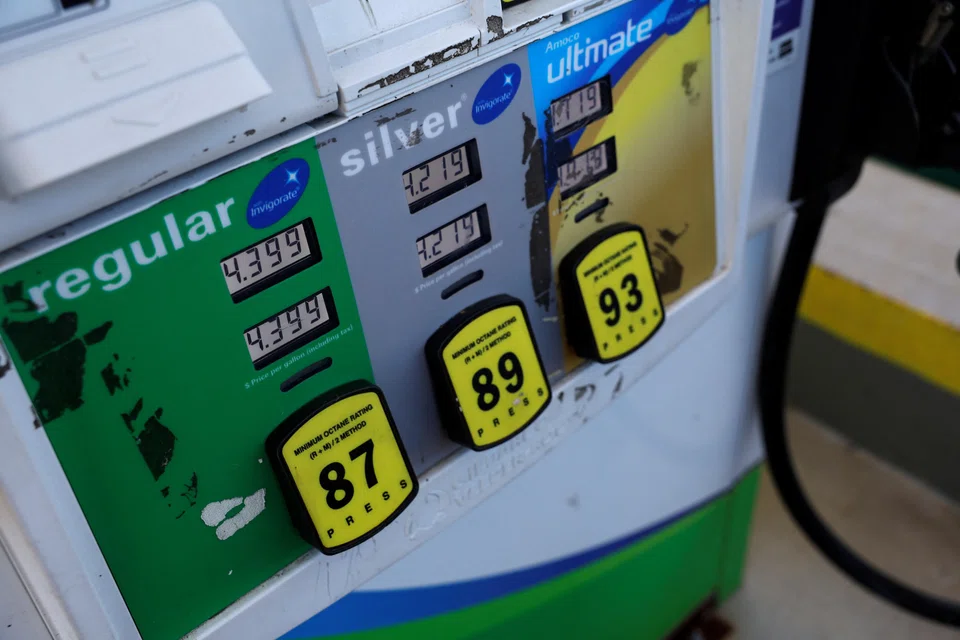
October’s inflation data showed the first sign. Petrol prices rose 1 per cent on the month, after a 9.1 per cent jump in September. But the relief rests on diplomacy rather than new supply, and petrol is still 37 per cent more expensive than a year ago.
Core inflation, which excludes food and energy, is the reason for caution. It rose 0.3 per cent in October, a third consecutive month at that pace. Food, medical care and household furnishings all rose, so the pressure is broad.
Governor Christopher Waller has since said a half-point rise “should be considered”.
Judging inflation with less data
The Fed must now judge inflation with less information than usual. Because the government shutdown in October 2025 prevented price collection that month, October’s report provides no annual inflation rate for either overall or core prices. The Cleveland Fed estimates headline inflation at about 3.8 per cent.
The calendar is changing too. From 2027, one of the Fed’s eight annual meetings will be set aside for long-term strategy with no rate decision attached, rising to two in 2028. That leaves seven rate decisions next year and six the year after.
Fewer decision points mean each carries more weight, and more scope for volatility around it.
What this means for portfolios
In fixed income, keep most of the portfolio short, but begin lending for longer. Shorter-dated bonds return capital sooner and are less exposed to swings in long-term yields.
The inflation report pushed the 10-year Treasury yield back to about 4.99 per cent, and less than a quarter of a percentage point now separates two and 10-year yields, so extending maturity costs very little income.
Moving 5 to 10 per cent of a bond allocation into 7 to 10-year government bonds is a measured way in, and the higher starting yield absorbs further rate rises.
In equities, favour profits that arrive sooner rather than later, as higher rates reduce the present value of distant earnings.
Cheaper oil adds a second reason to prefer Asia. Singapore, China, Japan and South Korea import most of their energy, so lower crude reduces input costs and eases regional inflation, a benefit the US does not share in the same way.
Asian markets also trade at a meaningful discount to the US for comparable earnings growth. Within the region, three areas stand out.
- Asian semiconductor makers still trade below their US peers, with strong balance sheets and demand underpinned by multi-year contracts.
- China’s technology sector is seeing artificial intelligence-related demand feed through to reported earnings.
- For Singapore, dividend-paying stocks pay income now, which is what tends to be rewarded while rates stay high.
For the US, two themes stand out. One is internet names (large-cap profitable companies), whose valuations have compressed below historical averages while earnings held up.
Second is US chipmakers, which are already earning profits from AI demand rather than waiting for it.
What might change the picture
Two developments would challenge the view that rates stay higher for longer. The first is a breakdown in the Gulf talks. The improvement is diplomatic, not structural, so crude could retrace its fall within weeks and restore the full case for tightening.
The second is the opposite – energy relief feeding through while core inflation cools. Core inflation would have to break a three-month run of 0.3 per cent to make a difference. If it does, December’s rise could be the last of the cycle, and longer-dated bonds would outperform.
Investors should watch the November inflation report, due on Dec 10, which restores the annual figures. Until then the monthly core readings carry more weight than usual; and a fourth month at 0.3 per cent would strengthen the case for a larger move.
Warsh said in October that the monetary medicine was “starting to work some”, with no firm conclusions yet. A month on, that still reads about right.
Energy has begun to give way, but underlying inflation has not. A December rise still looks likely, and inflation is not yet beaten.
Investors should position for rates staying high, while watching for the point at which cheaper energy prices reach the rest of the consumption basket.
The writer is a research analyst with the global fixed income team, FSM Global, the B2C division of iFast Financial
TRENDING NOW

CapitaLand, Far East, Sing Holdings team up in S$1.8 billion bid at S$910 psf ppr for Jurong Lake District site

‘If there’s a price to be paid, so be it’: George Yeo says Singapore must safeguard its reputation

Demand, tech capabilities position Apac and AI as Skyscanner’s next growth frontiers: CEO Bryan Batista

US agents, Singapore officials conducted Megaspeed check in June 2025; Alice Huang interviewed: US agencies

