

Asia markets unfazed by latest US tariff move; STI ends 0.7% higher
Singapore’s benchmark index regaining ground after slipping below 5,000 on Nov 20

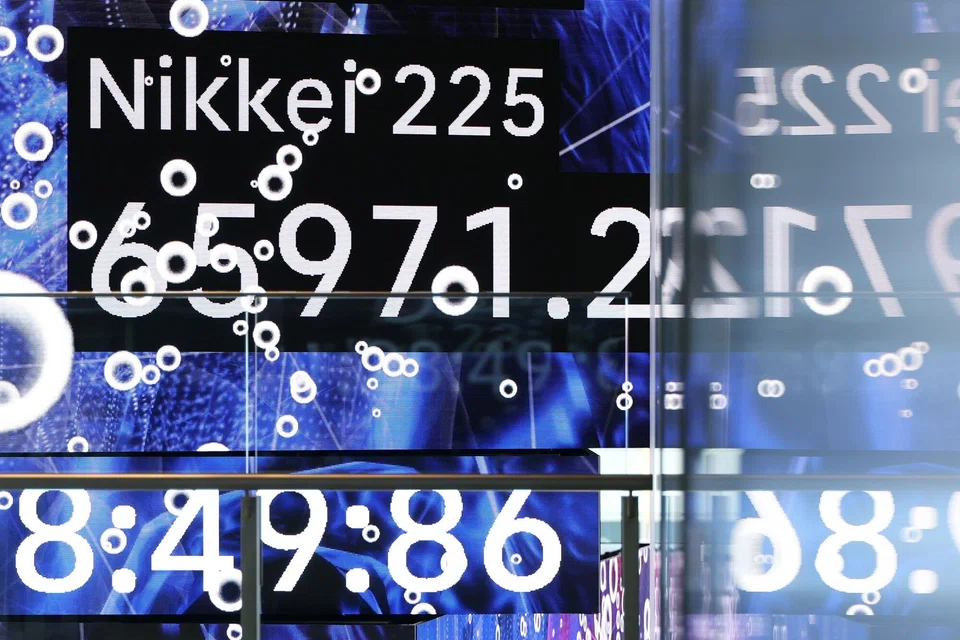
[SINGAPORE] Asia stock markets ended Thursday (Nov 26) slightly higher after a volatile overnight trade in the US and fresh tariff news.
Singapore’s benchmark Straits Times Index (STI) closed up 0.7 per cent at 4,962.64, regaining some ground after slipping below 5,000 on Nov 20 in the wake of a broader global tech sell-off.
Across the broader market, gainers outnumbered losers 335 to 191, after 895.9 million securities valued at S$1.4 billion changed hands.
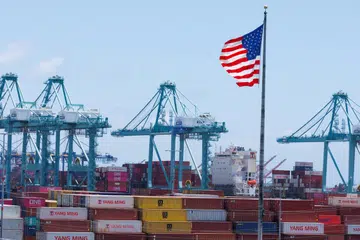
Asia stocks brushed off new tariffs announced by the US Trade Representative (USTR) on Wednesday.
Japan’s Nikkei 225 and South Korea’s Kospi closed up 0.9 per cent and 0.3 per cent, respectively, while Hong Kong’s Hang Seng Index ended 1.2 per cent higher. The FTSE Bursa Malaysia inched 0.6 per cent higher; Australia’s ASX was up 0.8 per cent.
Singapore and 13 other trading partners face potential new US tariffs after the USTR accused them of producing more goods than they would in market-driven conditions.

The tariff rates under Section 301 could be as high as 20 per cent and take effect in early 2027 following a comment and hearing process in January.
They will however, be net of previously announced Section 301 tariffs of 12.5 per cent linked to forced labour concerns, bringing the overall tariff burden lower than the announced 20 per cent.
In China’s case, the 20 per cent could double to 40 per cent if it fails to honour the trade truce agreed between Beijing and Washington last year.
Overnight on Wall Street, the S&P 500 dipped 0.25 per cent to 7,182.78 and the Nasdaq Index was off just 0.62 per cent at 23,585.80 after diving 5 per cent in early trading.
Recently listed Anthropic ended at US$82.79, below its US$83 initial public offering price, amid renewed fears of a collapse in the artificial intelligence boom.
“Anthropic is a good barometer of how investors feel about the sector,” said Swissquote senior analyst Ipek Ozkardeskaya on Wednesday. “The cost of growth is overshadowing the excitement about what its frontier model can do and how fast the company is growing.”
Nvidia shares also finished the session lower at US$149.30, following a tumultuous two weeks of its CEO Jensen Huang’s fall from grace and quick reinstatement soon after an intervention by Trump.
Enrico Chinello, next-generation research analyst at Julius Baer, said that Huang’s swift reinstatement shows the US treats Nvidia as “a strategic asset rather than just a listed company”, and that the US-China AI rivalry is increasingly a contest over access to compute.
He observed that China is now pushed to stimulate its domestic chip providers to close the gap with US counterparts as quickly as possible.
“These dynamics – the US’ push to protect American technology and China’s desire to build up domestic chip manufacturing capabilities – were particularly evident in the recent cancellation of a US$7 billion deal between Tencent and Oracle,” Chinello added.
Caught in the middle are South-east Asia data centre developers, as both the US and China seem to be pushing for domestic capacity.
Still, Chinello remains constructive on the cloud computing and AI space, despite a “rising geopolitical risk” to the portions of demand and capacity that rely on cross-border access to compute.
Decoding Asia newsletter: your guide to navigating Asia in a new global order. Sign up here to get Decoding Asia newsletter. Delivered to your inbox. Free.
Copyright SPH Media. All rights reserved.
TRENDING NOW
Nvidia halts chip shipments to 4 countries in South-east Asia, including Singapore: FT

Should Keppel swoop in to snare Mapletree Investments?

OCBC opens 100-tonne gold vaulting facility to meet growing institutional demand
‘Very disappointed’: Singapore disagrees with US tariff rationale, to seek lower levies

