

Asian stocks snap two-day fall as SK Hynix, Samsung rise over 2%
Renewed bets on the AI trade boost chip stocks, with focus on the possible reopening of the Strait of Hormuz
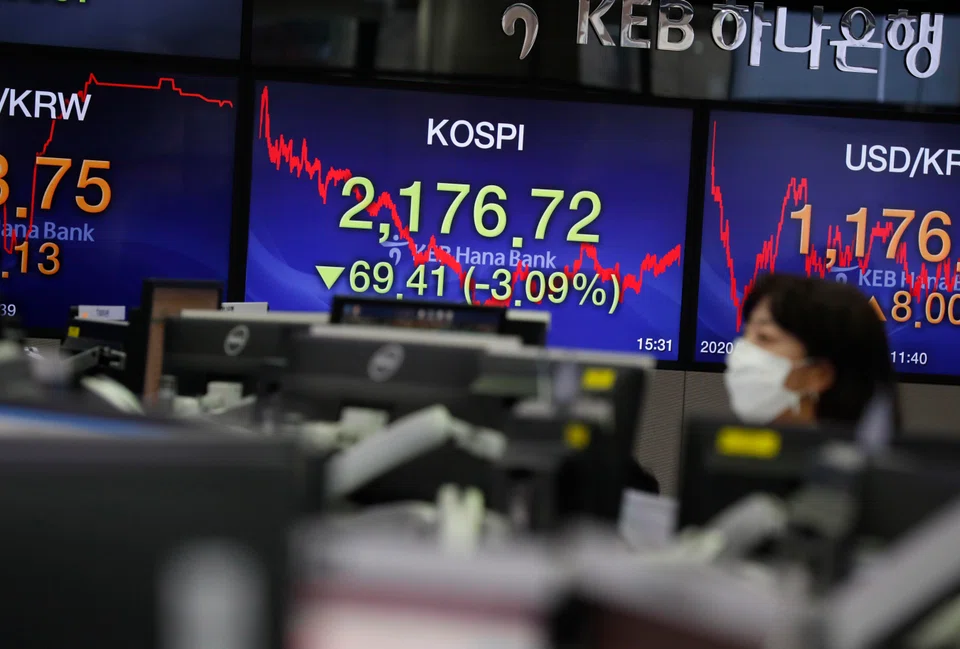
ASIAN shares climbed to their highest level since mid-July as investors renewed bets on the artificial intelligence trade, boosting chip stocks. Oil and the US dollar dropped on optimism over an interim US-Iran deal.
MSCI’s Asia Pacific equities gauge climbed over 2 per cent, its first gain in three sessions. South Korea’s Kospi Index and Japan’s Nikkei 225 Stock Average rallied about 3 per cent, while Australian shares hit an all-time high.
Chip stocks remained in focus, with Samsung Electronics and SK Hynix both gaining more than 2 per cent in Seoul. Nvidia advanced over 2 per cent in post-market trading after Elon Musk touted the company’s Vera Rubin chips.
Among the main moves across markets, S&P 500 futures rose 0.3 per cent as at 12 pm Tokyo time. Japan’s Topix rose 1.5 per cent, Australia’s S&P/ASX 200 rose 0.5 per cent, Hong Kong’s Hang Seng was little changed and the Shanghai Composite rose 0.9 per cent.
Futures contracts for the S&P 500 Index edged higher after the benchmark closed at a record high on Tuesday (Aug 4).
A cautious tone lingered as SpaceX shares fell 7.5 per cent in extended trading after the company projected higher-than-expected spending on its AI business. Advanced Micro Devices also slid 9 per cent after an underwhelming outlook.
Elsewhere, Brent extended its losses on optimism over a possible interim deal between Washington and Teheran.
The commodity fell 1.1 per cent to about US$78.50 a barrel as Axios reported the US, Iran and Oman are closing in on an agreement to reopen the Strait of Hormuz, and aiming for a Wednesday announcement.
Treasuries advanced along with gold as traders curbed expectations for interest rate hikes.
Strong earnings from technology megacaps have helped restore confidence after a month of volatility in AI stocks that erased gains at several hedge funds.
Investors are also watching whether progress towards reopening the key shipping route extends the recent decline in oil prices, easing inflation pressures and tempering expectations for US Federal Reserve rate hikes.
“Tech results over the past week clearly show that AI investment will continue to rise sharply,” said Vey-Sern Ling, managing director at Union Bancaire Privée.
“This is reassuring for investors, especially with valuations now looking much more reasonable after the recent correction.”
Technology stocks are coming back because the three pressures behind the recent sell-off – AI spending concerns, higher bond yields and the increase in oil prices – are all easing at the same time.
Strong earnings are reassuring investors that AI demand remains intact, while lower oil and bond yields are taking pressure off valuations.
Earlier, a US semiconductor gauge posted its strongest four-day advance since 2020.
Still, “it’s not an all-clear, especially as returns on AI capex still need to be proven”, said Charu Chanana, chief investment strategist at Saxo Markets in Singapore.
“But after leverage and crowded positioning were flushed out, even modest relief can produce an outsized rebound.”
In other corners of the market, the yen’s gains, fuelled by the joint US-Japan intervention, stalled.
Treasuries rallied in the New York session as signs of progress towards a diplomatic resolution of the Iran war sent oil prices lower, curbing expectations for more than one Fed interest rate hike in the coming year.
The yield on the benchmark 10-year Treasury edged down to 4.6 per cent on Wednesday.
The US dollar, the haven of choice during the Middle East conflict, dropped. Gold rose 1.2 per cent to about US$4,125 an ounce as the decline in oil prices reduced expectations that rates will stay higher for longer.
Elsewhere, Asia-based hedge funds logged extensive losses in July, as the tech sell-off led to what Goldman Sachs prime brokers said was the worst month for regional stock pickers on record.
Back to geopolitical news, a short-term deal may help normalise commercial shipping in the strait – a crucial conduit for global energy supplies – and prevent the resumption of fighting in the Middle East.
But even if such an agreement is reached, it might still fail to end the war conclusively or resolve Trump’s concerns about Iran’s nuclear programme.
Qatar said a proposal had been drafted, while US and Iranian officials expressed optimism about an agreement to reopen the crucial waterway, impacting oil prices.
“With so much optimism now priced into the oil market – and the risk of a repeat of last week’s false dawn still very real – the balance of risks appears to be becoming more skewed back to the upside,” wrote Tony Sycamore, an analyst at IG Markets in Sydney. BLOOMBERG
Decoding Asia newsletter: your guide to navigating Asia in a new global order. Sign up here to get Decoding Asia newsletter. Delivered to your inbox. Free.
Share with us your feedback on BT's products and services
TRENDING NOW

DBS, OCBC, UOB rout lops billions off STI as inflation, rate concerns spook investors

Grab CEO’s wife Chloe Tong on life with Anthony Tan and finding her purpose

OCBC sheds S$8 billion in value as shares close nearly 6% down; analysts cautious on banks

Deal between tycoon friends sparks scrutiny of Philippine power sector

