

Trump discusses Iran with Qatari emir as hopes for Hormuz deal grows
A 60-day agreement on the Strait of Hormuz could come as soon as Wednesday, an Axios report says
[WASHINGTON] The prospect of an interim deal focused on the Strait of Hormuz gained traction after Qatar said a proposal had been drafted and both American and Iranian officials sounded hopeful about reopening the crucial waterway.
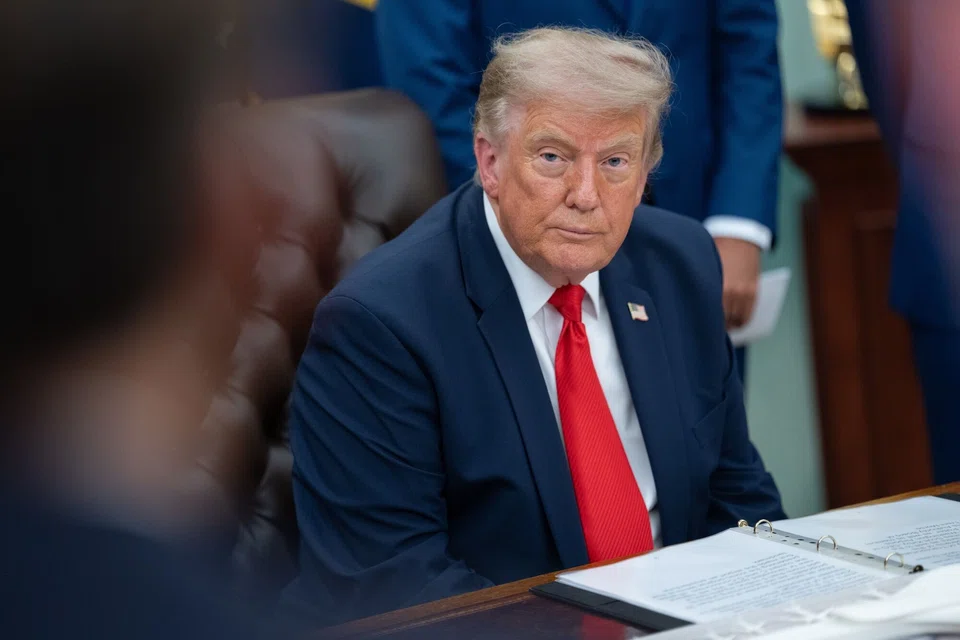
US President Donald Trump discussed efforts to de-escalate US-Iran tensions with Qatar’s emir Sheikh Tamim Bin Hamad Al-Thani in a call on Tuesday (Aug 4), according to the Gulf state’s government.
A White House official confirmed the call, but did not offer additional details.
Axios later reported that the US, Iran and Oman are preparing to announce as soon as Wednesday a 60-day agreement on shipping through the Strait of Hormuz.
Under the proposal, inbound vessels would use a northern lane near Iran, while outbound traffic would travel through Omani waters in coordination with Iran, citing two regional sources and a US official.
No tolls or fees would be charged during the 60-day agreement, Axios said. Iran and Oman would also work to clear mines from a middle shipping lane for two-way traffic.
Brent crude traded at below US$79 a barrel as prospects for an agreement centered on reopening the strait gained momentum.
A short-term deal could help normalise commercial shipping in the strait – a crucial conduit for global energy supplies – and prevent the resumption of fighting in the Middle East.
Yet even if such an agreement is reached, it might still fail to end the war or resolve Trump’s concerns about Iran’s nuclear programme.
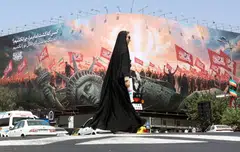
The previous US-Iran ceasefire lasted less than a month before collapsing over disagreements about control of Hormuz, raising the risk that military strikes and Iranian retaliation could resume if another agreement unravels.
In a possible concession that could form part of an agreement, Iran is considering allowing European nations to remove mines from the strait, according to diplomats familiar with the matter, who spoke on condition of anonymity to discuss sensitive information.
That is contrary to Iran’s public stance, but in private meetings in recent weeks Teheran has softened its position. Iran’s foreign ministry did not immediately respond to a request for comment.
Both US Secretary of State Marco Rubio and Treasury Secretary Scott Bessent separately gave optimistic assessments of the Hormuz talks.
“I think the immediate deal, the one that you see a lot of focus on, is the straits,” Rubio told reporters, of ongoing efforts to get more ships moving through the key waterway.
Bessent also suggested an accord on the chokepoint could come soon.
“We’re in talks with the Iranians and I think there is a chance we may have a deal today or tomorrow to open the strait,” Bessent told CNBC.
Asked whether there would be a toll on maritime traffic, he added: “I think it would be freedom of movement.”
Bessent’s comments came after the foreign ministry of Qatar, one of the main mediators between Washington and Teheran, said a proposed de-escalation resolution was “being circulated between the parties”.
Iran’s state-run IRIB News cited the country’s foreign ministry spokesman Esmail Baghaei as saying the talks between Iran and Oman had been positive.
He said ongoing discussions were focused on “defining safe outbound and inbound routes for vessels”.
But both Qatar and US officials have cautioned there is no agreement yet. Throughout the conflict, US officials have repeatedly said a deal to open Hormuz was close, with nothing materialising.
A Qatari spokesman said he could not provide a timeline for a pact and that the focus was on finding a short-term resolution to avoid a further confrontation.
It is unclear whether Qatar was referring to negotiations between Iran and Oman to get more ships sailing through the Strait of Hormuz.
Tensions have heightened in recent days, with Trump saying he was giving Iran a final chance to reach an agreement. Over the weekend, he held off on attacks that he said would have been the largest since World War II.
“I want to give them every last chance before decapitation,” Trump told reporters on Monday.
A diplomatic breakthrough appears to hinge on the talks between Oman and Iran, though Teheran continues to insist it has the right to control maritime traffic and stop vessels that pass through the strait without its permission.
The impasse underscores Trump’s difficulty in ending the war he launched in late February, which has driven up energy prices before November’s midterm elections.
The Islamic Republic has vowed to retaliate fiercely against any major US-Israeli strikes.
Throughout the conflict, it has caused significant damage to Gulf Arab states such as Kuwait, Bahrain, Saudi Arabia and the United Arab Emirates with one-way attack drones and ballistic missiles.
The Trump administration has also faced questions about US weapons stockpiles after Reuters reported the Army had used up most of its long-range precision missiles.
Trump dismissed those concerns on Tuesday, saying the US had “far more munitions than anyone in the world” and that defence companies were stepping up production.
Trump has repeatedly backed away from threats to launch major attacks on Iran, though any renewed military escalation would likely send oil prices higher.
A senior Iranian official urged the US to “take the first step and change its behaviour” by returning to the terms of an interim peace agreement reached in June. BLOOMBERG
Decoding Asia newsletter: your guide to navigating Asia in a new global order. Sign up here to get Decoding Asia newsletter. Delivered to your inbox. Free.
Share with us your feedback on BT's products and services
TRENDING NOW

LTA proposes combining car COE categories, adding rebate-surcharge system

StarHub to acquire MyRepublic’s mobile business amid ongoing telco consolidation

DBS, OCBC, UOB rout lops billions off STI as inflation, rate concerns spook investors

Grab CEO’s wife Chloe Tong on life with Anthony Tan and finding her purpose

