

Hengli’s ex-Singapore unit dismisses staff after US sanctions, at risk of being wound down: sources
Singapore is an important base for many China-based firms seeking to source crude and metals
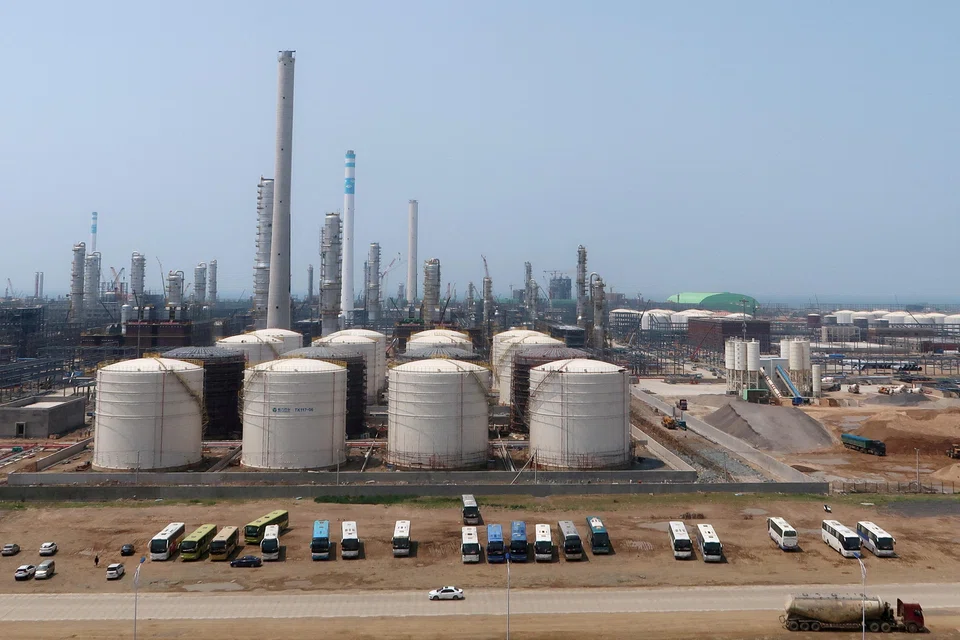
[SINGAPORE] Hengli Petrochemical International dismissed some Singapore-based staff, according to people with knowledge of the matter, weeks after its then-parent was slapped with US sanctions.
Some employees were let go, while others were offered roles in other entities, the people said, asking not to be identified as the information is not public.
The Singapore trading entity – which was used to channel crude to one of China’s largest private refiners – is now at risk of being wound down, they added.
The US has stepped up efforts to clamp down on entities linked to Teheran’s oil trade, as Washington presses on with its war against Iran.
While official data indicates China has not taken oil from the Islamic Republic for years, many cargoes have arrived indirectly – providing an essential and usually cheap source of supply, especially for privately owned processors such as Hengli.
The US push has jolted the commodity trading industry in Singapore, which is an important base for many China-based firms seeking to source crude and metals. The city-state sits on the trade routes that run from the energy-rich Middle East to larger Asian markets, including China.
A slew of Chinese private refiners had set up shop in Singapore in recent years to capitalise on the well-established commodity-trading environment. Placing traders in the country had meant easier access to potential counterparties – ranging from the biggest oil supermajors to nimble trading houses – as well as to other vital services such as banking and shipping.
Until end-April, Hengli Petrochemical International had been wholly owned by Hengli Petrochemical (Dalian) Refinery, when its ownership changed following the US curbs.
Hengli Petrochemical (Dalian) Refinery was blacklisted by the US Treasury Department’s Office of Foreign Assets Control (OFAC) over alleged links to Iran – a claim it denied.


After the US move, state-linked Dalian Changxing International Trade became the majority owner of the Singapore unit.
An e-mail seeking comment sent to Hengli Petrochemical, the Shanghai-listed parent of the sanctioned Dalian refinery, was not answered. Representatives of Hengli Petrochemical International were not contactable via messaging.
In recent years, OFAC has sanctioned a handful of Chinese companies, including those involved in port operations, shipping and financing, but they have typically been far smaller than Hengli.
In a separate move in the week of May 11, the US sanctioned a dozen entities and individuals over the sale of Iranian oil to China, stepping up pressure just days before President Donald Trump meets his Chinese counterpart Xi Jinping.
The pair will meet on Thursday morning in Beijing, according to the White House.
Hengli Petrochemical (Dalian) Refinery is China’s second-largest private refiner. It operates a modern oil-processing and chemical complex in Liaoning province. The Singapore unit was responsible for the trading and sourcing of feedstock for Hengli’s China-based processing plants. BLOOMBERG
Decoding Asia newsletter: your guide to navigating Asia in a new global order. Sign up here to get Decoding Asia newsletter. Delivered to your inbox. Free.
Share with us your feedback on BT's products and services
TRENDING NOW

What role can Japan play in Asean’s future?

IOI Properties and CapitaLand Investment closer to acquiring One Raffles Place in joint bid
AI bubble may burst soon amid financing concentration, rising rates: Ray Dalio

OCBC sheds S$8 billion in value as shares close nearly 6% down; analysts cautious on banks

