

Keppel to link Indonesia solar farm with Jurong Island power plant for clean power import
The plan is subject to ‘detailed development and regulatory approvals’

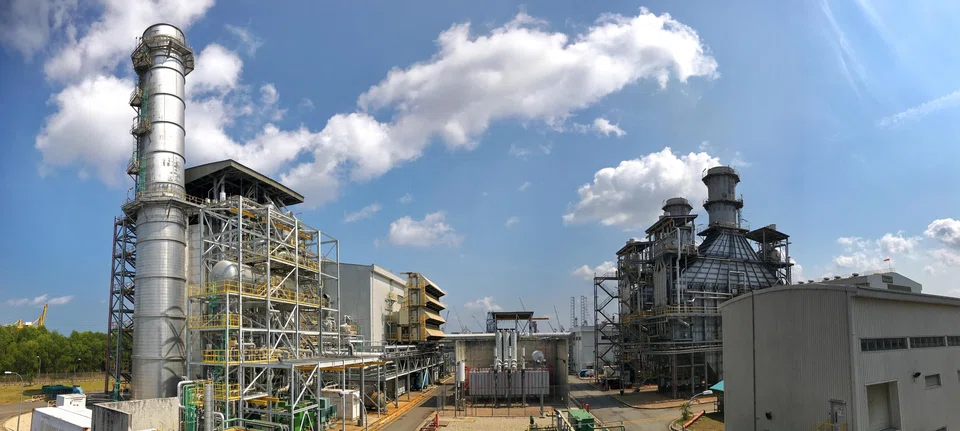
[SINGAPORE] The Keppel Merlimau Cogen (KMC) power plant on Jurong Island will be connected to a solar power facility on Indonesia via a subsea cable, as part of a clean power import project by asset manager Keppel.
This will integrate Keppel’s “future renewable imports with its existing Jurong Island power infrastructure”, the company said on Friday (Sep 18).
Keppel previously received a conditional licence from Singapore’s Energy Market Authority (EMA) to import 300 megawatts of low-carbon electricity from Indonesia.
The company is planning for KMC to be the landing point for the imported power, which will come from a 2 gigawatt (GW) solar facility in the Riau Islands, integrated with utility-scale battery storage.
“KMC is located in close proximity to the future Jurong Island Data Centre Park, creating potential to integrate existing power infrastructure with future digital infrastructure,” Keppel said.
The plan for KMC as a landing point is subject to “detailed development and regulatory approvals”, the company added in a fact sheet provided during a media tour of another Jurong Island facility, the recently opened Keppel Sakra Cogen power plant.
Singapore aims to import about 6 GW of low-carbon electricity by 2035, as part of its drive for decarbonisation and energy security.
Keppel is one of six players granted a conditional licence by EMA to collectively import 3 GW of clean power from Indonesia.
However, these projects may face regulatory uncertainty, as Indonesia requires clean energy exporters to renew permits every five years. The frequent renewal timeframe has been flagged as a concern for potential investors and offtakers.
Separately, EMA has granted another seven players conditional approval – the step before obtaining a conditional licence – to bring in 6.25 GW of clean power. This includes Keppel’s proposed 1 GW power import from Cambodia.
Decoding Asia newsletter: your guide to navigating Asia in a new global order. Sign up here to get Decoding Asia newsletter. Delivered to your inbox. Free.
Copyright SPH Media. All rights reserved.
TRENDING NOW

CPIB hauls Multi-Chem CEO, COO in for questioning; stock hits ‘circuit breaker’

Fed hike throws Singapore banks a margin lifeline; UOB likely to benefit more

He built the Vingroup empire. Now South-east Asia’s richest man is handing some key roles to his sons

From Haidilao to Oriental Kopi: How some of Asia’s favourite F&B players are faring in 2026

