The next chapter of fintech as AI rewrites the game
Decision-makers are set for three days of collaborating on ideas and shaping policies for the sector

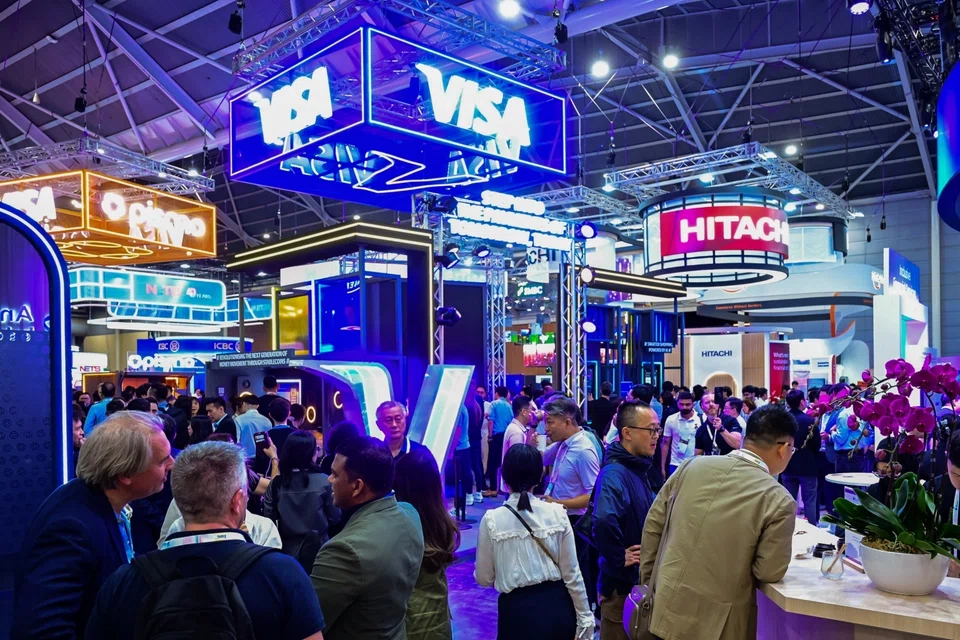
[SINGAPORE] Just as the fast car fans look forward to the regular Formula 1 night race in Singapore, the fintech community has its annual highlight with the Singapore FinTech Festival (SFF), where decision-makers in policy, finance and technology gather to collaborate on innovative ideas and shape policies for the sector.
With a record-breaking 70,000 visitors from 142 countries at last year’s event, the organisers – the Monetary Authority of Singapore (MAS) and the Global Finance & Technology Network (GFTN) – are looking forward to similar numbers for the 11th edition of the festival this year.
Industry players, policymakers, senior leaders, tech providers and startups will spend three days from Nov 18 to 20 discussing the latest happenings on the fintech scene.
The theme for this year’s event focuses on global finance and five areas that have come to the forefront: technology, geoeconomics, capital, talent and policy.
In the area of technology, the latest developments centre on agentic artificial intelligence, quantum and tokenisation.
In the geoeconomics space, there is a move from a single global marketplace to a world organised around blocs. This inevitably affects trade corridors, supply chains, capital flows, data infrastructure and payment rails.

As for capital, technology is creating new kinds of assets and changing how markets work. SFF 2026 will have sessions looking at the challenges of raising venture funding.
No discussion is possible without focusing on talent and whether the workforce is able to change and adapt in a fast-moving environment. As AI redefines entry-level work, workforce capability is increasingly becoming a challenge for employers.
Any debate on fintech also has to take into account policy changes. However, with shifts in geoeconomics and technology, the finance rulebook is being rewritten.


These themes will form the backdrop for the discussions during the festival. Central bankers including Deutsche Bundesbank’s Joachim Nagel will discuss how to combine innovation with financial stability, as well as how to ensure that digital money and financial systems stay safe.
Peng Yang, the CEO of Ant International, will be among those discussing the next stage of development of the financial system. What are the new rules of money, involving stablecoins and tokenisation? JPMorgan’s global co-head for payments Umar Farooq will join others in giving his views.
As always, the burning question is whether fintech disruptors can scale and pass the profit test. Speakers will include GCash’s Martha Sazon.
Chairman of the GFTN Ravi Menon and Nobel laureate in economic sciences Michael Spence will look at employment, economic and productivity opportunities as AI advances rapidly.
Deputy Prime Minister and MAS chairman Gan Kim Yong and MAS managing director Chia Der Jiun will discuss how Singapore acts as a convening hub for financial policy, innovation and cross-border growth.
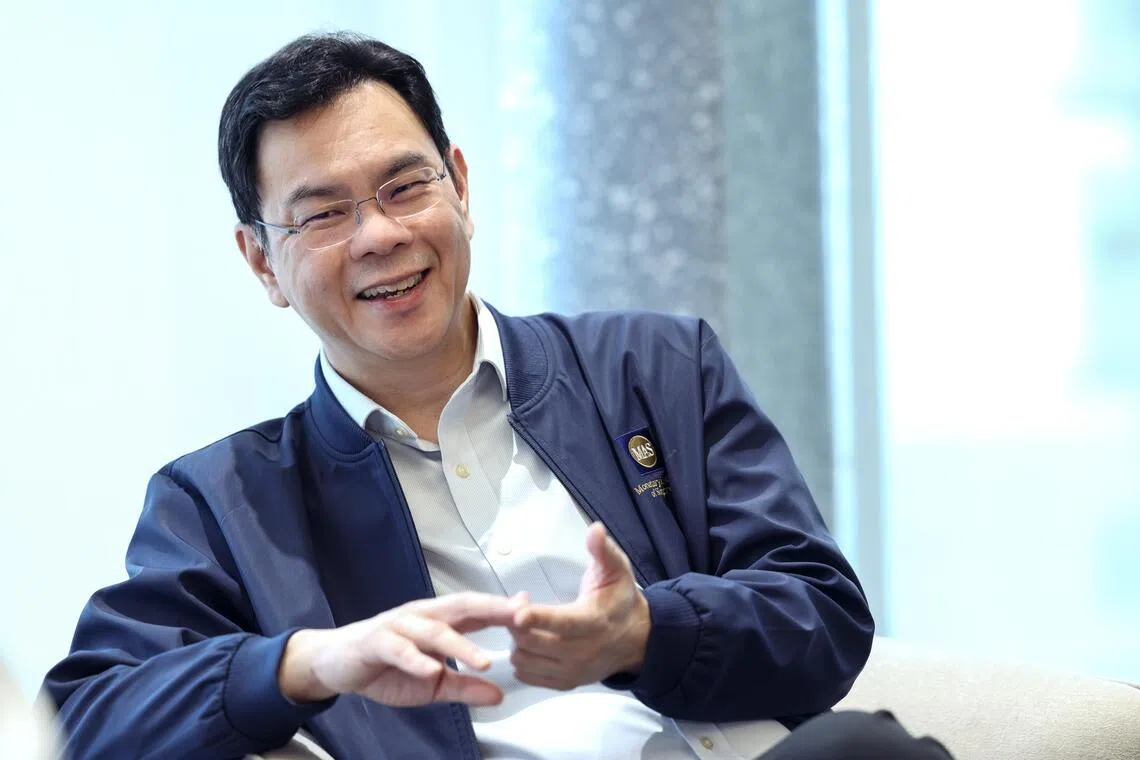
Ahead of the event, Chia met The Business Times in the MAS office in the heart of the Central Business District, to talk about the aims of SFF 2026 and the direction in which the fintech sector is heading.
Tokenisation and payments
Given the potential with tokenisation, there has been progress on various fronts. Financial institutions are also keen to advance this area, Chia said.
To aid further development of the ecosystem, MAS is working on international collaboration. Domestically, in Singapore, the regulator is also looking to encourage liquidity.
There are three layers to tokenisation.
Digital assets, or the tokenisation of financial assets, form the top layer. Financial assets such as bonds, funds and money market funds have been tokenised, and there have been various use cases.
Digital settlement assets such as stablecoins form the second layer. Chia noted that there has been significant progress, with use cases in the areas of retail payments as well as wholesale payments.
Increasingly, large global payments companies are allowing customers to settle in stablecoins. Digital deposit tokens are also being used by banks and being offered to corporate customers to manage their treasury operations.
The third layer, the foundation, is institutional-grade infrastructure. With developments on this front, there are now a number of network operators that offer institutional-grade, highly reliable networks, with programmable features that allow regulatory compliance.
In September, MAS issued a consultation paper on how stablecoin issuers may qualify to be MAS-regulated, and the safeguards they must meet to support value stability and user protection.
For MAS, its current priorities include interoperability, to ensure that tokens representing financial assets can move across different networks and be transacted across different networks.
“Our aim is to continue to encourage flows, liquidity, transactions as well as tokenisation of more assets, but of course, maintaining good standards,” said Chia.
AI and the move towards more practical applications
Compared with SFF 2025, which saw many demonstrations of use cases, Chia expects this year’s festival to showcase more practical applications.
“Certainly, AI will continue to be a big theme for SFF 2026. I’m expecting a further broadening and deepening of AI applications,” he said, given the various trends in the AI space.
“Instead of quite specific use cases or potentially narrow use cases, we are likely to see end-to-end deployment of AI for very large processes.”
He added that financial institutions are likely to showcase how they are using AI more pervasively in their organisation and demonstrate a high number of use cases.
This could be in customer engagement or in terms of assisting and augmenting financial sector professionals in their work. For example, in wealth management, AI is already being deployed in document preparation and portfolio analysis, which allows advisers to spend more time with their clients or reach out to more clients in any given time.
With the increased amounts of investment going into AI, Chia expects that users and companies will demand a clearer explanation of the benefits, efficiency gains and customer outcomes arising from such investments.
AI as a leveller
Chia is very mindful of ensuring that good AI adoption does not remain the preserve of the largest financial institutions.
“We don’t want a winner-takes-all situation, but something that can benefit all financial institutions, and therefore allowing more customers to benefit across the board,” he said.
“We are keen to promote the diffusion of AI, and one way we do this is through our Pathfin platform. Essentially, the idea is to put good and validated solutions on the platform so that participating financial institutions have a lower cost of discovery for these solutions, and they can adopt it more easily.”
The platform involves participating financial institutions sharing their experience implementing AI solutions while also gaining insights from the collective experiences of their peers.
Tapping a centralised library of proven AI solutions and implementation best practices, financial institutions are able to reduce the time and effort needed to search, select and effectively implement AI solutions.
Agentic finance and agentic commerce
This year, agentic finance and agentic commerce are the buzzwords among industry players.
“You will see further development in this area,” said Chia. “I expect the big tech companies to be showcasing their AI agent, consumer agent products, which can assist in every aspect of your life.”
He expects the involvement of financial institutions to deepen once human customers start allowing agents to make payment on their behalf.
“We are still at the fairly early stages of agentic capability. On the one hand, there are enthusiastic, fast adopters that are even giving account credentials to their agents to allow them to transact on their behalf. There are also informed adopters who are taking a more cautious stance.”
How financial institutions navigate a safe middle path, in terms of interacting with agents will be a key challenge for the industry, Chia added.
He said that this is a focus area for MAS, to ensure that such transactions involving agents are conducted safely. This includes tightly scoping the mandate, to ensure that the agents behave within the parameters and that outcomes are not misaligned.
Safety is of paramount importance, Chia noted, especially if agentic commerce develops further and “agents interact with financial services and handle funds and accounts”.
“If there’s a dispute, where the agent purchased the wrong item or went over budget; these are major questions to be answered before agentic commerce can be onboarded in a significant way into financial services.”
Industry standards for AI
Addressing the risks as AI becomes more prevalent across the fintech sector is an area of concern for MAS.
But the answer is not necessarily more regulation. “In the AI space, we don’t rush into very prescriptive regulation because it’s a fast-moving space,” Chia explained.
“It’s a combination of regulation which sets and highlights the main risks and the responsibilities and the need for controls with promoting good practices that are developed in collaboration with the industry.”
Complementing regulations will be industry standards. As a regulator, MAS focuses on collaborating with industry to develop standards and share best practices. For example, it is working with financial institutions and fintechs to develop a framework that will enable AI agents in financial services to carry out financial tasks safely, securely and reliably.
At the same time, MAS is mindful of over-regulation and stifling innovation. “We want to find the right touch,” said Chia. “MAS is very supportive and facilitative of innovation.”
MAS has supported the setting up of AI competency centres by financial institutions, to scale AI solutions across front, middle and back-office functions. Some 30 such AI centres of excellence have been set up so far.
Wealth management
One of the fastest-growing areas in the financial sector is the wealth segment. Chia is quietly confident about its prospects. “With the wealth industry, the feedback is that there is good growth and strong interest. The fundamental underpinnings for Singapore’s value proposition and for its competitive advantage remain unchanged.”
He noted that Singapore is regarded as a trusted centre, with its system of laws, predictability, offering a pro-business environment and well-regulated financial sector.
“We see the financial institutions investing in capabilities and wealth, so as to continue offering good value and good services to their customers,” he added.
The financial institutions have been investing in AI to sharpen their value proposition to customers, for example, and upgrading the skills of the workforce.
A recent bugbear has been the time it takes for wealthy customers to open accounts. Chia noted that “our standards remain the same, but some practices were burdensome and bureaucratic, and they can be streamlined further”.
Already, now, nearly half of the new private bank account openings managed to meet the industry aim of being completed within a month. Chia said that further improvements are forthcoming as the financial institutions working with MAS are seeing if technology can pare practices further without increasing risk.
Regional collaboration
MAS has signed 39 fintech cooperation agreements with its international counterparts to foster closer cooperation on fintech and to promote innovation in financial services in their respective markets.
Chia said: “We try to match fintechs and financial institutions from both countries, to find opportunities to work together. A fintech from one country may want to expand in the other. There is a process for referral, to assess them and issue a licence if appropriate.”
And there have been concrete developments. For example, a fintech in Singapore partnered an insurance company in India where an AI solution led to efficiency and productivity gains.
In the payments space, collaboration resulted in a significant initiative, Project Nexus, on the payments front. Lower-cost, cross-border retail payments within 60 seconds were able to take place after the domestic payment systems of Malaysia, Thailand and Singapore were linked.
Project Nexus is set to expand, with the next step being to establish a connection with India.
SFF has proven to be a fruitful ground for discussion, with Chia noting that it “provides a platform for dialogue between the regulators to share views on regulations in new areas and explore opportunities for collaboration”.
Decoding Asia newsletter: your guide to navigating Asia in a new global order. Sign up here to get Decoding Asia newsletter. Delivered to your inbox. Free.
Copyright SPH Media. All rights reserved.