

Phillip’s Web3 arm Symphony bets on Kazakhstan for Central Asia push
The digital assets firm has received regulatory approval to offer tokenised investment products
 Add BT as a preferred source
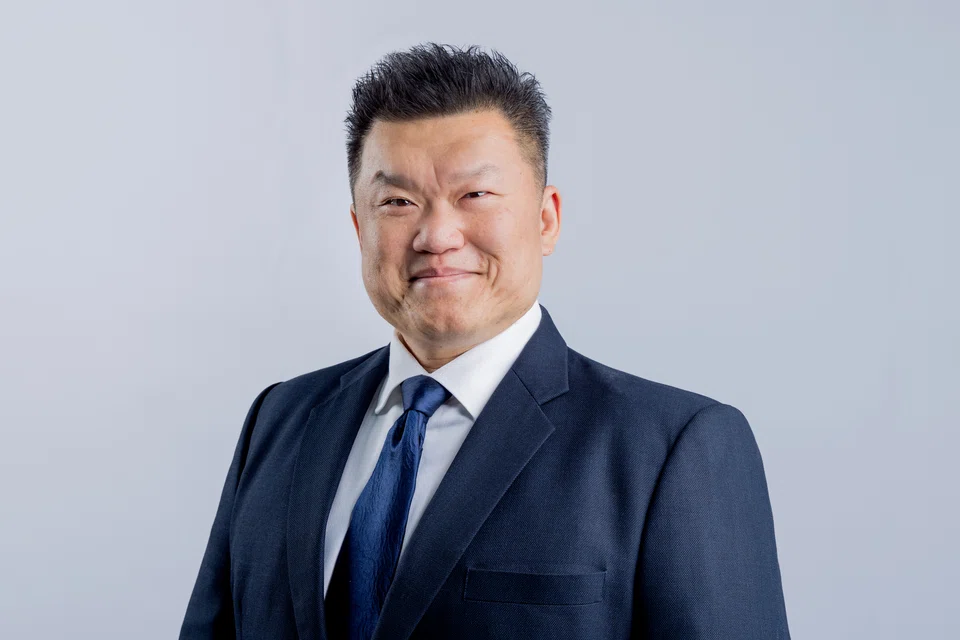
[SINGAPORE] Before he stepped into Astana, Kazakhstan, for the first time two years ago, Symphony Digital Assets CEO Seh Huan Kiat had few expectations about the opportunities in the Central Asian country’s digital economy.
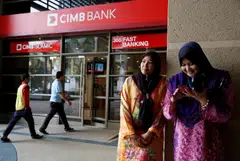
“Once I entered the city, my perception completely changed,” he told The Business Times in an exclusive interview. “I brought some Kazakh currency but never used cash. I paid for everything with my phone.”
While financial centres such as Singapore, Dubai and Hong Kong are known as digital asset hubs, Seh was struck by how seriously regulators and financial firms in the country were discussing tokenisation and digital assets.
Seh is now placing a bet on the technology in Central Asia through Symphony, the Web3 arm of Singapore brokerage and wealth management group PhillipCapital.
Symphony’s Kazakhstan unit has now received a licence approval from the Astana Financial Services Authority (AFSA), to act as an intermediary dealing digital assets and arranging deals in tokenised securities.
The regulator oversees the Astana International Financial Centre (AIFC), a financial hub in Kazakhstan’s capital that operates under a legal framework based on English common law.
The company is now awaiting final permissions to begin serving clients, an AIFC spokesperson told BT.
Symphony chose Kazakhstan for its first overseas operations, building on PhillipCapital’s existing business relationships in the country and elsewhere in Central Asia.
Seh believes there is a clearer use case outside Singapore, where investors may face more friction moving money across borders or accessing foreign investment products.

“Singapore is too well served already,” he said. “Stablecoin and tokenisation only really become meaningful when you are global.”
AIFC told BT that it sees potential for closer Singapore-Kazakhstan links in fintech, digital assets, tokenisation, capital markets and financial infrastructure.
“International firms can access new markets and opportunities in Central Asia, while the local market benefits from international expertise, investment and the development of new financial products and services,” added the spokesperson.
The AFSA, AIFC Authority and the Monetary Authority of Singapore have been working together since 2018, when a tripartite cooperation agreement to boost fintech ties between Singapore and Kazakhstan was signed.
A natural market
Symphony was launched in 2024 to house PhillipCapital’s digital asset activities separately from its traditional financial business.
The firm initially focused on cryptocurrencies, but later began looking at how the same technology could be used for conventional investments.
Seh noted that one such asset class is money-market funds, which typically hold short-term debt instruments and give investors a return on cash.
Tokenising a fund could allow investors holding stablecoins to gain exposure to traditional investments without first moving their money back through the banking system themselves.
Central Asia could offer a natural market for such products, Seh believes.
“We think there is genuine demand because people (in the region) already hold significant amounts of USDT due to remittance flows,” he said. USDT, issued by Tether, is a digital token designed to maintain a stable value of US$1.
“If they can deploy that USDT into regulated money-market funds, they can generate yield instead of simply holding stablecoins idle,” he added.
Such a product could be particularly useful to holders as many stablecoins, including USDT, do not pay holders the yield generated by the reserves backing them.
Phillip Securities, with Symphony as its technology partner, launched a tokenised money-market fund in 2025. The underlying fund has more than US$800 million in assets under management.
The model also incorporates market-making on a licensed digital asset exchange, giving investors access to liquidity through the secondary market. This means investors do not have to go through the fund’s traditional redemption process, which can take several days.
Seh noted that Symphony is also exploring other tokenised real-world assets – either through its Kazakhstan entity or PhillipCapital distribution channels. The commodity-rich Kazakhstan opens up these possibilities, he added.
AIFC said potential tokenised assets could include real estate, financial instruments, metals, minerals and other commodities.
But Seh believes that Symphony should not rush to put more assets on-chain unless there is a clear use-case for such a product.
“The question is that if you tokenise something, why are you tokenising it?” he said.
With conventional equities, for instance, Seh sees less benefit because settlement is already relatively fast in major markets.
In the long term, he believes the firm can offer digital-asset investors access to PhillipCapital’s suite of investment products – across multiple global markets.
“The distribution, to me, is the most important,” he said.
For now, the priority is getting Kazakhstan running.
“Our first job is to make sure we stabilise our business operations in Kazakhstan and serve our customers well there,” Seh said.
Decoding Asia newsletter: your guide to navigating Asia in a new global order. Sign up here to get Decoding Asia newsletter. Delivered to your inbox. Free.
Copyright SPH Media. All rights reserved.
TRENDING NOW

Singdollar hits 10-month high against ringgit as investors take refuge in traditional safe haven

Apple joins foldable phone race with US$1,999 passport-shaped iPhone Duo

DBS ‘categorically rejects’ S$1.3 billion claim by 1MDB-linked entities under liquidation

Commodity-finance risks back in focus amid Radiant World scrutiny

