HKSE wants to scrap lunch break; SGX’s experience shows traders had little appetite for it
The Republic’s bourse did away with the one-hour pause in 2011 to improve market accessibility, but reinstated it six years later due to its unpopularity

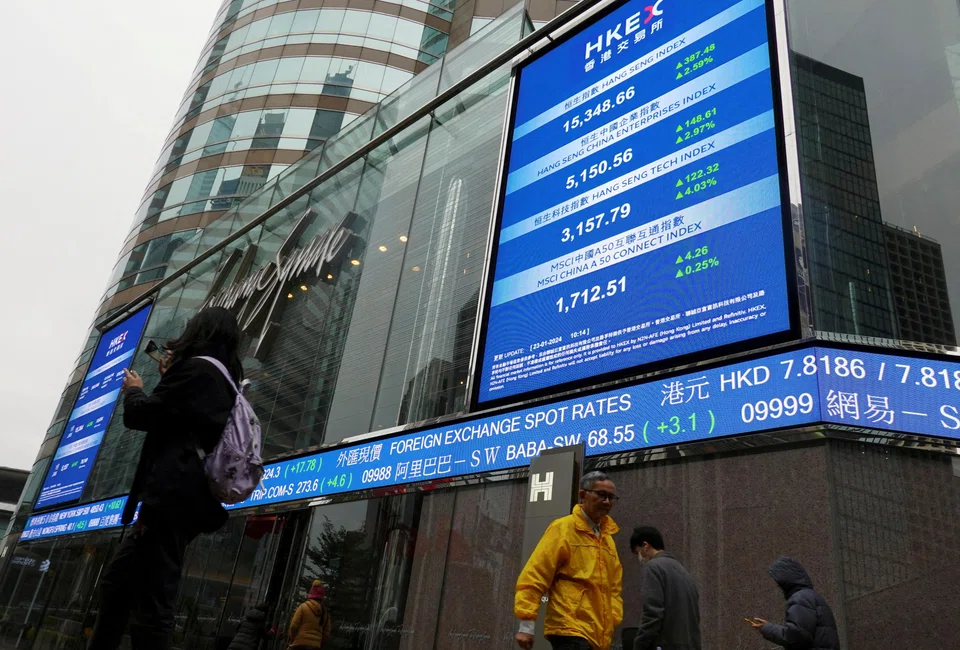
[SINGAPORE] Hong Kong’s stock exchange is proposing to scrap its lunch trading break, a move that the Singapore Exchange (SGX) has tried before.
The Republic’s bourse did away with the one-hour pause in 2011 to improve market accessibility, but reinstated it six years later after feedback from market participants.
SGX’s trading day currently runs from 9 am to 5 pm, with a lunch break from 12 pm to 1 pm.
Over at the Hong Kong Exchanges and Clearing (HKEX), moves are afoot to bring forward its market open by half an hour to 9 am, the same time as SGX’s opening bell, and also eliminate its one-hour lunch break.
HKEX’s trading day will end at 4 pm, still earlier than SGX’s 5 pm.
Hong Kong’s proposed changes may be part of a global trend to extend trading hours.
London is launching LSE 24, a night-time trading site, in the first half of 2027 for some of its exchange-traded products.
Its trading hours, from 5 pm to 7.59 am, complements the London Stock Exchange’s trading hours of 8 am to 4.30 pm, giving investors more flexibility.
Over at Nasdaq, which currently trades 9.30 am to 4 pm on weekdays, trading will start from 9 pm on Sunday and end at 8 pm on Friday night from Dec 6 this year. From Mondays to Thursdays, there will be a one-hour break from 8 pm to 9 pm for system processing.
For Singapore’s part, longer trading hours alone are unlikely to transform an exchange’s appeal, said market participants. They believe investors tend to place greater weight on investment opportunities, ease of trading and market liquidity.
“Singapore’s own experience tells us that an extra hour on its own doesn’t necessarily create new capital or stronger conviction among investors, but that doesn’t mean it’s the wrong direction,” said Zavier Wong, market analyst at online trading platform eToro.
Dan Chang, investment specialist at PhillipCapital, who worked through SGX’s six-year experiment, said trading during the additional lunchtime session was generally thin and lacked liquidity.
“It even overspilled to the ‘normal trading hours’ as the longer hours deflated a bit of the enthusiasm and vibrancy,” he told The Business Times.
Professor Lawrence Loh, director of the Centre for Governance and Sustainability at NUS Business School, echoed the view, describing trading hours as a “hygiene factor” rather than a key differentiator for a financial market.
An SGX spokesperson told BT that any extension of trading hours would require substantial changes across the market ecosystem and must deliver clear benefits for market participants.
The spokesperson said: “The recommendations of the Equities Market Review Group contain measures to improve the market structure, including enhancing the market-making ecosystem, reducing board lot sizes and modernising the post-trade custody model.”
Longer day doesn’t mean more trading
Many cautioned that longer trading hours do not automatically translate into higher trading volumes, stronger liquidity or more listings.
Jeyson Ng, CEO of Moomoo Singapore, said the “overall trading experience depends on more than market hours alone”.
He noted that the combination of round-the-clock access and multi-market reach offered by online trading platforms could be more effective in addressing time-zone barriers than extending the hours of any single market.
Longer trading hours also come with operational challenges, including adjustments to trade processing and settlement systems, noted Lee Yong Heng, deputy head of global markets at Phillip Securities.
Prof Loh added that the impact on market participants’ well-being should be considered, as extended hours could increase costs and strain smaller firms.
For long-term investors, longer trading hours are unlikely to significantly change investment outcomes.
“Successful investing is still about owning good businesses, buying at sensible valuations and managing risk well,” said David Gerald, founder and CEO of the Securities Investors Association (Singapore), or Sias.
“That doesn’t change whether the market closes at 5 pm or 9 pm.”
Benefits of extended trading hours for Singapore
However, for active market participants, extended trading hours could provide greater flexibility and market access.
Malcolm Koo, CEO of CGS International Securities Singapore, said: “Extended trading windows may also facilitate cross-border investment activity, and provide institutional investors with greater opportunities to manage risk and execute trades without being constrained by market operating hours.”
Phillip Securities’ Lee added that extended hours could create more opportunities for institutional investors, market makers and proprietary traders to execute trades and support liquidity, particularly for multi-listed securities and related instruments traded across major markets.
Sias’ Gerald said the move towards longer trading hours reflects a broader global trend.
“As trading has become largely electronic and self-directed, it is natural for exchanges to review whether their trading hours still meet investors’ needs,” he said.
Gerald added that market conditions may have changed since SGX last reviewed its trading hours, making another review worthwhile.
With the upcoming Global Listing Board, it would make sense to review trading hours as part of a broader evaluation of the market, he said.
Trends elsewhere
As markets seek to improve market accessibility and competitiveness by extending trading hours, Lee noted that “smaller and less liquid markets don’t always have the demand to justify it”.
Globally, he said that “as mobile trading becomes the norm, continuous market access is becoming an expectation rather than convenience, especially when material news develops”.
In Hong Kong’s case, the financial centre has been moving gradually towards longer trading hours. In 2011, HKEX shortened its lunch break from two hours to one, despite protests from stockbrokers and restaurant workers.
Lee believes the current proposal is intended to strengthen Hong Kong’s position as a regional financial hub, particularly by supporting mainland China-related capital flows.
Hong Kong has significant participation from mainland Chinese investors through the Stock Connect initiative, which allows them to access eligible Hong Kong shares (Southbound).
PhillipCapital’s Chang noted that Southbound Stock Connect reportedly accounted for around one-fifth of Hong Kong equity turnover in 2025.
“A longer Hong Kong session may attract more order flow during periods when other regional markets are closed or on their lunch breaks,” he added.
More broadly, market watchers believe Hong Kong’s proposal is unlikely to materially affect SGX’s standing or prompt Singapore to follow suit in the near term.
Lee expects the impact on SGX to be limited, as the two exchanges serve different market segments and are only partial substitutes.
SGX is known for real estate investments trusts, Asean equities and commodities, which have limited overlap with HKEX, he said.
Lee said extending trading hours alone is unlikely to alter Singapore’s competitive position, but “it does raise the benchmark for the region’s exchanges as investors increasingly expect greater accessibility and flexibility”.
Decoding Asia newsletter: your guide to navigating Asia in a new global order. Sign up here to get Decoding Asia newsletter. Delivered to your inbox. Free.
Copyright SPH Media. All rights reserved.