Singapore launches central bank gold-vaulting, extends GST waiver to wholesale activities
The Republic’s over-the-counter clearing system will start operations in Q1 2027


[SINGAPORE] The Monetary Authority of Singapore (MAS) on Tuesday (Nov 10) launched its gold-vaulting service for central banks and an enhanced goods and services tax framework to support wholesale gold market activities.
The gold-vaulting service, which MAS announced in June, is open to foreign central banks, sovereign entities and multilateral organisations established by governments or central banks.
Gold will be stored in Singapore’s national currency vault, which can hold up to 500 tonnes, with room to expand as demand grows, noted MAS. This complements the Republic’s existing commercial vaulting capacity of more than 2,000 tonnes, which serves market participants such as bullion banks and institutional investors.
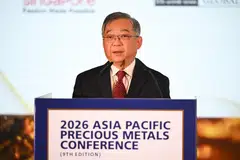
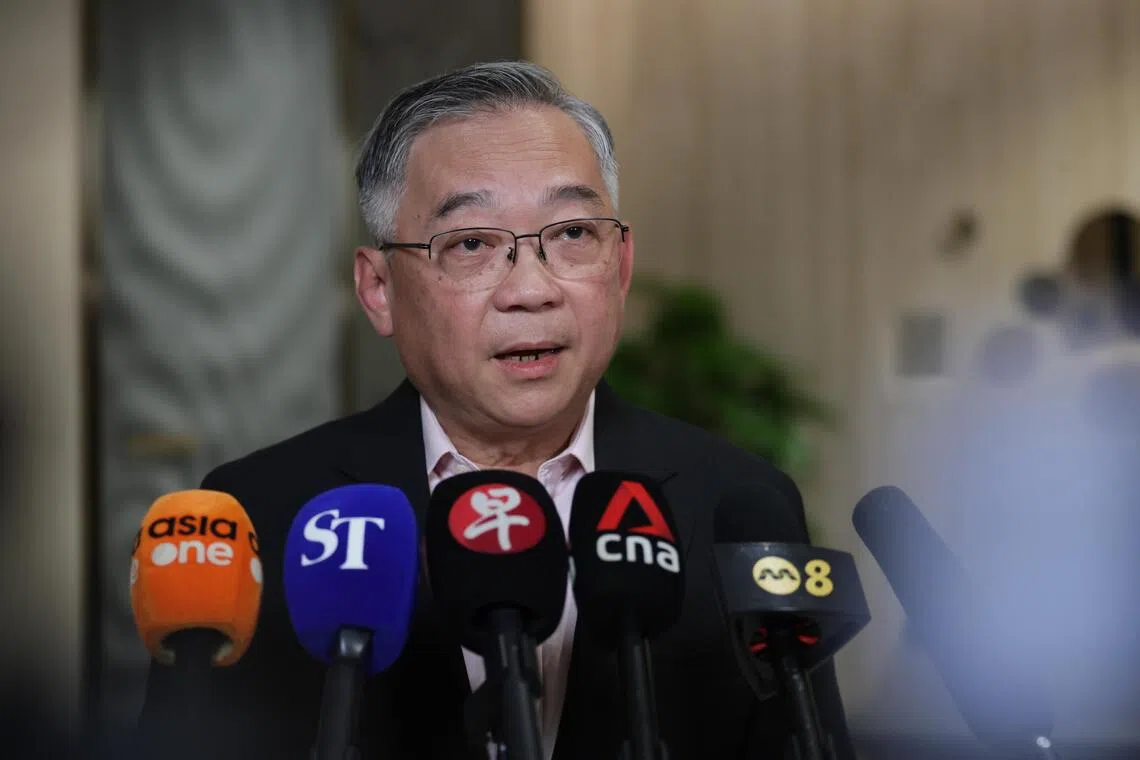
“With the growing demand for gold as a reserve asset, central banks are also looking for alternatives, looking for more options to strengthen their resilience in terms of their gold reserves,” said Deputy Prime Minister Gan Kim Yong, who is also chairman of MAS, on Tuesday.
He noted that some foreign central banks had expressed interest in vaulting gold in Singapore, but declined to specify which institutions.
Asked about competition with Hong Kong – which is also deepening its gold market infrastructure, DPM Gan said that “it’s not a zero-sum game”.

Hong Kong previously announced that it aims increase its total gold storage capacity by more than 10 times to over 2,000 tonnes by 2030. It also intends to launch a clearing and settlement system for gold in the first quarter of 2027.
“What Singapore is doing is to offer an additional option to the central banks who are interested in looking for alternative venues to store their gold reserves,” he added, noting that the goal is not to replace other gold centres.
MAS said it will also offer gold custody accounts to select Singapore-based bullion banks with “expertise and experience in providing gold-related services and trading liquidity” to these institutions.

Further measures to boost liquidity
MAS and the Ministry of Finance also introduced an enhanced goods and services tax framework to support wholesale investment precious metal gold market activities in Singapore.
Under this framework, GST will be waived on specified services between institutional participants, such as vaulting, refining, recasting, assaying and broking.
“This will better reflect the fact that the gold is predominantly traded among institutional participants, and is not for domestic consumption,” said DPM Gan.
The framework is expected to take effect from April 2027, with more details to be shared during Budget 2027.
“This enhancement will reduce transaction costs, complementing the broader suite of measures being introduced to deepen market participation, enhance liquidity and strengthen Singapore’s position as a leading gold trading hub in Asia,” said Kenneth Lai, head of global markets at OCBC.
He added that greater clarity on the tax treatment of certain gold-related services is “important” as it supports business opportunities.
“Amid ongoing geopolitical and macroeconomic uncertainty, clients increasingly value the ability to hold physical bullion locally and transact through a trusted Singapore-based institution,” said Lai.
Separately, MAS said that industry testing of the Singapore Exchange’s (SGX) over-the-counter gold clearing system has been completed, with a rule book to be finalised soon.
Live trading and market operations are expected to commence in Q1 2027, with gold market liquidity building throughout the year.
This follows a memorandum of understanding signed in June by SGX and six clearing banks: DBS, Deutsche Bank, ICBC Standard Bank, JPMorgan, OCBC and UOB.
The clearing system will support both kilobars and large bars for standardised settlement during Asian trading hours. This comes as gold trading and price discovery are currently concentrated in global centres such as New York and London.
The kilobar, weighing 1 kg, is the preferred standard in Asian markets and is accepted for delivery in Comex gold futures contracts in the US.
Large bars, which are gold bars weighing 400 troy ounces, or about 12.4 kg, are the standard for institutional trading and settlement in London.
Meanwhile, SGX’s physically deliverable gold futures contract, Gold Kilobar Futures, is targeted for launch in Q2 2027.
DPM Gan noted that Singapore’s initiatives to deepen its gold infrastructure will “anchor new high-value activities across trading, risk management, custody and professional services”.
“It will create good jobs and capabilities, while adding depth and resilience to our financial sector, strengthening Singapore’s role as a trusted connector between Asia and global gold markets,” he said.
Decoding Asia newsletter: your guide to navigating Asia in a new global order. Sign up here to get Decoding Asia newsletter. Delivered to your inbox. Free.
Copyright SPH Media. All rights reserved.