Singapore speeds up IPO process with listing review functions to be consolidated under SGX RegCo
Applications to be approved in 6 to 8 weeks; MAS still oversees SFA prospectus requirements, gives exemptions

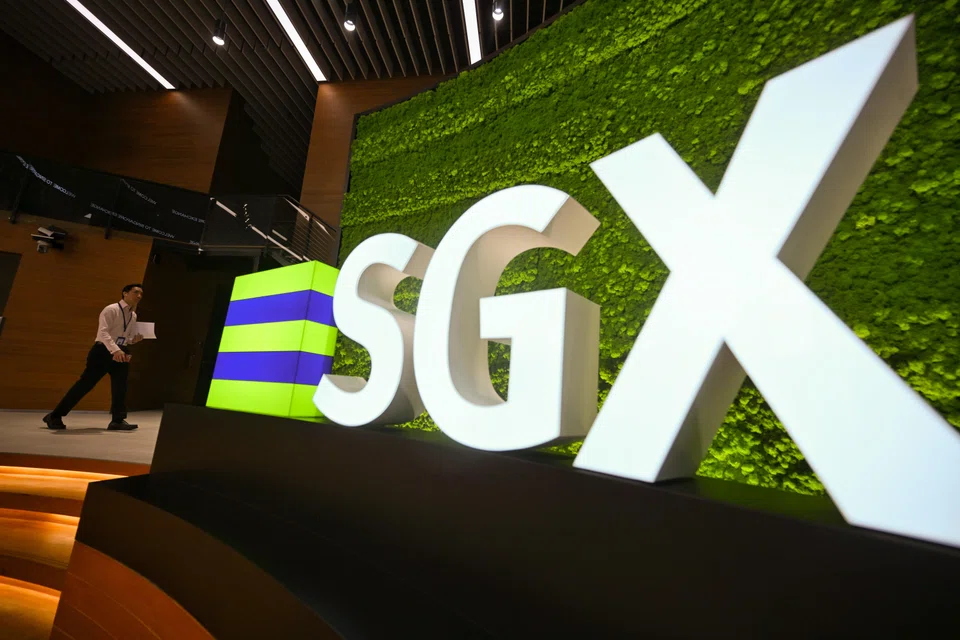
[SINGAPORE] Regulators are streamlining the path to a public listing on the Singapore Exchange (SGX) mainboard and its new Global Listing Board, bringing initial public offering reviews under a single touchpoint and committing to a six-to-eight-week timeframe.
Singapore Exchange Regulation (SGX RegCo) will be delegated prospectus review functions for mainboard and Global Listing Board (GLB) listing applications with effect from Jan 4, 2027.
The changes to the IPO process come after a recommendation from the Equity Market Review Group (EMRG) to simplify listing procedures and encourage more local listings. The EMRG was set up in August 2024 to look into the development of Singapore’s equities market.
Previously, a prospective issuer had to engage SGX RegCo on its suitability to list and separately submit its prospectus to the Monetary Authority of Singapore (MAS) for review.
Thereafter, the Listings Advisory Committee (LAC), a panel of independent financial sector professionals, would weigh in.
Under a new framework announced on Tuesday (Nov 3), SGX RegCo will serve as a single point of contact in dealing with all prospectuses and listing applications from prospective issuers.

It aims to process all complete listing applications within six to eight weeks, and “expects applications can be substantially reviewed within the shorter end of that timeframe”. Under current arrangements, Singapore listing applications have a “variable” timeline “starting from six weeks”.
Tan Boon Gin, CEO of SGX RegCo, said that amid fast-changing market conditions and sentiment, listing windows can open and close in a few weeks.
“Having to deal with multiple regulatory touchpoints adds friction and uncertainty to the listing process – including to listing timelines – and can potentially make a difference between a successful listing and a missed opportunity,” he added.



The shorter timeline will put SGX’s processes on par with exchanges such as the US’ Nasdaq, with which the Singapore bourse has built a dual-listing bridge on the Global Listing Board.
A Nasdaq listing application typically takes four to six weeks to be processed, and another one to two weeks for formal approval.
Announced in November 2025, the set-up of the Global Listing Board creates a cross-border, dual-listing framework for companies to be simultaneously listed on Nasdaq and SGX with a single set of listing documents. A minimum S$2 billion market capitalisation requirement applies.
In SGX’s latest fiscal year ended Jun 30, there were 24 applications received for an IPO or reverse takeover (RTO), a jump of 41 per cent from the 17 received in FY2025 and four times the six applications submitted in FY2024.
While interest is on the rise, the numbers lag the two busiest IPO markets in the Asia-Pacific, India and Hong Kong. More than 200 companies have gone public in India so far this year, including its largest IPO to date: the US$3.2 billion listing of Jio Platforms.
Over in Hong Kong, there were 118 new listings in the first nine months of 2026, about 71 per cent more than the 69 IPOs tallied in the same period a year earlier.
The latest moves come amid calls for ways to improve the post-IPO performance of new listings. As at end-July, five of the six companies that listed on SGX this year were trading below their listed prices.
The changes will apply to all corporations, business trusts or real estate investment trusts (Reits) seeking a listing on SGX’s mainboard or GLB.
SGX RegCo will also stand down the LAC. The panel was originally created in 2015 to address concerns about SGX’s independence in the listing policymaking and review process, at a time when SGX RegCo had not yet been established.
SGX RegCo will continue to issue guidance to the market via commentaries in its regulator’s column.
Tan told The Business Times that this is one of many channels of further support. SGX RegCo also publishes decisions on listing applications with more detailed information, to help potential issuers understand how regulations apply.
MAS’ role under consolidated model
Tan said that MAS will continue to determine Securities and Futures Act (SFA) prospectus requirements and approve exemptions. When necessary, MAS will also investigate potential breaches and take enforcement action.
In terms of regulatory oversight, MAS will still conduct periodic inspections of SGX RegCo, while supervising the local bourse’s performance. This is on top of continuing to oversee regulatory responsibilities of SGX RegCo, too.
Tan added that reviews by SGX RegCo and MAS were, historically, “two sides of the same coin”. “Both of us looked at the issuer’s risk factors, conflicts of interest, financials, key executives, and compliance with laws and regulations.”
The new process will see SGX RegCo applying both lenses simultaneously, to improve the experience for issuers and market professionals, he said.
Lim Tuang Lee, assistant managing director for capital markets at MAS, said the consolidation of the listing review function with SGX RegCo is part of a set of holistic measures to strengthen Singapore’s equities market.
“Constructive” move
Malcolm Koo, CEO of CGS International Securities Singapore, described the move to streamline processes as “constructive”. A single pathway, he said, will reduce duplication and provide “greater certainty” over the review timeline.
Still, DBS’ global head of equity capital markets Art Anuruk Karoonyavanich told BT that ultimately, demand, investor depth and liquidity in the market are still crucial for the bourse to attract IPOs for the long term.
The GLB, in particular, will be helpful to grow the regional exposure of offerings seen in Singapore.
“Issuers (will likely) need to see a few of these successful key listings (on the GLB) that get done and trade well post-IPO, to spur more listings to come,” Karoonyavanich added.
Both Koo and Karoonyavanich noted that the S$2 billion minimum market cap for a company to list on the GLB already makes things “selective”, such that only companies with strong fundamentals can list.
“Larger, Asian growth companies” that value both the depth of the US market, and access to investors in Singapore and Asean, are hence the target of GLB’s proposition, said Koo.
Six respondents offered comments to SGX RegCo, responding to questions raised in a consultation paper last year.
Among them were CGS International Securities Singapore, Rajah and Tann Singapore, RHTLaw Asia, WongPartnership, and Allen and Gledhill, which solicited the views of seven financial institutions, including DBS Bank, Deutsche Bank (Singapore), JPMorgan Securities Asia, OCBC, UOB, UOB Kay Hian. The last respondent requested to stay confidential.
Decoding Asia newsletter: your guide to navigating Asia in a new global order. Sign up here to get Decoding Asia newsletter. Delivered to your inbox. Free.
Copyright SPH Media. All rights reserved.