

Singapore stocks fall as US strikes Iran despite peace talks; STI down 0.8%
Across the broader market, losers beat gainers 322 to 257, after 1.9 billion securities change hands
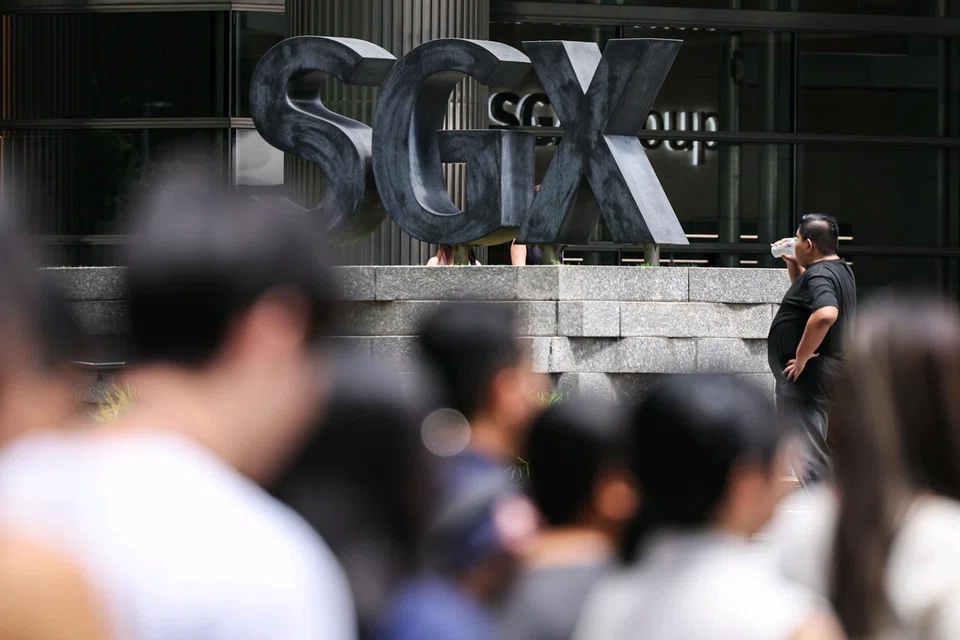
[SINGAPORE] Singapore shares ended lower on Tuesday (May 26) amid a mixed performance in regional markets, while Middle East tensions flared with the US launching strikes on southern Iran even as peace deal talks were under way.
The benchmark Straits Times Index (STI) lost 0.8 per cent or 41.75 points to finish at 5,028.80.
Sats led the gainers on Singapore’s blue-chip index with a 5.6 per cent or S$0.19 rise to S$3.56.
The group on Monday reported a net profit of S$50.7 million for its fourth quarter ended Mar 31, up 31 per cent year on year. CEO Kerry Mok on Tuesday said that it could issue special dividends or conduct a share buyback when it has the spare cash.
The worst performer among STI constituents was Jardine Matheson Holdings (JMH) . It declined 4.2 per cent or US$3.01 to US$68.
The local banks all ended lower. DBS retreated 0.3 per cent or S$0.18 to S$62, OCBC fell 0.6 per cent or S$0.15 to S$23.36, and UOB was down 0.5 per cent or S$0.19 at S$37.72.
Within the iEdge Singapore Next 50 Index, Food Empire was the top gainer. It rose 1.3 per cent or S$0.04 to S$3.04.
Meanwhile, Boustead Singapore was the biggest loser, falling 13.2 per cent or S$0.34 to S$2.23.
Across the broader market, losers beat gainers 322 to 257, after 1.9 billion securities worth S$1.9 billion changed hands.


Key regional indices had a mixed showing.
Hong Kong’s Hang Seng Index shed 0.03 per cent, Japan’s Nikkei 225 slipped 0.3 per cent and the FTSE Bursa Malaysia KLCI declined 0.6 per cent, while South Korea’s Kospi advanced 2.6 per cent.
As the Middle East crisis approaches the three-month mark, Swissquote senior analyst Ipek Ozkardeskaya noted that “every additional day is pushing the physical market towards pain levels not yet seen during this crisis”.
“That means heightened volatility and potentially sharp upside moves as markets prepare for a prolonged period of constrained oil supply, while global oil inventories continue to decline at record speed,” she added.
This article has been written with the assistance of AI and reviewed by a reporter
Decoding Asia newsletter: your guide to navigating Asia in a new global order. Sign up here to get Decoding Asia newsletter. Delivered to your inbox. Free.
Share with us your feedback on BT's products and services
TRENDING NOW

Once staunchly pro-China, Malaysian Chinese businesses are now distancing themselves from Beijing

Looking beyond looming CEO succession, should UOB potentially pursue a transformative merger?

Could stablecoins be the future of money?

Grab CEO’s wife Chloe Tong on life with Anthony Tan and finding her purpose

