

Robot makers rule hottest Asia stock trades on physical AI boom
Investors are increasingly betting the next wave of value creation will come from robotics
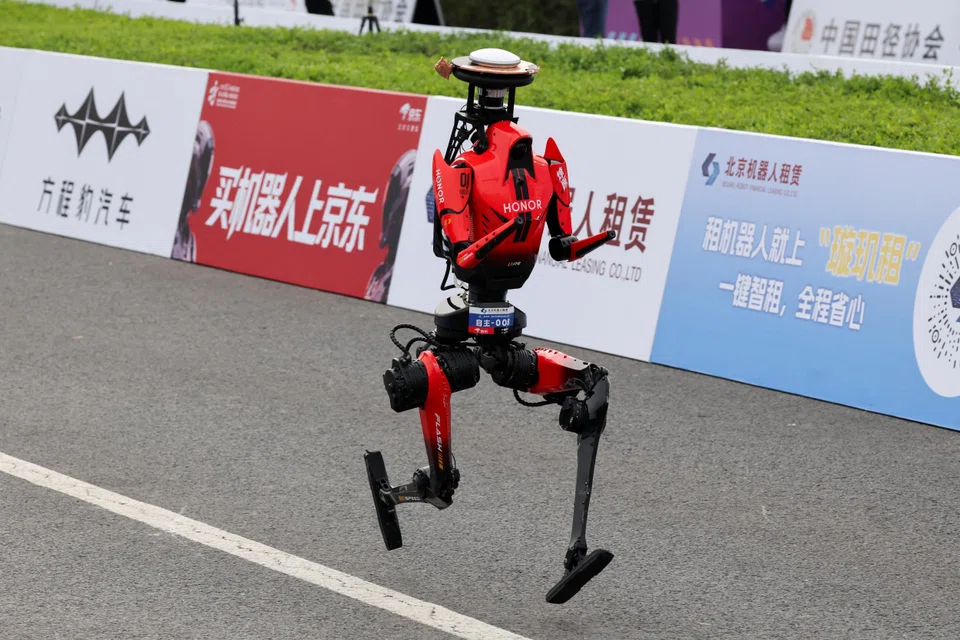
[TOKYO] Robotics has become one of the hottest stock themes in Asia as the artificial intelligence trade broadens beyond the region’s chipmakers.
While the AI boom drove global awareness of Asia’s central role in providing semiconductors required to build and run large-language models, investors are increasingly betting the next wave of value creation will come from robotics. That is sparking new winners as well as breathing new life into some of the region’s venerable industrial and automation trades.
Shares of LG Electronics, which is reportedly discussing a tie-up on humanoids with Nvidia, are up 55 per cent this week in Seoul to rank as the top performer on a key regional benchmark. Japan’s Fanuc has risen 10 per cent on a deal with Alphabet’s Google to develop AI for industrial robots. Humanoid stocks climbed again in Korea and China on Friday (May 15) while the region’s chip shares slumped.
“The rally in robotics stocks reflects the AI cycle moving from digital into physical deployment,” said Gary Tan, a portfolio manager at Allspring Global Investments. “’Physical AI’ is emerging as the next leg of the AI trade.”
South Korea’s Hyundai Motor also gained this week, on news that the nation’s military is exploring a strategic partnership with the automomaker to potentially deploy robotics. Among other robot-related stocks, Taiwan’s Hiwin Technologies jumped after better-than-expected earnings, and China’s Shenzhen LDRobot more than doubled in its Hong Kong debut.
Nvidia has helped drive the trend, with chief executive Jensen Huang increasingly framing humanoid robots and autonomous machines as the next major computing platform after generative AI.
China has established an early lead as the nation builds out capacity to make robots and posts continued news of locally made humanoids accomplishing various feats.
Japan is also seen as well-positioned for the transition because of its decades-long dominance in factory automation, while South Korea is trying to extend its AI exposure beyond memory chips into robotics.
The physical AI market is projected to grow at an average of 47 per cent annually to reach US$15.2 billion by 2032, according to a report last month from MarketsandMarkets, a global market-research and consulting firm.
SEE ALSO
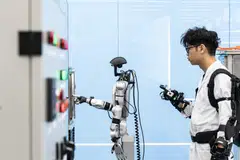

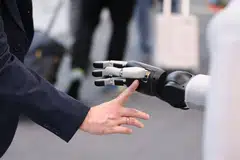







While robotics stocks have soared, the trade is still at an early stage. In addition to the usual need for companies to eventually back up big share-price gains with earnings, robots face practical challenges that raise some investor caution.
“Physical AI has to deal with safety, regulation, factories, supply chains and customer trust far more than generative AI,” said Charu Chanana, chief investment strategist at Saxo Markets. “My sense is that it is still a future opportunity and not something that will be scaled immediately.” BLOOMBERG
Decoding Asia newsletter: your guide to navigating Asia in a new global order. Sign up here to get Decoding Asia newsletter. Delivered to your inbox. Free.
Share with us your feedback on BT's products and services
TRENDING NOW

LTA proposes combining car COE categories, adding rebate-surcharge system

StarHub to acquire MyRepublic’s mobile business amid ongoing telco consolidation

DBS, OCBC, UOB rout lops billions off STI as inflation, rate concerns spook investors

Grab CEO’s wife Chloe Tong on life with Anthony Tan and finding her purpose

