

CDG Zig, Kumpool join Singapore-Malaysia cross-border taxi scheme from Nov 16
Both countries will also raise the quota of licensed cross-border taxis to 500 each, from 300 currently

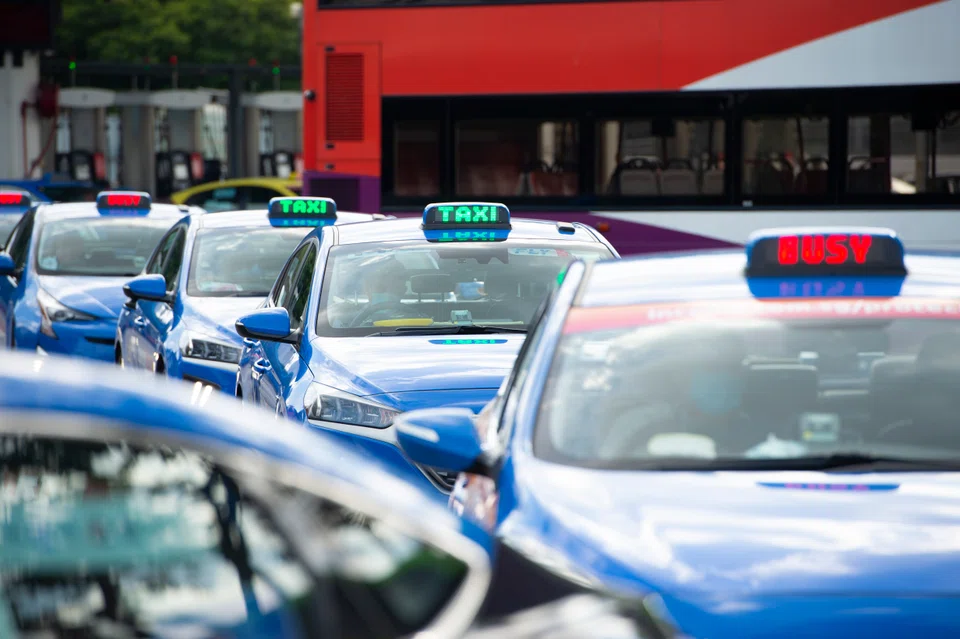
[SINGAPORE] Local transport operator ComfortDelGro (CDG)’ s Zig platform and Malaysian ride-pooling operator Kumpool have been licensed to offer cross-border taxi services under the enhanced Cross-Border Taxi Scheme from Nov 16.
On the same day, Singapore and Malaysia will also increase the quota of licensed cross-border taxis to 500 per country, from 300 currently, said the transport ministries of both countries on Friday (Nov 6).
“Commuters and drivers can look forward to more options for cross-border point-to-point trips, greater convenience and a better commuting experience,” said the ministries.
CDG Zig and Kumpool will join GrabCar as licensed operators under the scheme, offering cross-border services through their respective platforms.
The scheme, introduced on May 4 this year, aims to make cross-border journeys between Singapore and Malaysia more flexible and convenient.
Enhancements include designated pick-up points for ride-hailing and e-hailing bookings, more flexible drop-off arrangements, an increase in the taxi quota and additional requirements to support enforcement against illegal domestic point-to-point trips.

In April 2026, the Land Transport Authority (LTA) gave GrabCar a three-year permit that allows passengers to book cross-border taxi services through Grab’s platform.
The Business Times previously reported that a Grab trip from Singapore’s Ban San Street to Larkin in Johor Bahru starts at S$80 for a standard four-seater vehicle, with fares reaching S$180 for a premium six-seater.
The transport ministries noted that commuters said they appreciated the flexibility of point-to-point drop-offs anywhere in Singapore and within the operating boundary in Johor Bahru, Iskandar Puteri, Forest City, Kulai and Senai.
SEE ALSO




Families and business travellers have also benefited from access to larger and premium vehicles.
Officials from Singapore’s Ministry of Transport, Malaysia’s Ministry of Transport, LTA and Malaysia’s Land Public Transport Agency have continued to work together on further improvements to cross-border taxi services.
LTA chief executive Ng Lang said the increase in quota was an important step towards strengthening connectivity between the two countries.
The latest quota expansion fulfils a target of 500 licensed cross-border taxis for each country, first announced by the two transport ministries on Dec 5, 2025.
The quota was subsequently raised from 200 to 300 taxis per country on May 4, 2026, when the enhanced Cross-Border Taxi Scheme was introduced.
Prior to that, private transport operators had been preparing to tap demand for cross-border journeys. In September 2025, CDG announced that travellers heading to Johor Bahru could book cross-border taxi rides from anywhere in Singapore through its hotline.
However, the service initially operated under more restrictive pick-up and drop-off arrangements. Singapore-registered taxis could pick up and drop off passengers only at Larkin Sentral Terminal in Johor Bahru, while Malaysia-registered taxis were restricted to Ban San Street Terminal in Rochor.
Specific operating conditions
While the higher quota and entry of new operators will expand the range of services available, the scheme also sets out specific operating conditions governing where taxis can pick up and drop off passengers.
Licensed cross-border taxis must meet specific identification requirements. Their vehicles must have prominent rooftop signs, distinctive cross-border taxi identification decals and designated licence plate prefixes to make them easily identifiable.
Malaysian-registered cross-border taxis entering Singapore must also install Singapore’s Electronic Road Pricing 2.0 on-board unit.
Despite the more flexible drop-off arrangements, pick-up privileges are not reciprocal. The rules differ according to whether a cross-border taxi is registered in Singapore or Malaysia.
Currently, Singapore-registered cross-border taxis operating under Grab can pick up passengers anywhere in Singapore and drop them off within the five designated operating areas in Johor. They cannot, however, pick up passengers freely within those areas.
Instead, Singapore-registered Grab taxis can collect passengers in Johor only from four designated locations: Larkin Sentral Terminal, Toppen Shopping Centre, Angsana Johor Bahru Mall and The Mall, Mid Valley Southkey.
Larkin Sentral Terminal has traditionally served as the boarding point for passengers taking street-hail taxis to Singapore. The three shopping centres were added as designated pick-up points for operators awarded a cross-border ride-hail service operator licence.
In contrast, Malaysia-registered cross-border taxis operating under the scheme can pick up passengers within the approved operating areas in Johor and drop them off anywhere in Singapore.
Decoding Asia newsletter: your guide to navigating Asia in a new global order. Sign up here to get Decoding Asia newsletter. Delivered to your inbox. Free.
Copyright SPH Media. All rights reserved.
TRENDING NOW

Singapore tech stocks plunge as Nasdaq bloodbath spills into region

S$3 billion money laundering case: Rare Pateks and Rolexes, diamond-covered Hermes and more head to auction

OCBC Q3 profit rises 3% to S$2.04 billion, slightly above expectations

From legacy to launch: Francis Yeoh and Yeoh Pei Xien on family unity and YTL’s next‑gen ventures

