COP31: Singapore authorises first carbon project with Rwanda for international emissions offsetting
Through this, around 780,000 tonnes of CO2 equivalent is set to be mitigated between 2026 and 2030

[SINGAPORE] Singapore has authorised its first-ever carbon credit project under its bilateral carbon market agreements.
Rwanda is the first among partner countries to have a project approved to generate credits that could be used to offset the city-state’s national emissions, and those of carbon tax-liable companies.
The project is the first to be approved under a legally binding framework, known as an implementation agreement, signed by Singapore and Rwanda in May 2025. The framework governs the generation and transfer of carbon credits between the two countries under Article 6 of the Paris Agreement.
As required under Article 6, which governs rules on the bilateral and international transfer of carbon credits, Rwanda has also issued authorisation for the project.
This means that credits generated from the project can be used to meet Singapore’s climate targets, and that Rwanda, as the host country, will increase its reported emissions by the amount of carbon credits it has transferred to Singapore.
Known as a corresponding adjustment, this accounting mechanism is a core requirement under Article 6 to avoid double-counting – that is, having the same emissions reduction counted towards both countries’ climate targets.

One carbon credit represents a reduction or removal of one tonne of carbon dioxide equivalent (tCO2e).
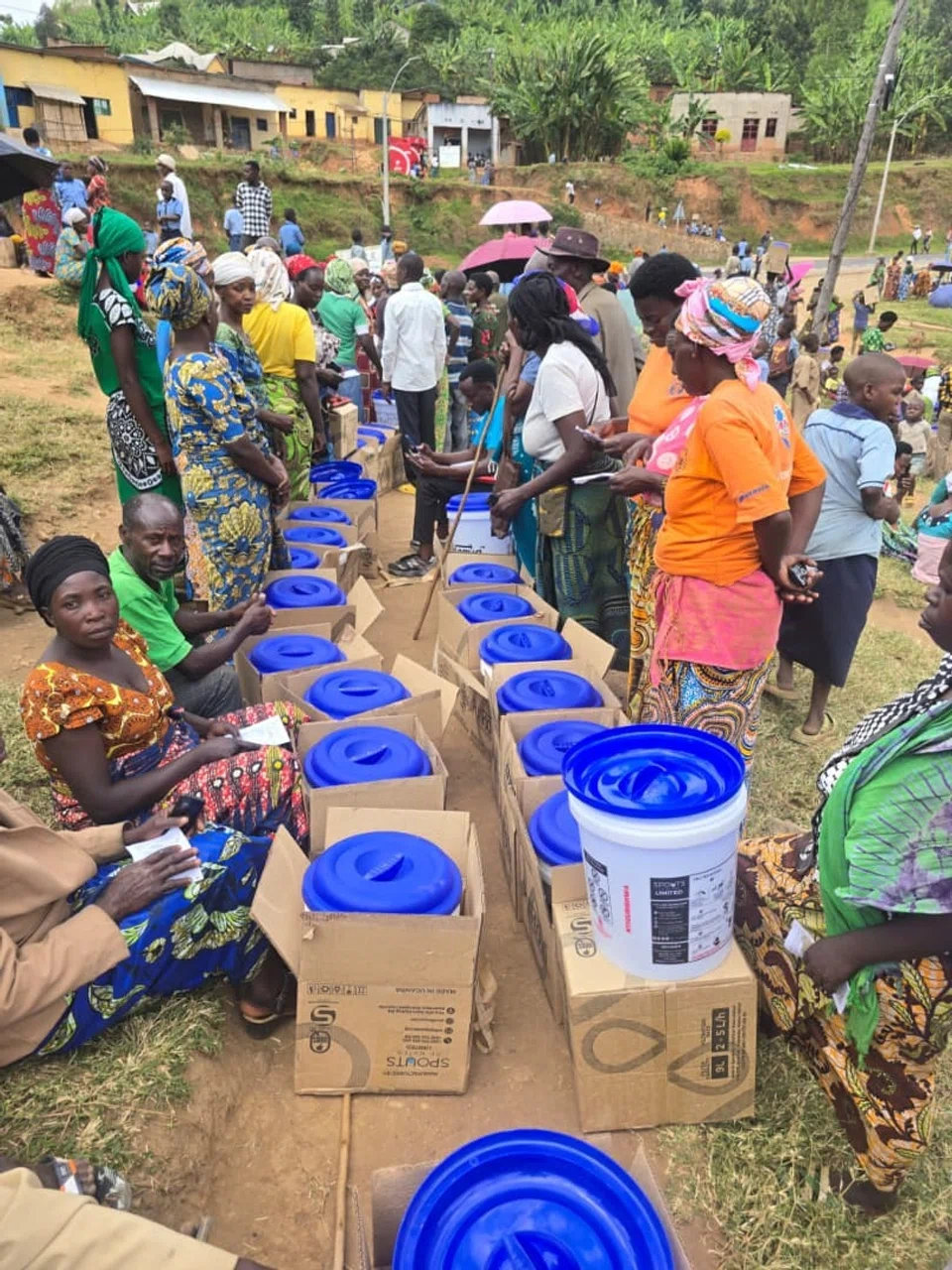
Developed by Climate Bridge International, the authorised project aims to improve access to safe drinking water for Rwandans, which is one of the country’s climate priorities, the National Environment Agency said on Saturday (Nov 14) at the sidelines of the COP31 climate summit.
By distributing 300,000 ceramic water filters to households and early childhood development centres across Rwanda with a focus on its western province, the project is expected to benefit around 1.8 million people.
SEE ALSO
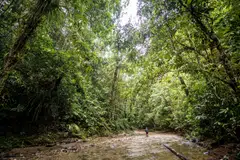



The filters will provide households and the centres with access to safe drinking water without the need to boil water using firewood or charcoal.
“By reducing reliance on these fuels for water treatment, the project will also reduce associated emissions and indoor air pollution,” NEA said. “The reduced need to collect firewood is expected to free up time for education, income-generating activities and community participation.”
The project is expected to mitigate around 780,000 tCO2e between 2026 and 2030. An initial 10,000 water filters started being distributed in June, with the remainder to be progressively deployed in 2027.
NEA said that this first authorisation marks a milestone in Singapore’s international carbon market cooperation, and that more than 20 projects are currently undergoing assessment under the implementation agreement between Singapore and Rwanda.
Despite signing 12 implementation agreements – six of which have been operationalised – no project has received the necessary authorisation until now. Such authorisation will pave the way for credits that meet Singapore’s eligibility criteria to be issued and transferred to the city-state.
Singapore has previously set a target of peaking greenhouse gas emissions around 2028, with a reduction to around 60 million tCO2e by 2030.
Besides helping Singapore offset its emissions to meet its interim climate targets, carbon tax-liable companies may also look forward to offsetting 5 per cent of their taxable emissions.
They have not been able to do so due to the lack of supply of such credits, and have therefore been allowed to roll over their unused offsets in 2025 to this year. Companies can only use credits that meet Singapore’s eligibility criteria laid out in the International Carbon Credits framework to offset their emissions.
Separately, Singapore and Bangladesh have inked a preliminary carbon credits deal, also on the sidelines of COP31, which is taking place at Antalya, Turkey. The memorandum of understanding (MOU) signed on Saturday will pave the way for both countries to trade carbon credits aligned with Article 6. Under the MOU, both countries will work towards an implementation agreement that sets out how carbon credits can be transferred from Bangladesh to Singapore in accordance with Article 6. The MOU also enables the exchange of best practices and knowledge for the development of high-integrity carbon markets and the identification of mutually beneficial Article 6-compliant carbon credit projects.
This will support both countries in achieving their climate targets, while promoting sustainable development, said the Ministry of Energy, Trade and Industry. The agreement was signed by Singapore’s Permanent Secretary for Sustainability and the Environment Melvyn Ong and Bangladesh’s State Minister for the Ministry of Environment, Forest and Climate Change Shaikh Faridul Islam.
Decoding Asia newsletter: your guide to navigating Asia in a new global order. Sign up here to get Decoding Asia newsletter. Delivered to your inbox. Free.
Copyright SPH Media. All rights reserved.