

Singapore may be able to import only half of 2035 clean energy target: report
Energy Market Authority-approved projects with a total capacity of 9.25 GW await construction

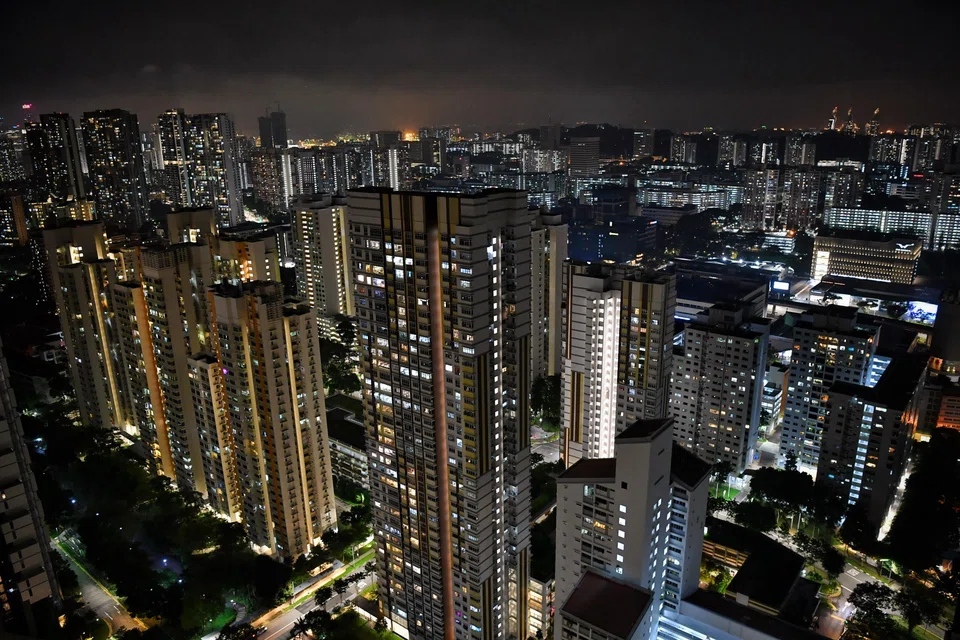
[SINGAPORE] Singapore looks set to miss its target of importing 6 gigawatt (GW) of low-carbon electricity from its neighbours, said global research and consultancy group Wood MacKenzie on Wednesday (Oct 7).
Low-carbon electricity imports are expected to account for half of that target, and only 15 per cent of Singapore’s total power-generation mix by 2035, indicated an analysis by the company.
The country has set a target of importing 6 GW of low-carbon electricity by 2035 – which would meet about one-third of its energy demand – as part of its broader plans to achieve net-zero emissions by 2050.
The renewable energy-disadvantaged city-state currently generates 95 per cent of its electricity from natural gas.
The Energy Market Authority (EMA) has granted conditional licences and approvals to renewable-energy developers in Malaysia, Indonesia, Vietnam, Cambodia and Australia, representing a total capacity of 9.25 GW.
However, Wood MacKenzie noted that none of these EMA-approved projects have begun construction.
'%3e%3cpath%20d='M12.1475%2025.5262C13.7713%2025.4295%2014.94%2023.913%2014.94%2021.8832C14.94%2019.5359%2013.474%2018.093%2011.5917%2018.093C11.3745%2018.093%2010.9582%2018.093%2010.8393%2018.1413V25.2086L11.8891%2025.5745C11.8891%2025.5745%2012.207%2025.5262%2012.1475%2025.5262ZM11.4934%2017.6281C13.2567%2017.6281%2014.3843%2016.4292%2014.3843%2014.4501C14.3843%2012.372%2013.275%2011.2973%2011.4339%2011.2973H10.8393V17.6305H11.4934V17.6281ZM6.66078%2025.6482L7.39265%2025.5492C8.02617%2025.4502%208.26403%2025.3053%208.26403%2025.1097V11.6149C8.26403%2011.4193%208.1451%2011.3709%207.23484%2011.249L6.68137%2011.173L6.6219%2010.7588H11.9508C15.7153%2010.7588%2017.0624%2012.0797%2017.0624%2014.1578C17.0624%2015.9666%2015.7748%2017.1909%2013.4969%2017.6305V17.7041C16.111%2017.948%2017.6571%2019.5382%2017.6571%2021.7636C17.6571%2024.3318%2015.8937%2026.0417%2012.1109%2026.0417H6.60132L6.66078%2025.6482Z'%20fill='%232B2B2B'/%3e%3cpath%20d='M20.6287%2025.6505L21.5596%2025.5515C22.1725%2025.4779%2022.4104%2025.3076%2022.4104%2025.112V11.249H21.9346C20.073%2011.3479%2018.982%2013.0095%2018.408%2014.6227L18.1907%2015.5018H17.6555L18.1701%2010.7588H29.3837L29.6421%2015.4787H29.1664L28.9491%2014.6227C28.3728%2012.8645%2027.3047%2011.2743%2025.5002%2011.249H24.9856V25.1856C24.9856%2025.3812%2025.1251%2025.4548%2025.9965%2025.5515L26.7695%2025.6505L26.829%2026.0417H20.5693L20.6287%2025.6505Z'%20fill='%232B2B2B'/%3e%3c/g%3e%3cdefs%3e%3cclipPath%20id='clip0_5242_21648'%3e%3crect%20width='24'%20height='16.8'%20fill='white'%20transform='translate(6%2010)'/%3e%3c/clipPath%3e%3c/defs%3e%3c/svg%3e)
Tan Wei Han, research analyst for South-east Asia’s power and renewables research at Wood Mackenzie, said: “The most significant challenges for EMA lie in export permit frameworks, project bankability, cross-border transmission financing, and the lack of a complete market mechanism that allows Singapore buyers to claim the carbon value of imported electricity.”
EMA has not yet responded to queries by The Business Times.
The low-carbon projects most viable to commence operations by 2035 would likely be those with Malaysia, said Wood MacKenzie.
EMA had granted conditional approvals to two companies in August 2026 to import clean energy from the state of Johor, with both aiming to commence commercial operations around 2029.
One approval was for Sembcorp Utilities to import 300 megawatts (MW) of power generated from a floating solar and battery-storage facility at Johor’s Linggiu Reservoir, which is also a key source of Singapore’s water imports.
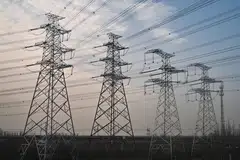
This project would tap the existing interconnector between Malaysia and Singapore, which has a bidirectional capacity of 1 GW, and therefore is able to bypass the global cable supply bottleneck affecting other import projects, said Wood MacKenzie.
The other awardee is Southern Solar Alliance, a unit of Malaysian developer Ditrolic Energy. It received conditional approval to import 600 MW from a solar and battery facility in peninsular Malaysia.
However, Wood MacKenzie noted that full delivery of the remaining 600 MW would likely require a second interconnector, which remains at the feasibility-study stage and faces potential time constraints beyond 2030.
EMA had also granted conditional approval to Sembcorp Utilities to import 1 GW of low-carbon electricity from Sarawak in October 2025.
Wood MacKenzie said the cross-border project with Sarawak stands apart as Sarawak Energy – the state-owned utility arm – and Sembcorp Utilities has already inked an agreement with sub-sea cable maker Prysmian to work on the design, installation method and protection needs of the interconnection.
“(This) provides a level of cable-supply certainty that Indonesia, Vietnam, Cambodia and Australia currently cannot match. Commercial operation is realistically targeted for the mid-2030s,” said the research company.
Import projects with Indonesia a game-changer
The import projects with Indonesia – which make up 37 per cent of the approved pipeline – could be the real game-changer.
Currently, six projects in Indonesia have been granted conditional licences, but these have largely stalled because the country’s electricity regulations requires export permits to be renewed every five years, and also allows quotas to be revoked if domestic supply is at risk.
Given that most power projects have a life cycle of more than 20 years, the five-year limit has made it challenging for developers to secure financing.
Indonesia also requires that 40 per cent of the projects’ components come from domestic sources.
This means that domestic manufacturing capabilities for large-scale battery storage – required to address intermittency issues of renewable-energy sources – needs to be developed first before construction can begin.
“Without agreed pricing, offtake contracts or a bankable revenue model, projects cannot reach the final investment decision,” Wood MacKenzie said.
Nevertheless, in July, Indonesia’s sovereign investment agency Danantara inked several agreements with Singapore companies to advance negotiations over cross-border electricity trade.
As for Singapore’s import projects with Vietnam, Cambodia and Australia, Wood MacKenzie noted that there is no visible construction timeline for any of them.
These projects, which make up 43 per cent of the approved pipeline, are unlikely to become significant sources of imports before the second half of the next decade, it added.
Wood MacKenzie’s Tan said that projects that are able to begin construction would have to first secure an importer licence from EMA, demonstrate their ability to deliver power at a level that is at least 60 per cent of its maximum possible output, and offer a price that off-takers are willing to commit long-term.
“No project in the pipeline has cleared all three hurdles yet,” he added.
Decoding Asia newsletter: your guide to navigating Asia in a new global order. Sign up here to get Decoding Asia newsletter. Delivered to your inbox. Free.
Copyright SPH Media. All rights reserved.
TRENDING NOW

LTA proposes combining car COE categories, adding rebate-surcharge system
StarHub to acquire MyRepublic’s mobile business amid ongoing telco consolidation

DBS, OCBC, UOB rout lops billions off STI as inflation, rate concerns spook investors

Grab CEO’s wife Chloe Tong on life with Anthony Tan and finding her purpose

