

‘Not done’: Keppel CEO Loh Chin Hua transformed the group, but says there’s ‘still a lot to do’
One of Loh’s most consequential decisions was also the most emotionally difficult: selling the offshore and marine business where Keppel itself was born.
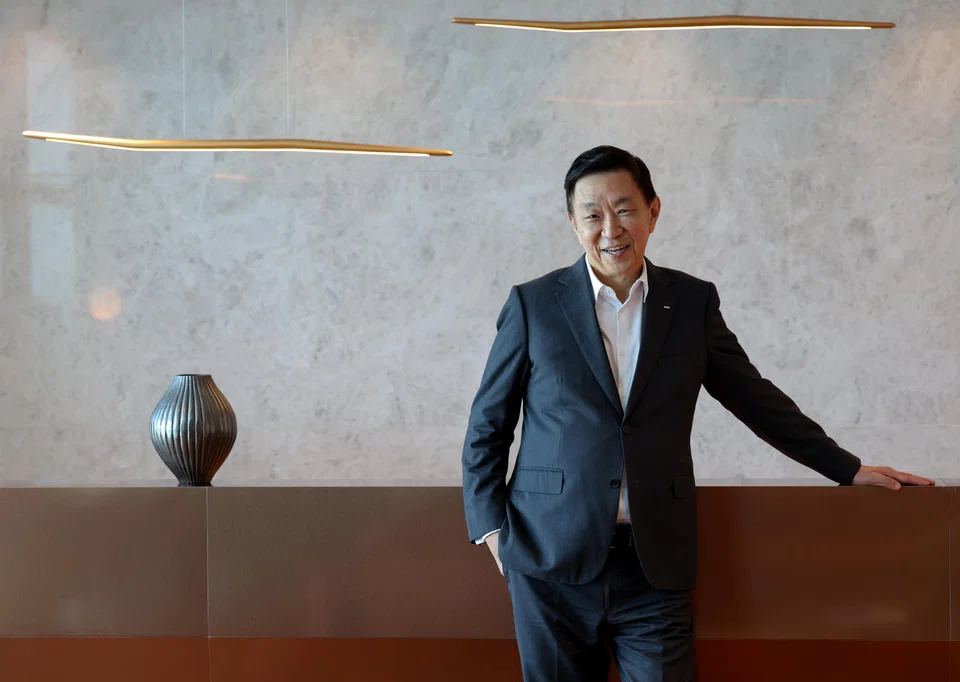
[SINGAPORE] KEPPEL chief executive Loh Chin Hua has little interest in declaring victory, even after winning the Best CEO Award for large-cap companies at the Singapore Corporate Awards for spearheading one of the most consequential transformations in Singapore corporate history.
“The work is not done,” he told The Business Times in an interview. “There’s still a lot to do.”
When Loh took the top job in January 2014, crude oil was trading comfortably above US$100 a barrel and Keppel was the undisputed king of offshore rigs.
Within months, the oil price began its collapse. Shale production surged, Opec’s influence weakened and the offshore marine industry went into a brutal downturn.
The business model that had made Keppel one of Singapore’s great industrial companies was suddenly under threat.
But there was no single moment when Loh decided Keppel had to change. Rather, he says, several conditions had built up.
One was the conglomerate structure itself. Keppel had three major businesses – infrastructure, offshore and marine, and property – operating largely independently. That made sense operationally, but it made the company harder for investors to value.
Keppel’s valuation was plagued by a persistent conglomerate discount as the market struggled to price a sprawling giant that built rigs in one corner and sold apartments in another.
One banker put it to Loh bluntly: two businesses could be doing well, but if the third stumbled, that was what the market saw.
SEE ALSO



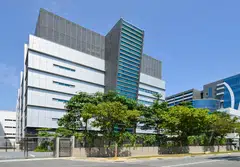


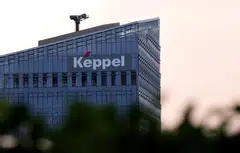
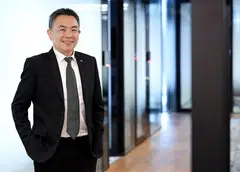
“Even though we were making good profits (in that period), the valuation we attracted from the market was not that attractive,” Loh said. The oil crash made that problem impossible to ignore.
For decades, Keppel had been organised vertically, with businesses operating in their own silos. “What did Keppel Land have to do with Keppel Offshore & Marine, or with Keppel Infrastructure?” Loh recalled. “They were run quite discretely.”
The transformation therefore had to go beyond selling businesses. Keppel had to change how the organisation itself worked.
That meant breaking down the fiefdoms, encouraging businesses to work across divisions and changing the incentives that had reinforced the old structure. Separate bonus pools for individual divisions were replaced by an enterprise-wide pool.
“Alignment is more to do with the brain – things like the reward system,” Loh said. “But most important is attunement. That’s the heart.”
The cultural change mattered because the strategy that eventually emerged was almost the opposite of the Keppel that investors had known.
The company would become less capital-intensive, more horizontally integrated and increasingly focused on infrastructure and asset management.
But first it had to pay for the transformation.
Selling the past
Since October 2020, Keppel has embarked on a sweeping programme of capital recycling, ultimately unlocking S$14.5 billion from asset monetisations by the end of 2025.
The most consequential decision was also the most emotionally difficult: selling the offshore and marine business where Keppel itself was born. “I remember telling my then-chairman, Dr Lee Boon Yang: ‘We’ll be known as the chairman and CEO that sold off the business where Keppel was born’,” Loh said.
The industry’s prolonged downturn had made a standalone future increasingly difficult to justify.
The eventual combination with Sembcorp Marine, creating what became Seatrium, offered a more logical home for the business.
“I’m very happy that Seatrium has taken off and has done very well,” Loh said. “I think it shows it’s the right decision that we’ve taken.”
Other assets followed, including logistics businesses and parts of Keppel’s property portfolio.
The objective was not simply to shrink the company. It was to recycle capital from businesses requiring large amounts of capital into businesses that could generate recurring income and attract third-party capital.
That distinction matters. Selling assets creates liquidity, but it does not, by itself, create value.
The real test is what Keppel does with the proceeds.
So far, the numbers suggest that the replacement engine is beginning to work.
The restructured Keppel reported net profit of S$1.1 billion for 2025, up 39 per cent from the previous year, while return on equity rose to 18.7 per cent.
Funds under management (FUM) reached S$95 billion at the end of 2025 and have since crossed S$106 billion, according to Loh.
Keppel has also surpassed its interim target of S$100 billion in FUM ahead of schedule.
The important question now is whether that asset-management platform can change the quality – rather than merely the composition – of Keppel’s earnings.
The new Keppel
Keppel is not becoming a pure-play asset manager in the mould of a traditional financial institution. Its proposition is more unusual.
It wants to originate and develop infrastructure, operate it, bring in third-party capital, retain exposure through sponsor stakes and co-investments, and then recycle capital into the next project.
In other words, the company wants to own the entire infrastructure value chain without necessarily keeping every asset on its own balance sheet indefinitely.
That model is particularly relevant to the infrastructure needed for the artificial-intelligence boom.
Loh describes Keppel as an “ecosystem player”.
“We can provide the data centre. We can provide the power. We can provide the subsea cable. We can provide the funding through the asset management business.”
The Bifrost subsea cable system offers perhaps the clearest example of that strategy.
The system, which connects Singapore to the west coast of the United States via Indonesia, secured its fifth and final fibre pair in July, bringing the project’s total contract value to about US$1.3 billion.
Keppel expects an internal rate of return of about 30 per cent and 25 years of recurring cable operations and maintenance income.
It is now evaluating further cable systems linking Singapore with the Middle East and Japan.
Power is another part of the proposition.
Data centre development increasingly faces constraints not just from demand for computing capacity but from the availability of electricity.
Keppel has secured a roughly 720-megawatt power bank near Melbourne, which Loh estimates could require S$10 billion to S$20 billion to build out fully.
The attraction for Keppel is not simply the power project itself.
“It will mean more FUM for us,” Loh said. “It will also mean more opportunities for our data centre operations, and perhaps we could also think about cooling for these data centres as well as providing integrated power.”
This is where the new Keppel’s strategy becomes more interesting than simply replacing shipyards with fund management.
The company is betting that owning complementary capabilities – power, connectivity, data centres and capital – gives it an advantage in originating and financing infrastructure projects.
Whether that advantage is genuinely greater than what investors could obtain by owning specialist companies separately is another question.
That, in a sense, brings Keppel back to the conglomerate problem that started the transformation.
The old Keppel was difficult to value because its businesses were disconnected. The new Keppel is betting that integration will make its businesses worth more together.
The unfinished ledger
The transformation is also far from complete.
Keppel still had a non-core portfolio with a carrying value of S$13.5 billion at the end of 2025, including legacy offshore rigs, selected properties and a residential landbank. Management intends to substantially monetise this portfolio by 2030.
That creates another test of execution.
The company has already discovered that getting out can be almost as complicated as getting in. Its proposed sale of M1’s telco business to Simba Telecom ultimately lapsed in May 2026 after regulatory complications, forcing Keppel to absorb an accounting hit associated with the aborted transaction.
Loh sees the setback as a delay rather than a repudiation of the strategy.
“If you take the view that it will happen, the deal that was aborted is just pushed to the right,” he said of Singapore’s telco consolidation. “It’s just a matter of time.”
The broader point is that the old Keppel cannot simply be switched off.
The legacy assets have to be monetised, businesses have to be reshaped and capital has to be redeployed – all while the new platform continues to grow.
That is a very different challenge from the one Loh faced in 2014.
Back then, the crisis provided the urgency. The old model was visibly breaking down, making radical change easier to justify.
The challenge now is maintaining that discipline when the existential threat has receded.
The real test
Keppel officially began operating as a single, horizontally integrated business in January 2024.
The early evidence is encouraging: profits are growing, FUM is rising and the company is building a pipeline of infrastructure investments that would have been almost unrecognisable to the Keppel of a decade ago.
But a successful transformation cannot be measured simply by how much has been sold or how quickly FUM has grown.
It ultimately has to show up in sustainable returns to shareholders.
The transformation was first about survival. Now, it’s about proving that the new model can create superior value without the crisis that forced Keppel to change in the first place.
That may be the more difficult test.
Loh himself is reluctant to talk about his legacy. His hope, he said, is simply to leave Keppel “in better shape” than when he arrived and for the next generation of Keppelites to preserve the company’s ability to adapt.
“It’s not dissimilar to what Singapore is going through,” he said. “How we constantly reinvent ourselves as circumstances change.”
There is still S$13.5 billion of legacy assets to clear. There are new infrastructure projects to finance and operate. And there is an asset-management machine that has to prove how much value it can generate through an entire cycle.
Loh has changed what Keppel is.
Now that the heaviest lifting is done, the question is whether the machine he has built can keep working after its architect eventually leaves.
Decoding Asia newsletter: your guide to navigating Asia in a new global order. Sign up here to get Decoding Asia newsletter. Delivered to your inbox. Free.
Copyright SPH Media. All rights reserved.
TRENDING NOW

Malaysian king buys stake in Singapore-listed mining firm expanding into rare earths

Grab CEO’s wife Chloe Tong on life with Anthony Tan and finding her purpose

Once staunchly pro-China, Malaysian Chinese businesses are now distancing themselves from Beijing
Longer wait times expected as S’pore healthcare institutions report system disruptions

