



Asean Power Grid deal raises stakes for regional AI boom
South-east Asia has a plan to share clean power. Can its data centres wait?
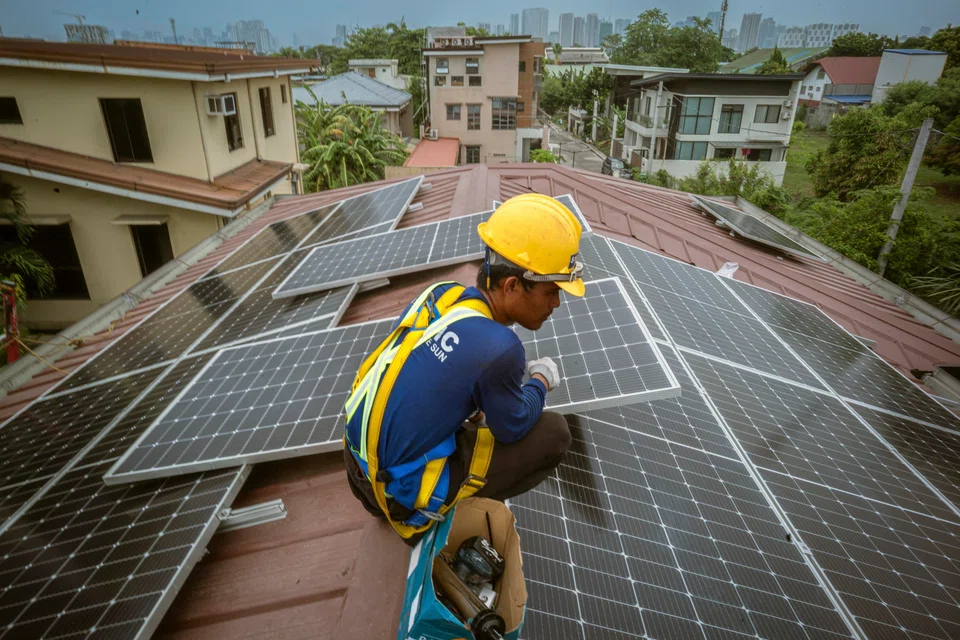

[MANILA] South-east Asia’s bid to become a hub for artificial intelligence is colliding with an awkward reality: Its power grids still run largely on coal and imported gas.
That tension took centre stage in Manila earlier this week, when all 11 Asean member states signed an enhanced memorandum of understanding (MOU) to build an integrated regional electricity network called the Asean Power Grid (APG).
The pact, which entered into force after the signing on Sunday (Nov 15), could determine whether the region’s booming data centre sector accelerates the green transition or locks in decades of fossil-fuel demand.
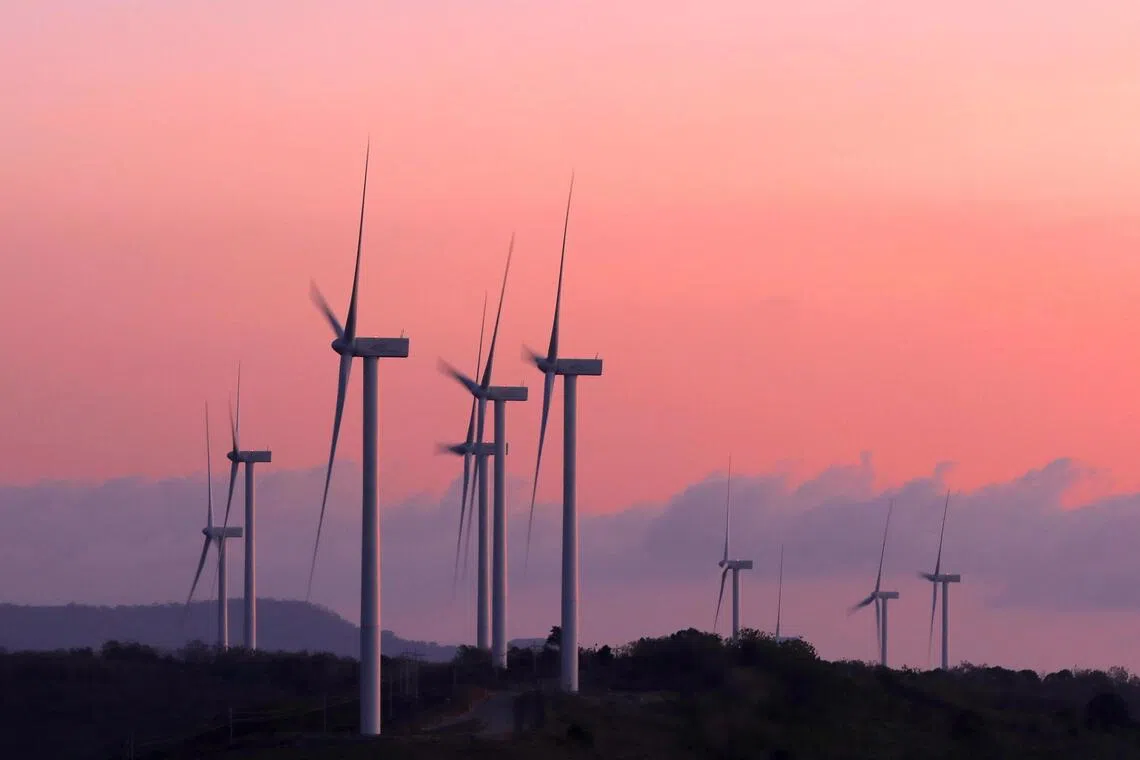
Designed to anchor cross-border interconnections, multilateral power trade and financing for overland lines and subsea cables, the agreement lands just as the COP31 conference in Turkey presses governments around the world to speed up clean electrification.
For South-east Asia, the immediate test is turning an influx of electricity-hungry digital infrastructure into fresh investments in renewable generation, storage and transmission.
Nowhere is that friction sharper than in the Philippines, which has just concluded its Asean chairmanship for 2026.

Manila is aggressively courting data centre operators as a pillar of its digital economy, yet its fragmented Luzon, Visayas and Mindanao grids remain plagued by transmission bottlenecks and recurring supply alerts.
More than nine in 10 Philippine business leaders say the country is overly reliant on fossil-fuel imports, the highest share among 18 economies surveyed by the Global Renewables Alliance (GRA), E3G and the We Mean Business Coalition.
A regional answer to national bottlenecks
By pooling complementary energy resources across borders, the APG seeks to strengthen supply security and smooth the adoption of intermittent renewables.
SEE ALSO




For the Philippines, deeper regional links could eventually provide a vital buffer when domestic generation is tight.
“The enhanced MOU brings our commitment to partnership, innovation and resilience into practical focus,” said the country’s Secretary of Energy Sharon Garin, who stressed the value of attracting private and multilateral capital.
The pact complements the APG Financing Initiative, which brings together the regional bloc, the Asian Development Bank and the World Bank Group to mobilise funding for grid projects.
Under a high-renewables scenario, Asean estimates that it will require US$764 billion in generation and transmission investment through to 2045.
Global tech demand is adding urgency to that timeline. Electricity consumption by data centres rose 17 per cent worldwide in 2025, while demand from AI-focused facilities surged 50 per cent, according to the International Energy Agency.
Data centres accounted for roughly 40 per cent of corporate renewable power-purchase agreements (PPAs) signed globally last year.
In South-east Asia, however, procuring clean power is often easier on paper than in practice.
While the Philippines boasts retail competition, an open access regime, a green energy option programme and a liberalised wholesale market, developers and corporate buyers still contend with permitting delays, wheeling charges and congested transmission lines.
GRA’s Asia-Pacific regional lead Rexor Amancio said that grid investment must catch up with generation capacity so that transmission corridors are built in renewable-rich zones before connection queues stall new projects.
“Navigating the Philippines’ power market does not have to mean getting trapped in grid bottlenecks, but it does require closing the gap between commercial ambition and system infrastructure,” he added.
Data centres as anchor customers
Clean-energy advocates argue that hyperscalers – the tech giants behind the world’s largest cloud and AI networks – should act as anchor customers for new solar, wind and geothermal projects, rather than simply buying up existing green supply.
Long-term corporate offtake deals can shore up the bankability of clean-energy and battery storage assets. Pairing generation with on-site batteries allows developers to serve immediate industrial demand, while flexible dispatch eases the strain on bottlenecked networks.
Hyperscalers have a direct commercial stake in funding grid upgrades upfront, not only to secure green electricity, but also to shield server farms from extreme weather, said Robert Cooke, GRA’s grids and electrification advocacy lead.
“Policymakers can mobilise data centres as a force for renewables,” he added.
Regulators are also under pressure to close accounting loopholes that let companies claim a “100 per cent renewable” status on paper by purchasing cheap annual green certificates, even while their servers hum through the night on coal-fired power.
Under frameworks such as the International Renewable Energy Agency’s COP31 green data centre programme, corporate buyers are being pressed to prove their electricity is newly built, locally sourced and matched hour-for-hour with consumption.
Amancio warned that if data centres “plug into a thermal-heavy grid and merely buy standard annual certificates or consume existing clean energy, they risk displacing green power from other users and driving up fossil gas at the margins, ultimately increasing power prices for everyone”.
Without faster grid connections, developers are already turning to dirtier workarounds.
BloombergNEF has reported that data centre builders frustrated by multi-year connection queues are increasingly installing dedicated onsite gas turbines – a stopgap that can be even more carbon-intensive than drawing power from a conventional grid.
Decoding Asia newsletter: your guide to navigating Asia in a new global order. Sign up here to get Decoding Asia newsletter. Delivered to your inbox. Free.
Share with us your feedback on BT's products and services
TRENDING NOW

South-east Asia has lost Nvidia’s best salesman

UN says Singapore’s Penguin International broke Libya arms embargo; company disputes panel’s findings
Is Singapore still South-east Asia’s headquarters haven?
CapitaLand, Far East, Sing Holdings team up for S$1.82 billion bid for Jurong Lake District site

