Asean states sign Digital Economy Framework Agreement, which kicks in from early 2027
Priority projects under the pact can include digital payment systems, digital identities for businesses and electronic trade documentation
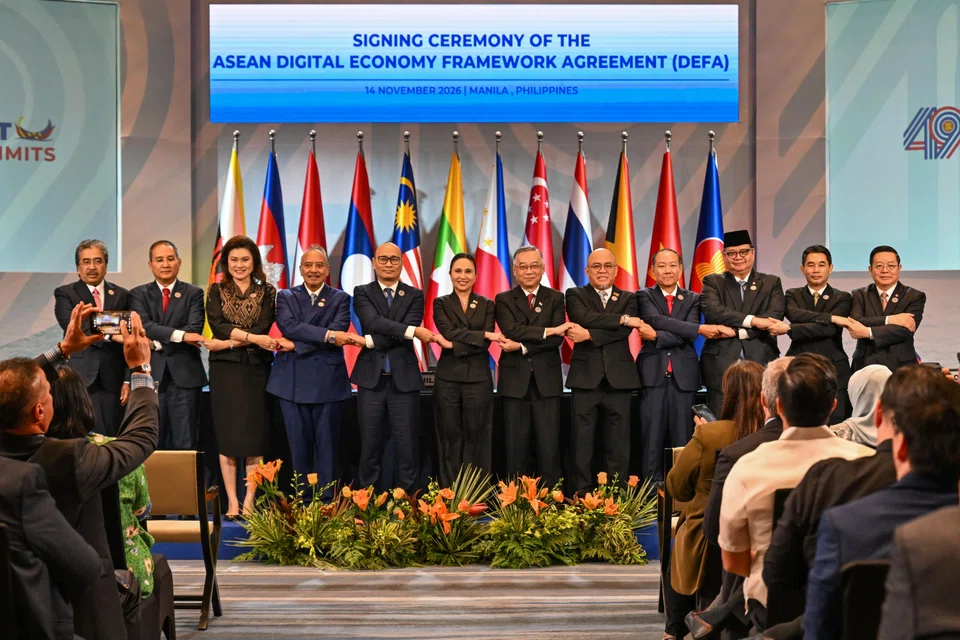
[MANILA] Asean member states have signed a landmark digital economy agreement and are working to roll out the first projects under the pact to benefit businesses and consumers in early 2027, said Singapore Deputy Prime Minister Gan Kim Yong.
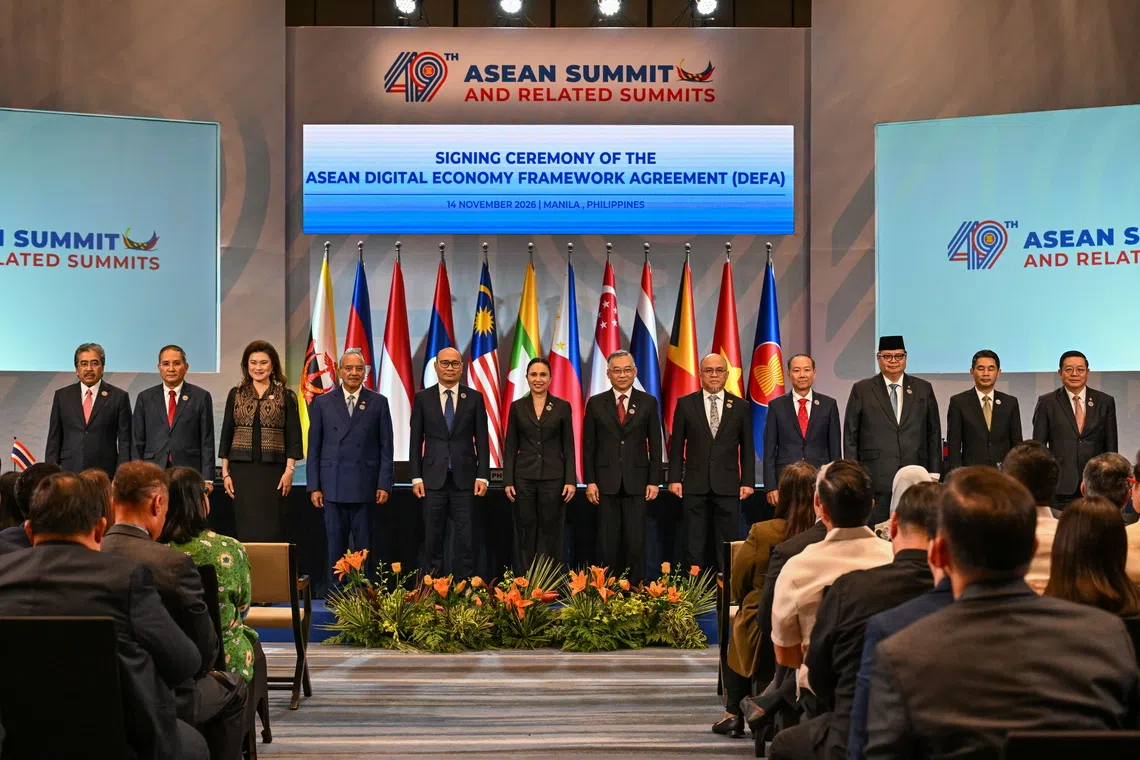
The Digital Economy Framework Agreement (Defa) was signed by Asean member states in Manila on Nov 14 following negotiations that began in September 2023.
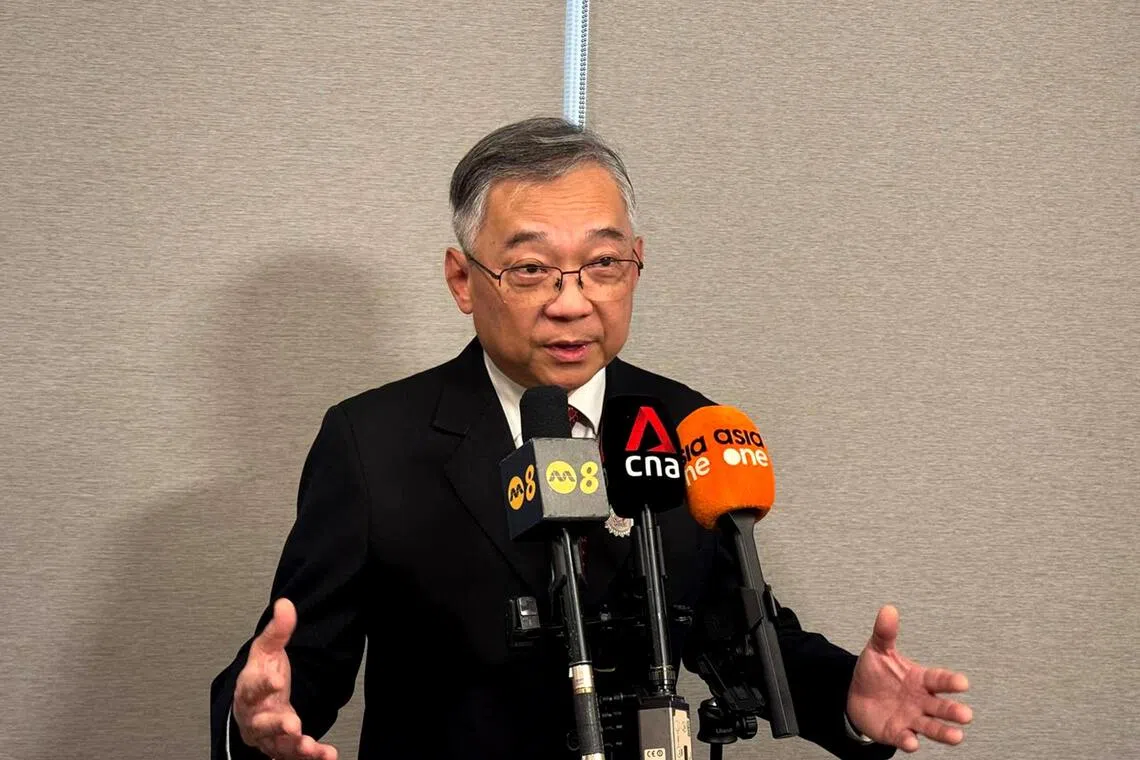
In a doorstop interview after the signing, Gan said priority projects under the pact could include digital payment systems, digital identities for businesses and electronic trade documentation, which would make cross-border transactions faster, easier and less costly.
“We hope that by the time we have the agreement come into force, we will already be ready with a few initiatives, with a few projects that we can embark on to benefit our businesses and our people,” he told reporters.
“I think this is digital connectivity in a way to connect Asean better to one another.
“This is over and above the physical connectivity that we have been working on – supply chain resilience, shipping connectivity, and so on,” said Gan on the sidelines of the 28th Asean Economic Community Council meeting in Manila.

In his interview, he also touched on Singapore’s two broad economic priorities when it takes over as Asean chair from the Philippines in 2027. These will be deepening integration within Asean and expanding cooperation with external partners.
In line with these priorities, Asean has made progress towards substantially concluding negotiations on a free trade agreement with Canada, with its signing targeted for 2027, he said.
Asean’s digital economy is projected to reach US$368 billion in 2026 and exceed US$1 trillion by 2035, according to a report by Google, Temasek and Bain & Company cited by Singapore’s Ministry of Energy, Trade and Industry (METI).
SEE ALSO



Defa, the grouping’s first standalone, legally binding digital economy agreement, establishes common rules covering digital trade, cross-border data flows, electronic payments, cybersecurity and artificial intelligence.
The agreement will enter into force 180 days after the signing, replacing the Asean Electronic Commerce Agreement of 2019, said METI in a release on Nov 14.
Elaborating on the benefits of Defa, Gan said electronic trade documentation could help companies reduce paperwork, speed up transactions and lower administrative costs.
“It will facilitate speeding up, as well as reducing costs for, trade documentation,” he said.
He said the agreement could also make digital payments more seamless, both for consumers making purchases across borders and companies conducting business-to-business transactions.
Gan also said digital identities would help businesses verify whom they are trading with, while clearer rules on cross-border data transfers could make it easier for companies to expand into other Asean markets.
The agreement also strengthens cooperation on data protection, cybersecurity and combating online scams.
Different countries, different speeds
Gan acknowledged that implementing Defa would be challenging because Asean countries have widely differing levels of digital infrastructure, regulations and business readiness.
To address these differences, the agreement allows countries that are ready to move ahead with specific initiatives while leaving the door open for others to join later.
“This flexibility allows our Asean to be able to progress not at the slowest member, but to allow us to progress our own pace,” he said.
For instance, he said countries prepared to facilitate cross-border data flows in particular sectors could work together, subject to safeguards relating to privacy, business confidentiality and national security.
Gan said officials were working on implementation plans to ensure businesses could benefit from the agreement early.
He stressed that governments would also need to engage the private sector, especially small and medium-sized enterprises, and invest in skills training to ensure businesses and workers were digitally ready.
Singapore businesses welcomed the agreement but said its success would depend on effective implementation.
“The key measure of success will be what businesses experience on the ground,” said Singapore Business Federation chief executive Kok Ping Soon.
He said companies would want to see less paperwork at borders, more seamless digital payments and trusted data flows that would make it easier to operate across Asean.
Gan also sought to allay concerns that greater regional integration could expose Singapore’s smaller businesses to increased competition from their Asean counterparts.
He argued that Asean economies were largely complementary and that closer digital integration would help companies compete more effectively against businesses elsewhere in the world.
“Our future and our fate are tied together,” he said, noting that Singapore’s economy depended heavily on the wider region’s growth.
Proposed Asean Green Economy Framework Agreement
On Singapore’s Asean chairmanship in 2027, Gan elaborated on its two broad economic priorities of strengthening integration within the 11-member grouping and expanding cooperation with external partners.
“Even as the global economy fragments, we do want Asean to be integrated,” he said.
He added that closer integration would send an important signal that Asean remains open for business despite growing geopolitical tensions and trade uncertainties.
Beyond implementing Defa, Singapore hopes to advance work on a proposed Asean Green Economy Framework Agreement.
Gan said ministers had received an encouraging interim update on a feasibility study, which aims to identify areas for cooperation on sustainability and green economic activities.
Asean hopes to complete the study before identifying areas for possible negotiations in 2027.
The grouping is also working to bring its upgraded Asean Trade in Goods Agreement into force by the end of 2026, earlier than initially planned.
On external economic cooperation, Singapore will seek to strengthen Asean’s ties with partners, including the European Union, Gulf Cooperation Council and members of the Comprehensive and Progressive Agreement for Trans-Pacific Partnership.
Gan praised the Philippines for advancing Asean’s economic agenda during its chairmanship, saying Singapore would take over in “very good shape” as the grouping marks its 60th anniversary in 2027.
Separately, Philippine Foreign Secretary Ma. Theresa Lazaro said on Nov 14 that Asean foreign ministers discussed transboundary haze pollution and efforts by Indonesia to tackle the land and forest fires that have affected neighbouring countries such as Singapore and Malaysia.
Speaking at a press conference, Lazaro said Singapore and Malaysia responded in a “very cordial” manner to Indonesia’s account of its efforts to address the problem.
The ministers also called for the accelerated operationalisation of the Asean Coordinating Centre for Transboundary Haze Pollution Control in Indonesia. But Lazaro noted that it has yet to be fully operational as a separate agreement governing its establishment requires ratification by at least six Asean member states.
Singapore has pledged to prioritise work on the establishment of the centre as Asean chair in 2027. THE STRAITS TIMES
Decoding Asia newsletter: your guide to navigating Asia in a new global order. Sign up here to get Decoding Asia newsletter. Delivered to your inbox. Free.
Share with us your feedback on BT's products and services