Ayala Corp remains committed to investing in social infrastructure sector: executive
The Philippine conglomerate is confident in its healthcare business despite JPMorgan’s recommendation to sell

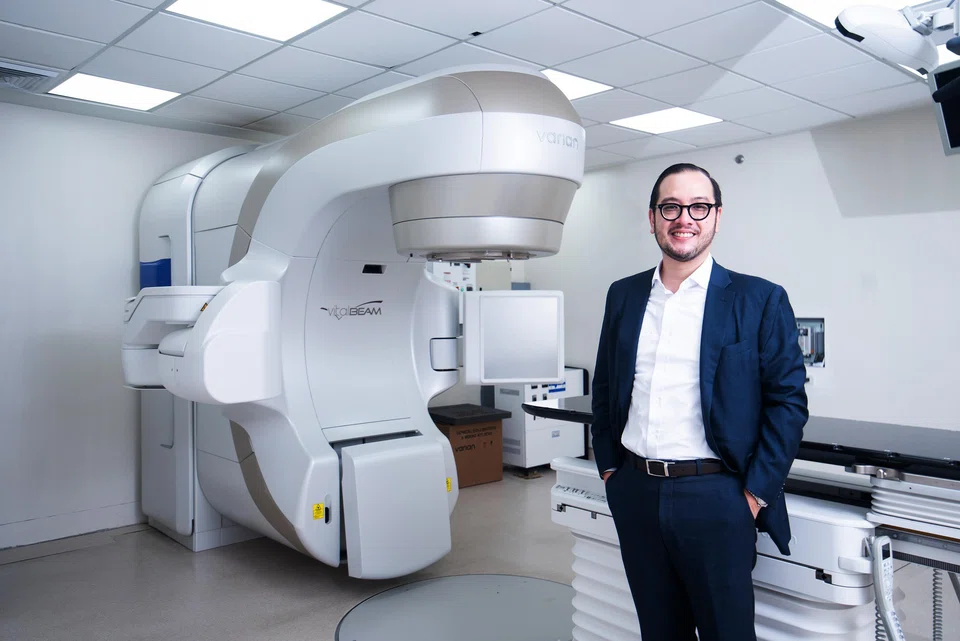
[MANILA] Ayala Corp, a diversified conglomerate in the Philippines, does not see itself divesting its healthcare or education businesses in the next 15 years.
Paolo Borromeo, the group’s chief social infrastructure officer, said in an interview with The Business Times at Ayala’s office in Manila that both these businesses “uplift” Ayala’s other sectors, as well as the Philippine economy.
The 48-year-old added that the conglomerate remains “deeply committed” to investing in health and education.
The conversation with Borromeo followed a report by The Philippine Star earlier in November, which cited a recommendation by JPMorgan Chase that the conglomerate should sell its smaller group businesses along with potentially privatising its real estate and property development business, Ayala Land.
The bank said that exits from units such as Integrated Micro-Electronics Inc (IMI), Ayala’s electronics manufacturing arm, and from its health and logistics businesses would allow management to direct capital towards businesses with stronger returns.
Ayala has diversified interests that include property development, real estate, banking, telecommunications, automotive distribution and power.

Borromeo said that healthcare is a long-term play, noting that the Philippines still remains very far behind developed economies in terms of healthcare infrastructure.
“I think when you’re outside looking in, it’s difficult to really appreciate the challenges in social infrastructure, meaning how far behind we are, and just the work and capital that needs to be deployed by both the public and private sector,” he said.
He added that Ayala has long-return horizons, noting that GCash started as a “tiny fragment” of Globe, Ayala’s telecommunications business, before becoming the Philippines’ biggest e-wallet.
SEE ALSO




Borromeo also acknowledged that Ayala has divested other businesses in its more-than-190-year history, citing its exit from Manila Water in 2024. He added, however, that he does not see any exit from healthcare in at least the next 15 years.
JPMorgan in its report noted the tightened capital allocation that Ayala has pursued under its president and CEO Cezar Consing, the first person from outside the Ayala family to serve as president and CEO of Ayala Corp.
Yet, Borromeo maintains that healthcare remains an important part of the conglomerate’s strategy, and that it has “sizeable value” even if the unit remains small earnings-wise.
He did not comment on IMI or AC Logistics.
AC Health’s revenue rose 29 per cent year on year in the first nine months of 2026 to reach 11.8 billion Philippine pesos (US$185 million). Its core net loss narrowed to 54 million pesos from 75 million pesos from a year earlier.
Borromeo became Ayala’s chief social infrastructure officer in April, having previously overseen AC Health. In his new role, he is responsible for optimising the impact of Ayala’s social infrastructure business, specifically healthcare and education.
“What good is the Philippines’ demographic dividend if we are not investing in (young Filipinos’) upbringing, their education, in their upskilling, and in their overall health?” he asked.
Borromeo believes Ayala’s healthcare and education businesses creates a reputational “halo effect” for the group. He added that having healthcare facilities in Ayala developments creates a better quality of life in that particular community, while education can potentially lead to higher incomes.
“Income and livelihood increases can translate to higher spending capacity,” he said, pointing out that capacity benefits both the country and the group.
“External research firms can have their own views,” he added, “but we have our own, and we are deeply committed to investing in the social infrastructure of the country because it helps uplift our other businesses and the nation.”
Decoding Asia newsletter: your guide to navigating Asia in a new global order. Sign up here to get Decoding Asia newsletter. Delivered to your inbox. Free.
Copyright SPH Media. All rights reserved.