



Global money trickles back to Indonesia as markets recover
Helping draw investors back is a series of moves aimed at restoring confidence

[JAKARTA] Global investors are tiptoeing back into Indonesian markets after the turmoil witnessed earlier this year, drawn by a striking rebound in local assets as policymakers stepped in to restore stability.
Foreign funds are buying the nation’s bonds for a fourth straight month, the rupiah has appreciated more than 3.5 per cent from June’s record low, and stocks look poised for their first quarterly inflow of 2026.
Money managers including those at Invesco and PPM America have trimmed their underweight positions in Indonesian assets.
Helping draw investors back is a series of moves aimed at restoring market confidence.
Indonesian President Prabowo Subianto has pledged to rein in the budget deficit, regulators have rolled out more measures to address MSCI’s concerns over market transparency, and newly appointed Bank Indonesia (BI) governor Destry Damayanti has signalled that she will stay the course.
A tougher global backdrop is raising the risks however, as renewed US-Iran hostilities drive up oil prices and bets grow on US Federal Reserve interest rate hikes.
“We would need to see continued policy delivery and a somewhat more supportive external environment before rebuilding a more meaningful position,” said Yiping Liao, a Singapore-based fund manager at Templeton Global, who oversees US$4.35 billion in assets. “I’m still fairly cautious. The key thing for us is execution.”
The scars from the sell-off run deep. Even as the Jakarta Composite Index has jumped 25 per cent from a more than five-year low in early June, meeting the definition of a technical bull market, the benchmark is still down almost 23 per cent for 2026 – the steepest loss among more than 90 global indices tracked by Bloomberg.
And the rupiah remains among Asia’s worst-performing currencies for 2026.
SEE ALSO



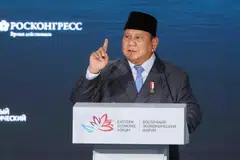



While global funds have bought US$296 million of local stocks so far this quarter on a net basis, that has barely dented year-to-date outflows of nearly US$4 billion.
Invesco has “modestly” cut its underweight position in equities as the risk-reward profile has improved, said William Yuen, a Hong Kong-based investment director at the firm, which oversees about US$2.4 trillion in assets globally.
“We will continue to monitor progress on the key issues and assess whether further adjustments are warranted,” he added.
The picture is mixed even in the bond market, where the semblance of optimism is perhaps most evident.
The return of foreign investors has been underpinned by BI’s measures to boost the appeal of local debt, and the pace of their purchases has slowed since June’s US$1.3 billion inflow, which was the biggest in about a year.
“The budget proposal is a step in the right direction, as are the initial signals from Damayanti. But you can see in Indonesia’s recent spread performance that the market still has some scepticism in terms of this administration’s underlying policy orientation,” said Matthew Graves, a portfolio manager at PPM America. “The only way you really close that gap is by backing up words with actions.”
Historic sell-off
Indonesia’s troubles began early in 2026, when index provider MSCI warned of a potential downgrade to frontier market status, citing concerns over investability.
The move triggered a historic rout that was exacerbated by fears of a sovereign rating cut, Prabowo’s populist policies and his push to exert greater control over the nation’s resource-rich export sector.
Then came the turnaround, sparked by an off-cycle interest rate hike by BI and other measures to shore up the rupiah.
In late June, MSCI delayed its review on Indonesian equities, saying that it needs more time to see efficacy of the transparency reforms announced.
UOB Asset Management Indonesia has turned neutral towards stocks, said CIO Albert Budiman.
Allianz Global Investors has “rebuilt a tactical overweight” position in front-end government bonds and the rupiah, said Ze Yi Ang, a senior portfolio manager, adding however that “policy continuity remains a key risk”.
‘Show us proof’
In all, money managers want to see evidence of a lasting shift towards more predictable and constructive policymaking before returning in force.
While Prabowo refrained from unveiling fresh populist measures in his budget speech last month, he said that Indonesia would open a new commodity exchange to exert greater influence over global prices.
Policy credibility aside, investors also want to see the outcome of MSCI’s November review and the Fed’s rate path as they weigh their exposure to Indonesian assets heading into end-2026.
“Unfortunately, over the past couple of years, we’ve seen back-and-forth moves,” said Natalia Gurushina, chief economist for emerging markets at Van Eck Associates in New York. “This is why some are rightly saying: ‘we’ve seen this movie before. Show us proof’.” BLOOMBERG
Decoding Asia newsletter: your guide to navigating Asia in a new global order. Sign up here to get Decoding Asia newsletter. Delivered to your inbox. Free.
Share with us your feedback on BT's products and services
TRENDING NOW
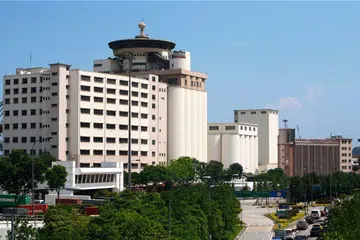
Prima to move out of historic Keppel Road flour mill building in 2028

Temasek-related Azalea, SeaTown, Seviora Capital to merge in 2027
Family offices see more tailored products, leverage ‘collective firepower’ for direct deal access

Singapore room rates soar, but hotels seeing mixed demand from F1 race and events

