



Indonesia assesses impact of new US chip controls on data centre investment after Nvidia scandal
The restrictions aim to prevent Chinese firms from accessing advanced American computing technology

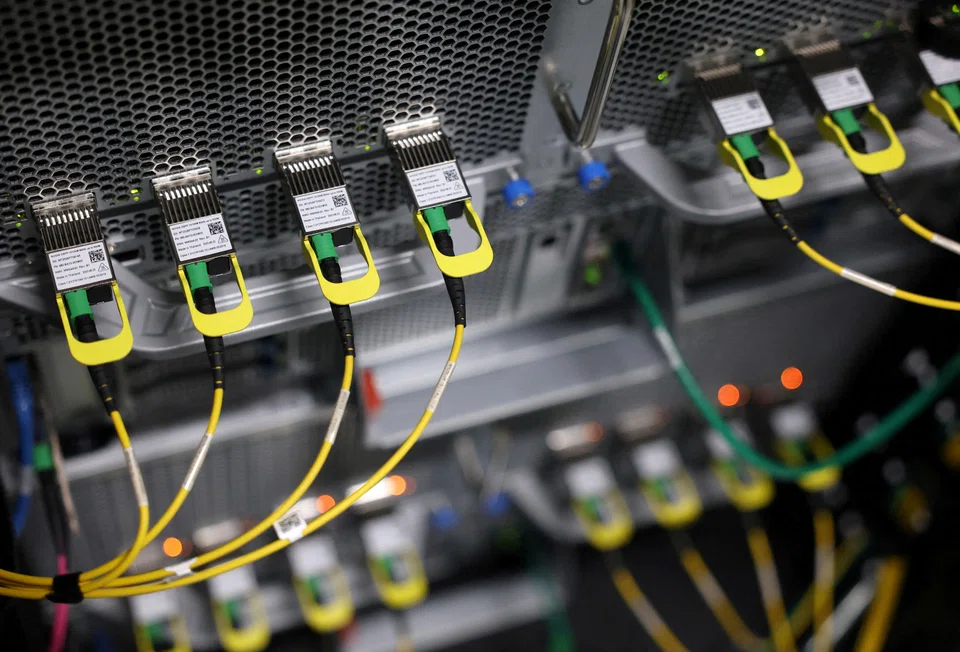
[JAKARTA] Indonesia said it is assessing the implications of Washington’s new restrictions on advanced semiconductor exports for investment and supply chains, as scrutiny intensifies over the alleged diversion of Nvidia chips through South-east Asia.
Haryo Limanseto, spokesperson for the Coordinating Ministry for Economic Affairs in Indonesia, said on Tuesday (Nov 17) that the government was closely monitoring the new US controls, and would study their substance and potential implications for investment in the country.
“The government will coordinate with relevant authorities and domestic industry players to identify the policy’s potential impact on supply chains and the development of Indonesia’s domestic technology industry,” he told The Business Times.
He added that the country also remained committed to transparent and responsible international trade in accordance with international law.
The US Commerce Department on Monday announced new export controls requiring companies to obtain licences before exporting, re-exporting or transferring advanced semiconductors to Indonesia, Malaysia, Singapore, Thailand and Brazil.
Washington considers the five countries to present a higher-than-normal risk of technology diversion.

The measures are aimed at preventing Chinese companies from accessing advanced US computing technology through data centres and other infrastructure located in third countries, circumventing existing restrictions on direct exports to China.
The announcement comes amid growing scrutiny over the possible diversion of advanced Nvidia chips to China through South-east Asia, following allegations involving Singapore-based cloud-computing company Megaspeed and its operations in the region.
On Monday, The Straits Times reported that Indonesian police had searched the office of Megaspeed International Indonesia, the company’s local subsidiary, earlier this year as part of an investigation requested by the US Federal Bureau of Investigation to trace Nvidia chips purchased by the company.

Indonesian police said on Tuesday they had received a request from the FBI to investigate suspected smuggling involving Megaspeed, but had not yet carried out any searches in connection with the case.
Officers from the National Police’s Criminal Investigation Department, known as Bareskrim, found server racks at the premises but no graphics processing units, said a senior Indonesian government official cited by the newspaper.
Indonesia remains heavily reliant on imported semiconductors, including advanced artificial intelligence chips designed by US companies such as Nvidia, leaving its nascent AI infrastructure sector exposed to potential disruptions from Washington’s export controls.
Cloudy outlook
The restrictions could also introduce fresh uncertainty for investors weighing the prospects of South-east Asia’s data centre industry, particularly if Nvidia becomes more cautious about supplying the region.
Maxwell Abbott, principal at Singapore-based advisory firm Meriwether, said the measures could make Nvidia more risk-averse in the short term, and potentially slow its investments and sales of advanced chips to regional data centre operators.
“From a business perspective, the question is whether this will lead to a slowdown in Nvidia’s investments in the region and its sales of advanced chips to South-east Asian data centres. I think it might,” he said.
He added that Indonesia could be particularly exposed to such a shift, given investors’ existing concerns about whether its regulatory and infrastructure environment can support large-scale investments over the long term.
However, the immediate impact may be limited if other semiconductor suppliers, including Broadcom and Intel, can step in to fill any supply gap.
“The broader concern is that Washington could tighten enforcement across South-east Asia, including through greater cooperation with regional law enforcement agencies to prevent chip diversion,” Abbott said.
This comes as Indonesia seeks to become a regional data centre hub, attracting investment amid rising demand for cloud computing and AI services.
South-east Asia’s largest economy imported US$3.3 billion worth of semiconductors in the first seven months of 2026, a 21.8 per cent increase from the same period a year earlier, Statistics Indonesia showed.
The new US restrictions have also drawn responses from other governments in the region.
Singapore’s Ministry of Digital Development and Information and Ministry of Energy, Trade and Industry said they were studying the details of Washington’s new measures and engaging affected companies to assess the potential business impact.
The authorities were also in discussions with their US counterparts over the scope and implementation of the restrictions, while exploring ways to facilitate trusted access to advanced semiconductors for Singapore companies.
The city-state said it would safeguard access to advanced computing capabilities for legitimate businesses, while taking action against companies that violate its laws or use the country to circumvent foreign export controls.
Malaysia, meanwhile, said on Nov 13 that it was working with Singaporean and US authorities to strengthen safeguards against chip smuggling.
Megaspeed has come under scrutiny amid allegations that its former managing director, Alice Huang, was involved in passing information to Beijing.
The company has been at the centre of a US national security investigation over suspicions that advanced Nvidia chips may have been diverted to Chinese customers in breach of American export restrictions.
Decoding Asia newsletter: your guide to navigating Asia in a new global order. Sign up here to get Decoding Asia newsletter. Delivered to your inbox. Free.
Copyright SPH Media. All rights reserved.
TRENDING NOW

‘If there’s a price to be paid, so be it’: George Yeo says Singapore must safeguard its reputation

South-east Asia has lost Nvidia’s best salesman
CapitaLand, Far East, Sing Holdings team up for S$1.8 billion bid at S$910 psf ppr for Jurong Lake District site

Beyond the greenback, Vietnam’s big borrowers turn to Asian-currency bonds

