



Indonesia’s fuel price hike, rupiah rout pile pressure on Prabowo as students protest
They are calling for the government’s free meals programme to be scrapped as living costs rise

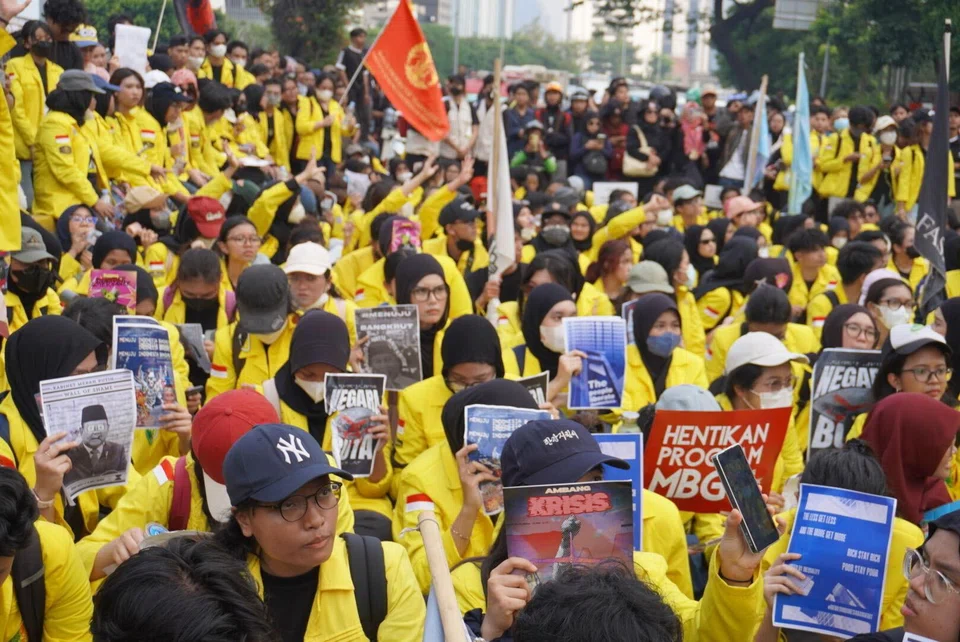
[JAKARTA] Rising fuel prices, a weakening rupiah and growing concerns over Indonesia’s economic direction triggered a student-led protest in Jakarta on Friday (Jun 12), posing a fresh challenge for President Prabowo Subianto.
As public frustration over living costs intensifies, more than a thousand students from universities in Greater Jakarta and social communities have rallied in the Thamrin area of central Jakarta, the country’s main business district and seat of government.
They accuse the administration of failing to address mounting economic pressures while pursuing costly spending programmes.
Authorities have deployed more than 4,000 police and military personnel to secure the protest, said the Jakarta Metropolitan Regional Police.
In a video statement ahead of the rally, the University of Indonesia’s student executive board – which led the movement – said the government had failed to respond to worsening economic conditions faced by ordinary citizens.
The students raised concerns over what they described as fiscal mismanagement, which they say has contributed to the rupiah’s slide, alongside worries about central bank independence and the government’s approach to public communication.
“Indonesia’s economy is deteriorating,” a narrator said in the video.
The students also called for the termination of Prabowo’s flagship free meals programme and the related Red and White Village Cooperatives initiative.
While the government has defended the programmes as tools to combat poverty and malnutrition, critics have questioned their fiscal burden and governance.
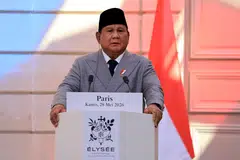
Scrutiny has further intensified after Prabowo recently dismissed a senior official overseeing the free meals programme amid a corruption investigation.
“A bitter pill that must be taken”
The protest comes after state-owned energy company Pertamina raised the price of non-subsidised petrol grade Pertamax by more than 30 per cent this week, a move driven by higher global energy costs and mounting fiscal pressures.
The increase has heightened concerns over household purchasing power as Indonesians already grapple with elevated food and transportation costs.
The protest also comes at a sensitive time for the government.
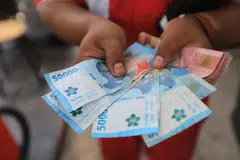
South-east Asia’s largest economy has been tussling with a combination of domestic and external pressures that pushed the rupiah past the psychologically important 18,000-per-US dollar level earlier this week, its weakest on record.
The currency has softened more than 7 per cent this year, prompting Bank Indonesia to unexpectedly raise interest rates on Tuesday in a bid to restore market confidence and curb capital outflows.
The rupiah rebounded to 17,845 against the greenback on Friday.
Besides foreign capital outflows and a stronger US dollar putting pressure on the rupiah, rising energy prices linked to tensions in the Middle East have increased import costs.
Fakhrul Fulvian, chief economist at Trimegah Sekuritas Indonesia, said that the sharp increase in fuel prices reflected the government’s increasingly constrained fiscal position amid rising subsidy costs and higher energy import bills.
“This is a bitter pill that must be taken,” he said.
“In normal circumstances, no government wants to raise fuel prices. However, when fiscal space becomes increasingly limited and subsidy costs continue to rise, an adjustment becomes a difficult but necessary choice.”
He added that the government should move quickly to cushion the impact of higher fuel prices through targeted assistance for vulnerable and lower-middle-income households, particularly those most affected by rising transportation and daily living costs.
The economic pressures that households face also coincide with growing unease among investors over the government’s policy direction.
Equity markets have come under pressure, with the Jakarta Composite Index tumbling more than 30 per cent this year amid foreign capital outflows and growing concerns over Indonesia’s investment climate.
These include increased scrutiny from index provider MSCI over the country’s investability.
The rally adds to a growing list of protests during Prabowo’s presidency. Demonstrations last August turned violent and left a motorcycle taxi driver dead, prompting deeper scrutiny of the government’s handling of public dissent.
Decoding Asia newsletter: your guide to navigating Asia in a new global order. Sign up here to get Decoding Asia newsletter. Delivered to your inbox. Free.
Copyright SPH Media. All rights reserved.
TRENDING NOW

Once staunchly pro-China, Malaysian Chinese businesses are now distancing themselves from Beijing

Looking beyond looming CEO succession, should UOB potentially pursue a transformative merger?

Could stablecoins be the future of money?

Grab CEO’s wife Chloe Tong on life with Anthony Tan and finding her purpose

