



Johor delays JS-SEZ blueprint roll-out for further refinements, targets launch in H1
The state seeks alignment among agencies as cross-border investment gains pace

[JOHOR BAHRU] Johor has postponed the roll-out of its highly anticipated Johor-Singapore Special Economic Zone (JS-SEZ) master plan and investment blueprint, as the authorities seek broader alignment across federal agencies to ensure the long-term viability of the initiative.
The JS-SEZ master plan and investment blueprint were initially slated for launch on Mar 30.
They aim to establish the zone as a high-growth hub, with the goal of generating RM260 billion (S$83.7 billion) in gross domestic product for Johor state by 2030 and creating more than 20,000 high-skilled jobs.
Johor Chief Minister Onn Hafiz Ghazi said the delay followed discussions with Economy Minister Akmal Nasrullah Mohd Nasir, with both sides agreeing that further refinements are needed before the plan is finalised.
He noted that the investment blueprint and master plan are currently under review by the National Investment Council and will be submitted to the Cabinet for approval.
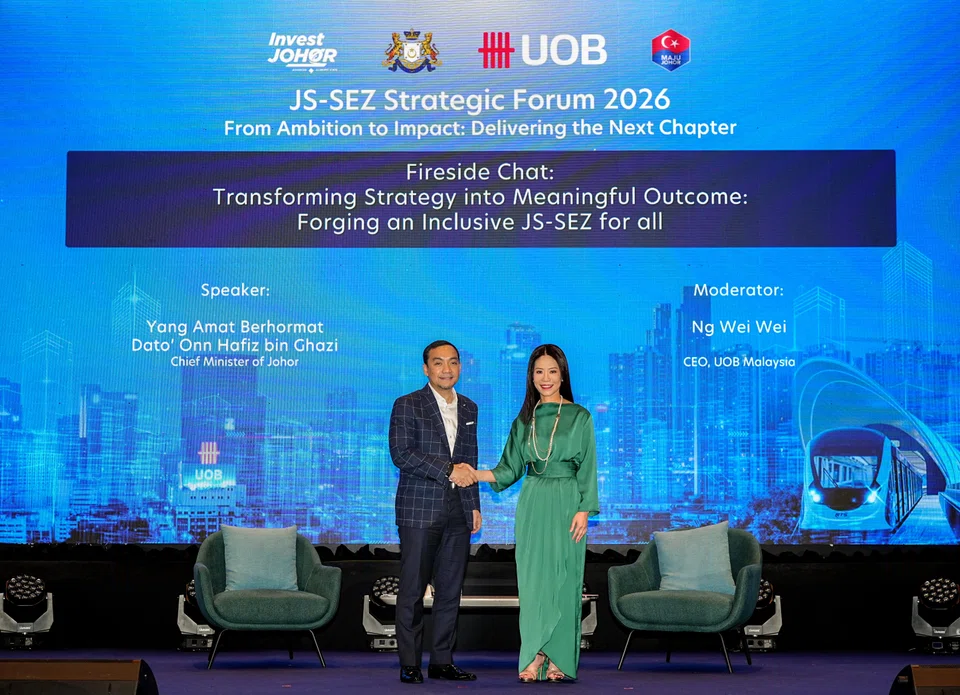
“Given (the) 10 to 20-year horizon, we are seeking broad endorsement across government agencies to ensure long-term stability,” Onn Hafiz said during a fireside chat at UOB-Invest Johor JS-SEZ Strategic Forum 2026 on Monday (Apr 20).
He described the initiative as a unique strategic window for Malaysia, Johor and Singapore to leverage their shared strengths.
“Ten years ago, such seamless collaboration across borders and agencies was unlikely. Now, we see total alignment from the federal level down to the state and region, underpinned by a deep cooperation with Singapore,” he added. “This is a once-in-a-generation opportunity, I can’t imagine this to happen again.”
The JS-SEZ is positioned as a cornerstone of Malaysia’s push to strengthen cross-border economic integration with Singapore, with a focus on advanced manufacturing, digital infrastructure and high-value services.
SEE ALSO


To support this, Onn Hafiz said, the investment blueprint and master plan are prioritising the ease of doing business. This includes the introduction of regulatory sandboxes aimed at accelerating emerging sectors such as healthcare and advanced technologies.
Separately, Lee Ting Han, chairman of the state investment, trade, consumer affairs and human resources committee, expects them to be finalised and launched in the first half of 2026. The timeline remains flexible pending approvals from all relevant government agencies.
“The deadline isn’t set in stone. Our priority is ensuring all stakeholders are fully aligned before the launch,” he told The Business Times on the sidelines of the forum.
Costs rising amid Middle East tensions
Commenting on the impact of the Middle East crisis on the state’s economy, Lee said that it is still too early to fully assess the effects of the ongoing crisis, though early signs point to rising business costs.
He noted that about two months of disruption have already led to higher costs, particularly in the construction sector, raising concerns for industries that depend on long-term cost predictability.
Specialised sectors such as chemicals and data centres could be particularly sensitive to such volatility, given their reliance on stable supply chains and energy inputs.
While the JS-SEZ continues to attract strong investor interest, Lee cautioned that investment inflows may take time to materialise, as relocation decisions by multinational corporations are typically long term and complex.
“We are not expecting an immediate influx. These are long-cycle investments,” he said.
He noted that Johor is looking to sustain its investment momentum after securing 339 projects worth RM110 billion in 2025 – the highest among Malaysian states.
“For 2026, we aim to build on that foundation as more established global brands enter the market. This will solidify the state’s standing in the high-tech engineering and technology sectors,” he said, though he declined to disclose specific company names.
The upcoming master plan is expected to sharpen Johor’s value proposition within the regional supply chain, particularly as companies seek diversification amid geopolitical uncertainties, Lee added.
Private-sector momentum builds
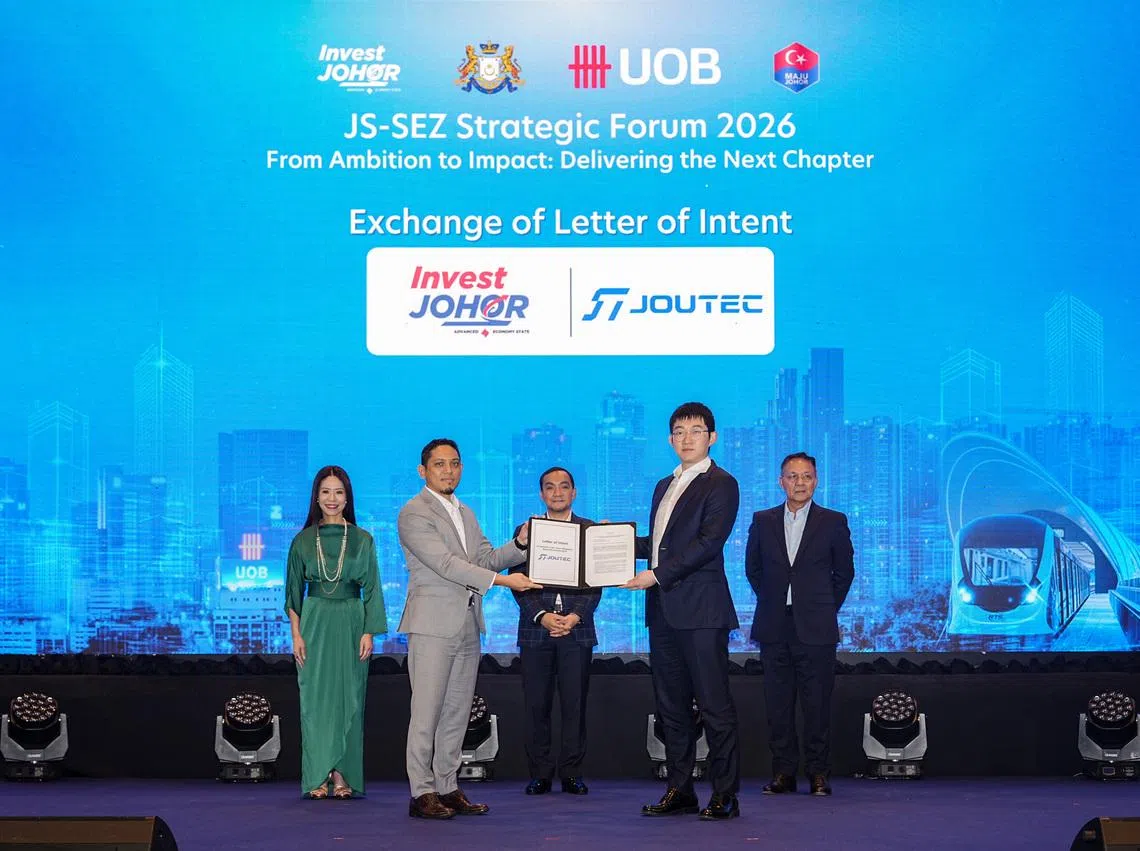
Even as the investment blueprint and master plan are being refined, early investment flows into the JS-SEZ are gaining traction, supported by public-private collaboration.
Ng Wei Wei, CEO of UOB Malaysia, said the bank has facilitated more than RM18 billion in foreign direct investment flows into the zone.
This follows the launch of UOB’s Green Lane initiative with Invest Johor last year, aimed at streamlining cross-border investment processes.
At the UOB-Invest Johor JS-SEZ Strategic Forum 2026, the bank also announced two new investor commitments exceeding RM1 billion, to be channelled through the Green Lane platform.
The developments underscore continued progress in regional supply chain integration, even as the broader master plan remains under review.
Separately, UOB launched its UOB My Digital Space initiative in Malaysia, an education programme designed to equip students with digital skills and critical thinking capabilities.
The programme, which targets students aged 10 to 16, has been rolled out across key markets including Singapore, Indonesia and China, and is expected to benefit more than 100,000 students regionally.
Decoding Asia newsletter: your guide to navigating Asia in a new global order. Sign up here to get Decoding Asia newsletter. Delivered to your inbox. Free.
Copyright SPH Media. All rights reserved.
TRENDING NOW

DBS, OCBC, UOB rout lops billions off STI as inflation, rate concerns spook investors

Grab CEO’s wife Chloe Tong on life with Anthony Tan and finding her purpose

OCBC sheds S$8 billion in value as shares close nearly 6% down; analysts cautious on banks

Deal between tycoon friends sparks scrutiny of Philippine power sector

