


Asean Business logo
SPONSORED BYUOB logo

Malaysian ports eye rerouted cargo, even as Middle East tensions at Hormuz risk congestion

The country’s hubs also face competition from other transhipment centres in the region
Summarise
    • While Malaysia’s ports appear to be operating without major visible disruption for now, the balance could shift quickly if the Gulf conflict drags on.
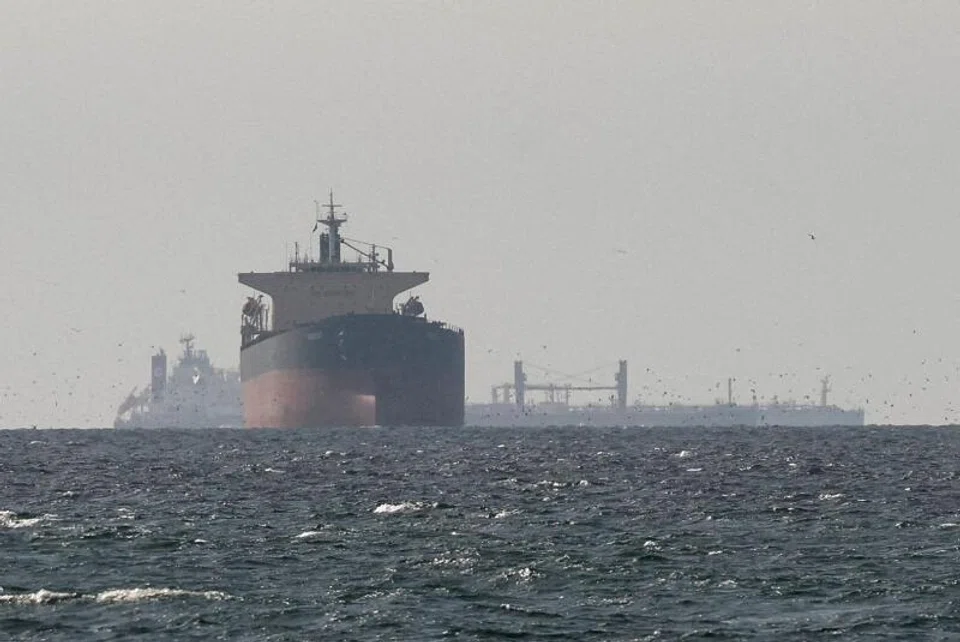
    • While Malaysia’s ports appear to be operating without major visible disruption for now, the balance could shift quickly if the Gulf conflict drags on. PHOTO: REUTERS
    Published Wed, Mar 18, 2026 · 09:44 AM

    [KUALA LUMPUR] Malaysia’s main transhipment hubs, Port Klang and Port of Tanjung Pelepas (PTP), could see cargo diverted to them amid the Middle East conflict, but industry players warn that the more immediate risk is congestion from delayed vessels, stranded containers and disrupted schedules.

    The tension is already visible. Port Klang Authority general manager Captain K Subramaniam told The Business Times that the port was operating normally with no sign of congestion or disruption. But the Malaysia Shipowners’ Association (Masa) said that ships were already rerouting, vessel stays were lengthening, and ports could face congestion in both ships and cargoes.

    Port Klang and PTP are natural candidates to absorb diverted traffic because both handle substantial Asia-Europe cargo volumes. But Kenanga Research said in a Mar 12 report that Westports had indicated 80 per cent of shipping lines were still arriving outside scheduled times, suggesting that networks were already under strain even before the latest Hormuz shock.

    Jayendu Krishna, director-head of maritime advisers at Drewry Shipping Consultants, told BT that Malaysian ports were among the regional hubs that could benefit if cargo is rerouted.

    He added, however, that the upside would be shared with competing transhipment centres such as Singapore’s PSA International, Colombo and Vizhinjam, and could be offset by congestion risks.

    Malaysia’s Ministry of Transport has already activated a task force with Masa, port operators and other maritime agencies. Transport Minister Anthony Loke said in a statement on Mar 10 that emergency measures included clearing empty containers from port areas and offsetting fuel-cost pressures.

    Mohamed Safwan Othman, chairman of Masa, said most vessels had rerouted via the Cape of Good Hope and were avoiding the Strait of Hormuz after insurers withdrew war-risk cover for affected voyages. He warned that ports had already reported longer vessel stays after ships cancelled Middle East-bound journeys.

    “We can expect congestion of both ships and cargoes at ports in Malaysia,” he told BT. The immediate stress, he added, comes less from any surge in cargo than from the disruption itself; delayed ships and stranded containers are harder for ports to manage.

    Rising to the occasion?

    Beyond the challenges facing port operators, the bigger question is whether the Strait of Malacca – one of the world’s busiest maritime choke points – can absorb additional traffic without creating new bottlenecks.

    Nurismarina Smail, a maritime security and diplomacy researcher at the Maritime Institute of Malaysia, told BT that shipping companies might reassess routes as security risks and insurance premiums rise.

    “The Strait of Malacca functions less as an alternative route and more as a central artery of global trade,” she said.

    “Higher vessel traffic may intensify congestion and raise navigational challenges in certain stretches of the waterway, potentially increasing the risk of maritime incidents.”

    She added that Malaysia, Singapore and Indonesia have long maintained cooperative traffic-management and maritime-security mechanisms to support safe passage through the strait, though that framework could come under greater pressure if rerouting is sustained.

    For now, Malaysia’s ports appear to be operating without major visible disruption. But if the Gulf conflict drags on, that balance could shift quickly. 

    Asia is likely to be hit the hardest. The US Energy Information Administration said in its Mar 3 global choke points update that, in the first half of 2025, 89 per cent of crude oil and ultralight oil moving through the strait went to Asian markets.

    For Malaysia, this translates to higher bunker fuel costs, more expensive shipping insurance, and potential volatility in vessel calls and cargo flows at its key ports. 

    Regional hubs are also likely to come under pressure as disruption spreads across the region’s shipping network.

    The risk extends beyond crude. The International Energy Agency (IEA) has said that more than 110 billion cubic metres of liquefied natural gas moved through Hormuz in 2025, accounting for nearly one-fifth of global trade.

    Bypass options remain limited. The IEA estimates alternative export capacity via Saudi Arabia’s Red Sea pipeline and the UAE’s Fujairah route at just 3.5 million to 5.5 million barrels a day – well below typical Hormuz volumes.

    Reuters similarly reported that these routes can absorb only part of any disruption, making sustained losses difficult to replace and limiting rerouting options. 

    Fitch Ratings warned on Mar 11 that a prolonged Iran-linked disruption could raise credit risks across Asia-Pacific ports.

    “Congestion can lift some storage and ancillary income at container ports, but weaker schedule reliability typically raises unit costs and reduces productivity, pressuring margins at operators with high fixed costs,” it said.

    Drewry Maritime Research similarly noted that while container shipping is less exposed than tanker and bulk sectors, it remains vulnerable to rerouting, delays and higher costs.

    Its automatic identification system data showed that as at Mar 1, 158 container ships with a combined capacity of 691,000 20-foot equivalent units (TEUs) were in the Middle East – about 2.1 per cent of the global fleet.

    As disruption ripples through the system, vessels bunching outside conflict zones and arriving off schedule are already creating backlogs, equipment shortages and higher freight costs across global supply chains.

    If the disruption persists, transhipment hubs may capture some diverted cargo and see gains from higher handling and storage activity, though any upside is likely to be contested across the region rather than concentrated in Malaysia.

    The clearer near-term losers are cargo owners – exporters, importers and manufacturers – who must absorb higher freight costs, war-risk surcharges and longer transit times, regardless of whether Malaysian ports see a volume uplift.



