



Oil spike pushes Malaysia fuel subsidies to RM3.2 billion a month
The monthly bill rises more than four times from RM700 million previously, but the government says it is poised to absorb the increase

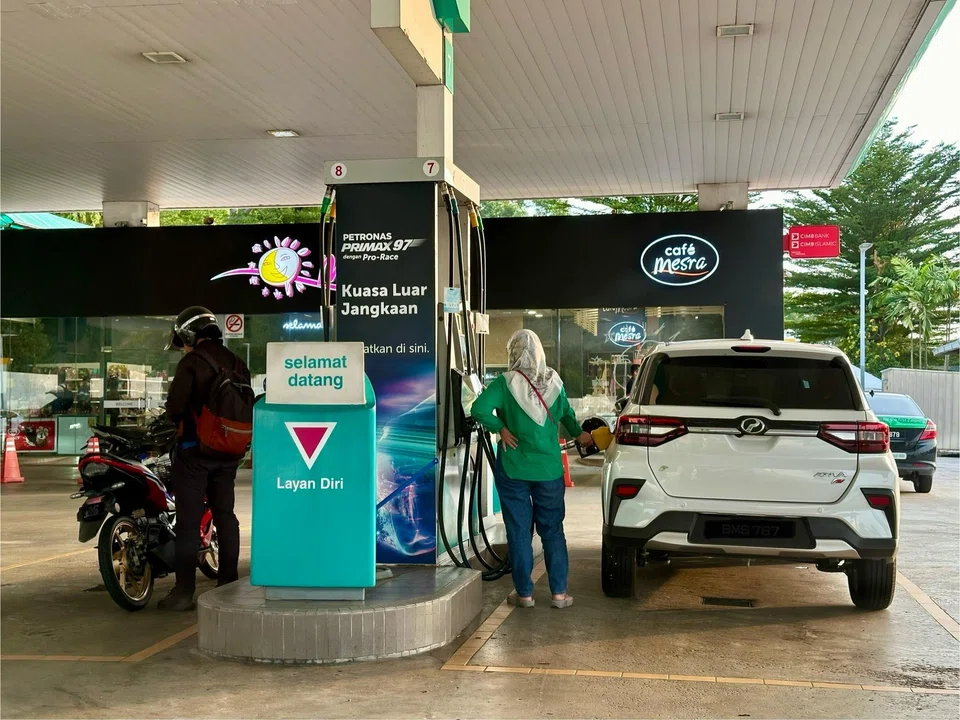
[KUALA LUMPUR] Malaysia’s fuel subsidy bill has risen more than four times to about RM3.2 billion (S$1 billion) a month as the Middle East conflict drives global oil prices higher, putting pressure on government finances.
Second Finance Minister Amir Hamzah Azizan said the monthly cost has gone up from roughly RM700 million previously, reflecting the sharp rise in crude prices since the outbreak of the Iran war. Now, about RM2 billion is allocated for petrol subsidies and RM1.2 billion for diesel, based on current oil prices worldwide.
Brent crude prices have been on a steep climb since tensions escalated in the Middle East, rising from around US$60 a barrel before the conflict to as high as US$119, before stabilising at about US$100 per barrel.
Despite the surge in global energy prices, the Malaysian government has maintained its fuel subsidy policy to shield consumers from rising costs.
“We are not saying that we are not affected. We are affected because the prices of goods are influenced by oil prices, which are determined by market forces,” Amir told reporters after a special Cabinet meeting on Friday (Mar 13).
However, he said the government remains in a strong position to absorb the higher subsidy bill, citing fiscal reforms and consolidation measures implemented over the past three years.
“As Prime Minister Anwar Ibrahim said, Malaysia has sufficient petrol and diesel supplies. Petronas and other companies are working to extend supply,” he added.
Under current policies, Malaysians can purchase up to 300 litres per month of subsidised RON95 petrol at RM1.99 a litre. Similarly, eligible companies under fleet and diesel programmes can still access subsidised diesel at RM2.15 per litre, with specific allocations determined by their approved quotas.
Analysts say the fiscal burden could rise sharply if oil prices continue climbing.
SEE ALSO




UOB Research earlier estimated that if Brent crude reaches US$150 a barrel, Malaysia’s RON95 petrol subsidy alone could cost about RM4.8 billion a month. If prices surge further to US$200 per barrel, the monthly bill could climb to around RM7.7 billion.
Amir declined to speculate on the economic impact should oil prices hit the US$200 mark, after Iran’s military earlier this week warned that it was possible.
“We should avoid speculation as it can be dangerous. When there is conflict in the Middle East, there is always a lot of speculation,” he said, adding that Malaysia is monitoring the situation and managing subsidies to stabilise fuel prices for the next two months.
Concerns over supply disruptions continue to intensify with the conflict as the Middle East accounts for a significant share of global energy exports. The blockade of the Strait of Hormuz – a key shipping route through which about one-fifth of the world’s oil supply passes – could further disrupt global markets.
Proposed work-from-home measures
At the same press briefing, Communications Minister Fahmi Fadzil said Malaysia is considering allowing civil servants to work from home as part of contingency measures linked to geopolitical developments. The proposal will be discussed in Parliament next Tuesday.
Elsewhere in South-east Asia, governments have already introduced energy-saving measures as oil prices remain volatile.
Thailand earlier this week encouraged public service employees to work remotely where possible to save fuel, and instructed government offices to set air-conditioning temperatures at 26 deg C to conserve energy.
In Vietnam, authorities have scrapped duties on several imported petroleum products to prevent fuel shortages and stabilise the domestic market.
The government is also encouraging companies to let employees work from home “whenever feasible” to help curb fuel demand, a statement on its website indicated.
Decoding Asia newsletter: your guide to navigating Asia in a new global order. Sign up here to get Decoding Asia newsletter. Delivered to your inbox. Free.
Copyright SPH Media. All rights reserved.
TRENDING NOW

Once staunchly pro-China, Malaysian Chinese businesses are now distancing themselves from Beijing

Looking beyond looming CEO succession, should UOB potentially pursue a transformative merger?

Could stablecoins be the future of money?

Grab CEO’s wife Chloe Tong on life with Anthony Tan and finding her purpose

