



Passing on values comes into focus as Asean’s family businesses hand over the reins
Families behind Singapore’s Eu Yan Sang and Indonesia’s Daya Selaras share insights on managing transitions
[SINGAPORE] Family businesses are a major economic force in South-east Asia, taking the form of everything from neighbourhood retailers to wholesalers, manufacturers and large conglomerates.
For many such businesses, ensuring a successful transition from one generation to the next is part of their business continuity plan.
Passing on one key intangible asset in particular could be critical for a generational handover.
“There is not enough preparation that you can get as a next-gen when you enter into a family business,” said Cynthia Handriani Wijaya, chief corporate officer at the Indonesia-based Daya Selaras Group.
“You can have the experience, skills and knowledge, but when you enter the business, you realise there’s so much dynamism,” she explained. “At the end of the day, it falls back to the values, and it’s really the values that are your guiding compass.”
Wijaya is part of the second generation at Daya Selaras, which deals in wastepaper recycling and manufacturing. The company was founded by her father, Hendriko Wijaya.
The younger Wijaya recounted a family trip to Bali when she was 11. During the trip, her father made the family write a 10-year plan.
While that was a daunting task for an 11-year-old, she realised upon reflection that it was a visionary move, as it united the family with a common goal and purpose.
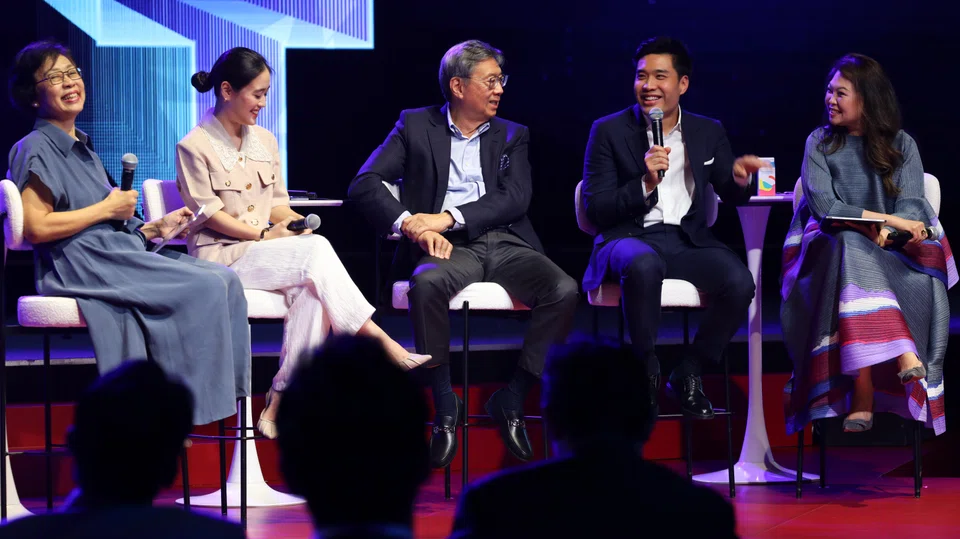
Wijaya was speaking at a panel on generational transition for family businesses on Thursday (Jul 30) at the Singapore Business Federation’s (SBF) ASEANext Forum, which was held at Resorts World Sentosa.
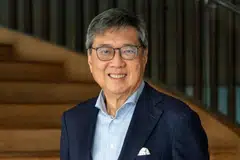


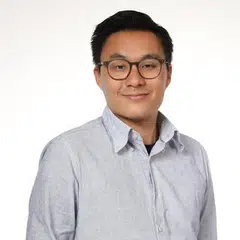
Eu Yan Sang International’s non-executive chairman Richard Eu and his son Richie Eu also shared similar views on how values played a role in family business transitions during the panel discussion moderated by Associate Professor Yupana Wiwattanakantang from the National University of Singapore Business School.
They shared a family poem written by Richard Eu’s great-great-grandfather, Eu He Song, that serves as a reminder for the family to “do the right thing by people” and “behave the right way”.
Richie Eu, the company’s managing director for mergers and acquisitions, shared that the essence of the poem was that “if you do the right thing, you will be successful”.
He added that his grandfather had also instilled in him three Hs to be: honest, hardworking and humble.
The value of the family legacy was imprinted in Richie Eu early on; he volunteered at a school for children with disabilities – where his grandfather was a patron – from when he was 15 through to college.
Angela Koh, the head of wealth planning and family office advisory services at UOB Private Bank, said one value she highly recommends families pass along is that the next generation must know they are “custodians”.
“You’re not just inheriting assets, you’re custodians: the financial capital, the social capital that the family has developed and grown,” she said. “It’s your responsibility to look after it and grow it so that future generations can actually benefit.”
She added that these resources can even help communities around the family.
In an earlier keynote ahead of the panel, Richard Eu spoke on the history of the Eu Yan Sang brand, and how his generation set “caring for mankind” as the company’s mission. That had its origins in the very early days of Eu Yan Sang, which was started because his great-grandfather wanted to provide a healthcare option to tin miners who had relied on opium as a form of healthcare.
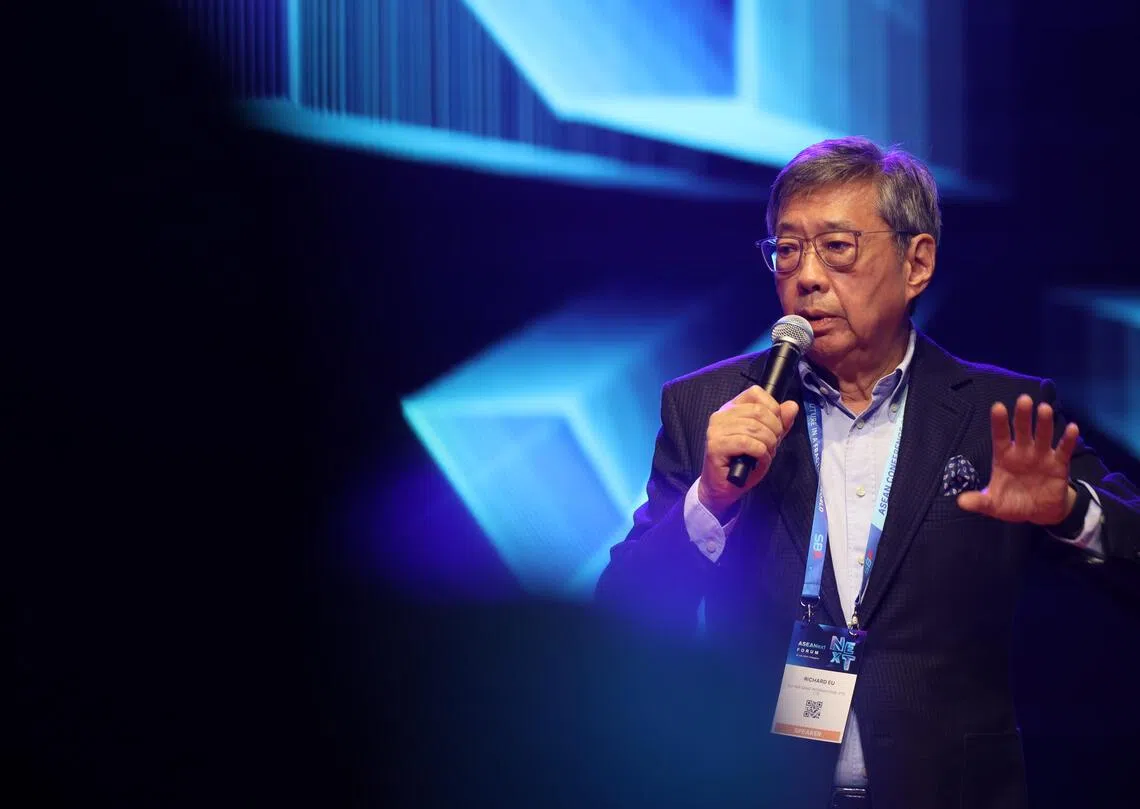
This year’s edition of the Asean Conference is centered on the theme of Asean’s future in a fractured world.
As part of the two-day conference, at a cocktail reception on Wednesday, The Business Times editor Chen Huifen shared findings from the inaugural BT Insights report that surveyed more than 500 C-suite executives.
Among others, she highlighted that 81 per cent of capex remains in Asia, with Vietnam, Malaysia and Singapore as top destinations.
She also stressed that while the old corporate playbook focused on globalisation, legacy relationship networks and predictability, the new Asean playbook, which is now being written, is defined by regionalisation, data-driven trust infrastructure and operational agility.
“Asean is no longer our backup market, but our primary platform,” she added.
BT is the media partner for SBF’s Asean Conference.
Decoding Asia newsletter: your guide to navigating Asia in a new global order. Sign up here to get Decoding Asia newsletter. Delivered to your inbox. Free.
Copyright SPH Media. All rights reserved.






