



Protect people, not prices: How Asean+3 can build resilience to energy shocks
Targeted support helps the most vulnerable and does not distort price signals
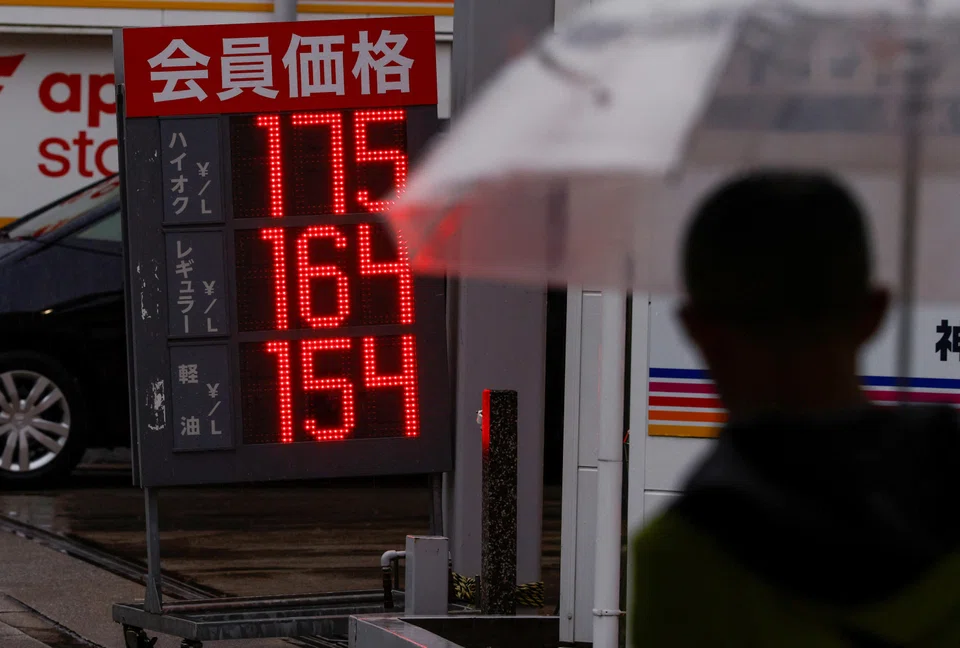
AMID the Middle East conflict, international oil prices have risen sharply, with Brent crude prices averaging about 60 per cent higher in September 2026 than in February 2026.
The surge is fanning inflation and cost-of-living pressures across the world, including the Asean+3 region – which consists of Asean members as well as China, Japan and South Korea. Governments are facing intense pressure to shield households and businesses from higher energy costs.
Yet, successive shocks previously – from the Covid-19 pandemic to the inflation that followed the war in Ukraine – have left many governments with higher public debt and less fiscal room. Population ageing and the energy transition will add to these demands.
The challenge now is not how much governments should spend during crises. It is how to protect those most affected without exhausting the resources needed to confront the next upheaval.
The region’s experience during the 2023 to 2025 inflation episode points to a useful principle: Wherever feasible, shield those most exposed rather than suppressing prices across the economy.
While broad energy subsidies provided immediate relief, they also directed support to consumers regardless of need. This weakened incentives to conserve energy and proved difficult to withdraw as price pressures eased, thus prolonging stresses on public finances.
In Thailand, for instance, energy subsidies in FY2024 cost the government an estimated 0.6 per cent of gross domestic product.
Other government measures in Asean+3 included temporary cash transfers and consumption vouchers to sustain household purchasing power and, where necessary, support domestic demand.
The mix varied with economic conditions. Where cost-of-living relief was the priority, economies such as Hong Kong, Indonesia, Japan, Malaysia, the Philippines and Singapore made greater use of targeted cash transfers.
By contrast, where supporting weaker domestic demand was a greater concern – as in China, South Korea and Thailand – greater emphasis was placed on time-bound consumption vouchers or cash transfers.
Different responses across the region
This approach is being tested again.
Asean+3 economies have adopted a range of policy responses to the recent Middle East energy shock.
Singapore announced targeted cost-of-living support measures in April and July 2026 – including cash payments, support for platform workers, taxi drivers and private-hire drivers, household vouchers and utility rebates – while retaining market-based fuel pricing.
Hong Kong and the Philippines introduced time-bound support for transport operators. Notably, Hong Kong’s temporary toll relief for commercial vehicles and subsidy for LPG expired as scheduled – an important demonstration of the value of credible sunset clauses.
Japan and South Korea provide contrasting case studies. Japan reintroduced temporary petrol price subsidies, while South Korea extended fuel tax cuts through to November 2026.
South Korea also complemented these measures with targeted household support, including energy vouchers for low-income households and tiered cash transfers.
These approaches reflect differences in exposure to the shock, domestic economic conditions, fiscal space and administrative capacity.
Where delivery systems are sufficiently developed and household affordability is the primary concern, targeted social protection can be deployed from the outset as a more fiscally sustainable first line of defence while preserving market incentives.
Other economies relied on temporary price measures that can be deployed quickly in response to spikes in energy costs or supply disruptions, particularly when rapid price pass-through poses stability risks.
Such support, however, should moderate rather than prevent price adjustments, be calibrated to fiscal space and debt sustainability considerations and include a transparent sunset clause.
Some nations combine both. Malaysia’s experience illustrates the importance of strengthening social protection to facilitate subsidy reform. Since 2024, it has moved from blanket fuel subsidies towards an evolving mix of market-based prices, targeted subsidies and expanded social assistance.
Coverage remains relatively broad, however, and further reform could align eligibility and compensation more closely with household needs while preserving clear price signals.
Build resilience before the next shock
Where institutional capacity allows, protecting household purchasing power while gradually reducing reliance on broad-based price subsidies offers three important advantages over blanket price controls.
First, it directs limited public resources towards vulnerable households and severely affected sectors instead of subsidising energy consumption across the economy.
Second, allowing global prices to pass through gradually encourages households and businesses to conserve energy, improve efficiency and adopt cleaner technologies. Prolonged blanket subsidies weaken these price signals.
Third, targeted support cushions the social impact of higher prices, making energy subsidy reform more socially and politically feasible.
In sum, targeted, temporary transfers contribute to long-term resilience by easing hardship among vulnerable households while preserving price signals and fiscal space for priority public investment.
Although this principle applies to other shocks, energy disruptions are distinctive: Fiscal support can cushion higher prices but cannot restore disrupted supply.
Hence, beyond short-term fiscal support, long-term resilience requires more diversified energy supplies, greater energy efficiency, expanded strategic reserves and faster investment in renewable energy and electricity networks, alongside stronger regional cooperation.
China is a case in point. The country’s continued investment in renewable energy, battery technologies, electric vehicles and electricity networks is strengthening its long-term energy security and resilience while accelerating the transition away from fossil fuels.
But it has also secured near and short-term stability because of its domestic coal supply alongside its petroleum reserves, which provide buffers during global supply disruptions.
Still, country-level measures alone cannot fully offset supply disruptions caused by geopolitical tensions or shipping constraints along critical maritime choke points. Stronger regional cooperation – including information sharing, emergency assistance and greater cross-border energy connectivity – is essential.
Initiatives such as the Asean Power Grid could strengthen energy security by facilitating cross-border electricity trade and integrating a larger share of renewable energy. These structural measures reinforce the fiscal case for reform.
Economies that consume energy more efficiently, draw on more diverse sources and trade electricity across borders will be less vulnerable to the next disruption – and will need less emergency support when it arrives.
As fiscal space tightens across Asean+3 governments, fiscal policy should not simply be about spending more during crises, particularly through blanket fuel subsidies, which would weaken price signals and strain public finances.
Instead, governments should spend better – protecting people through well-targeted support, while building greater resilience to future energy shocks.
The writers are from the Asean+3 Macroeconomic Research Office (Amro). Ravisara Hataiseree is economist and Tee Koon Hui is senior economist. Sum Dek Joe was previously economist at Amro.
The commentary is based on the writers’ own experiences, observations and argument. AI tools were used for refining and critiquing the draft. The writers remains fully accountable for the commentary’s accuracy, originality and final form.
TRENDING NOW

Philippine power giant First Gen rebuffs foreign offers, plans up to US$2.6 billion in expansion

Once staunchly pro-China, Malaysian Chinese businesses are now distancing themselves from Beijing

Nearly half of Singapore workers put in at least six unpaid hours a week: survey

Vietnam’s data-centre investment rush faces reality check on power and site constraints

