Recent COP31 failure need not preclude Asean progress on regional energy transition
Economic pressures tip to push growth in renewables; bloc-wide cooperation remains main hurdle


[SINGAPORE] The failure to reach a consensus at this year’s United Nations climate conference reflects the increasingly fractious nature of international climate diplomacy.
It was an outcome some say has long been in the making, as countries become increasingly divided by geopolitical tensions and competing priorities.
But the absence of a global agreement does not mean climate action has to grind to a halt. Instead, it could spur regional groupings such as Asean to take on a bigger role in climate cooperation, even if progress comes through bilateral or regional arrangements.
Regional cooperation could become an increasingly important avenue for sustaining climate action and delivering tangible economic benefits, while continuing to complement the global multilateral process, said Shabrina Nadhila, energy analyst for Asia at energy think tank Ember.
Shift to regional coalitions
While international cooperation will remain important, Christina Ng, managing director of independent think tank Energy Shift Institute, said that Asean does not need to wait for global consensus to make progress on investments that serve its own economic and energy security interests.
For Asean, this shift towards regional cooperation is primarily driven by practical economic and energy security considerations, rather than climate ambitions.

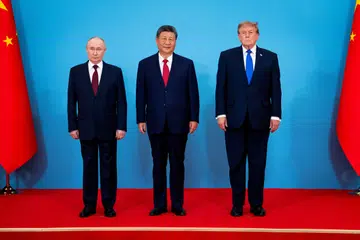
Recent progress was made on this front when all 11 South-east Asian member states signed an enhanced memorandum of understanding on the Asean Power Grid at the recent Asean summit in Manila, Philippines.
The planned Asean Power Grid, a major initiative aiming to connect the region’s power systems for cross-border electricity trade, is among the South-east Asian bloc’s established mechanisms for energy cooperation.
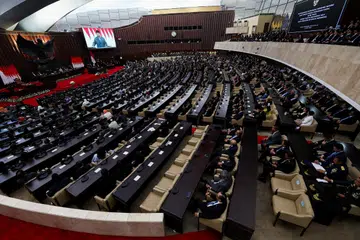
The Asean summit concluded just days before the COP31 climate conference in Antalya, Turkey. There, by contrast, nearly 200 countries spent two weeks locked in negotiations that ran 49 hours into overtime, marking the longest COP in history.
SEE ALSO

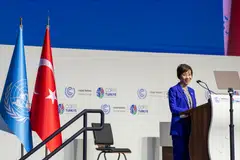



Despite the overtime, the conference ended without a consensus – the second time in COP history that countries have failed to reach one. This failure stemmed largely from disagreement around the omission of the term “fossil fuels” from the final draft text.
COP31’s president of negotiations, Chris Bowen – who is also climate change minister of Australia, which co-hosted the climate talks – attributed the collapse of negotiations to “unbridgeable red lines” amid “the most complicated and fraught geopolitical environment in living memory”.
With energy security displacing emissions reduction as the top priority for most governments in the wake of the Iran war, consensus among almost 200 countries is becoming harder to achieve, said Chen Yingde, power and energy transition analyst at BMI, the country risk and analysis research arm of Fitch Solutions.
“Importers and exporters draw opposite conclusions from the same supply shock. Importers are accelerating renewables, storage and grids; resource-rich markets prioritise reliability and affordability,” he said.
Under such circumstances, he told The Business Times that “we expect climate action to shift further towards national policy, bilateral deals and regional groupings”.
The Iran war has further underscored the vulnerability of many South-east Asian economies to energy price volatility and supply disruptions, given their reliance on imported fossil fuels.
Energy Shift Institute’s Ng added: “The region has strong economic reasons to strengthen regional energy cooperation regardless of what happens at COP31.
“This means building on shared economic interests, keeping international partnerships and sources of finance diversified, and reducing exposure to volatile global fuel markets.”
Regional power connectivity
While Asean member states have different energy priorities and transition pathways, ensuring affordable, reliable and secure electricity is a common interest across the region, said Ember’s Nadhila.
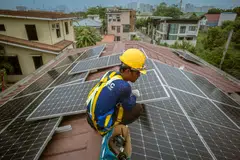
Against this backdrop, developing domestic clean energy resources and facilitating cross-border electricity trade have emerged as key pathways for Asean countries to reduce their exposure to external energy shocks.
Such cooperation can serve economic and energy security objectives alongside climate goals, she said.
“Asean could build on this common ground to deepen cooperation in renewable energy development, cross-border electricity trading, technology transfer and clean energy financing,” she added.
She also pointed out that the region has significant renewable energy potential, which could be better utilised with stronger regional cooperation.
The Asean Power Grid is one tangible example of an initiative with a strong economic case for moving forward.
A study by Ember found that a one-year delay in the commissioning of the regional grid after 2035 could cost the region around US$2.6 billion, with the price tag largely due to additional gas consumption.
“This demonstrates that delaying regional energy cooperation comes with a significant economic cost, not just an environmental one,” said Nadhila.
BMI’s Chen noted that Asean is expected to play a role in setting standards and providing political backing for cross-border projects, as well as delivering on bilateral and small-group links.
This includes the planned undersea cable between the Malaysian state of Sabah and the Philippine island of Mindanao, as well as Singapore’s various low-carbon electricity import projects.
Enabling policies needed
Despite economic rather than climate priorities, Asean may have made more headway in its recent energy transition talks than the parties at COP31. However, experts still noted limitations and challenges of working within the Asean ecosystem.
Chen said that the expansion of the Asean Power Grid is not happening as fast as it should. He expects regional electricity trade to scale up only gradually into the 2030s.
Exportable electricity supply is not keeping pace with import demand.
Laos remains the only major exporter of energy within the bloc, while growing domestic demand – including from data centre expansion – could limit the amount of electricity Malaysia and Indonesia have available for export in future.
On top of that, regional grid interconnection could be hampered by delays in subsea cable delivery, on the back of tight global manufacturing capacity.
And, even though widening divisions in global climate diplomacy could create greater impetus for regional cooperation, Chen also noted that Asean’s consensus-based decision-making process and the lack of an enforcement mandate for its coordinating body might constrain meaningful progress.
He cited the Laos-Thailand-Malaysia-Singapore Power Integration Project as an example of how political volatility can disrupt multilateral initiatives, as instability in Thailand delayed the project’s second phase by around six months.
Ng similarly observed that turning regional ambitions into actual investments will be the key challenge with complex cross-border electricity projects.
“The biggest uncertainty is who bears the risks when national policies or priorities change,” she said.
“What happens if a country decides to prioritise domestic electricity supply over exports, leaving investors with lost revenue? Banks and private investors can assess and price many commercial risks, but they cannot control government policies or guarantee that export rights will remain in place over the lifetime of a project.”
More than political commitments are needed to give the market confidence.
“Asean governments must provide clear, durable agreements on their obligations, how risks are shared and what happens when policies change. Without these safeguards, even commercially promising projects may struggle to attract affordable financing,” said Ng.
Decoding Asia newsletter: your guide to navigating Asia in a new global order. Sign up here to get Decoding Asia newsletter. Delivered to your inbox. Free.
Copyright SPH Media. All rights reserved.