



Senai’s second act: JS-SEZ reshapes Johor’s factory town as Singapore’s industrial ally
Cross-border investments are turning the area into a high-value manufacturing powerhouse

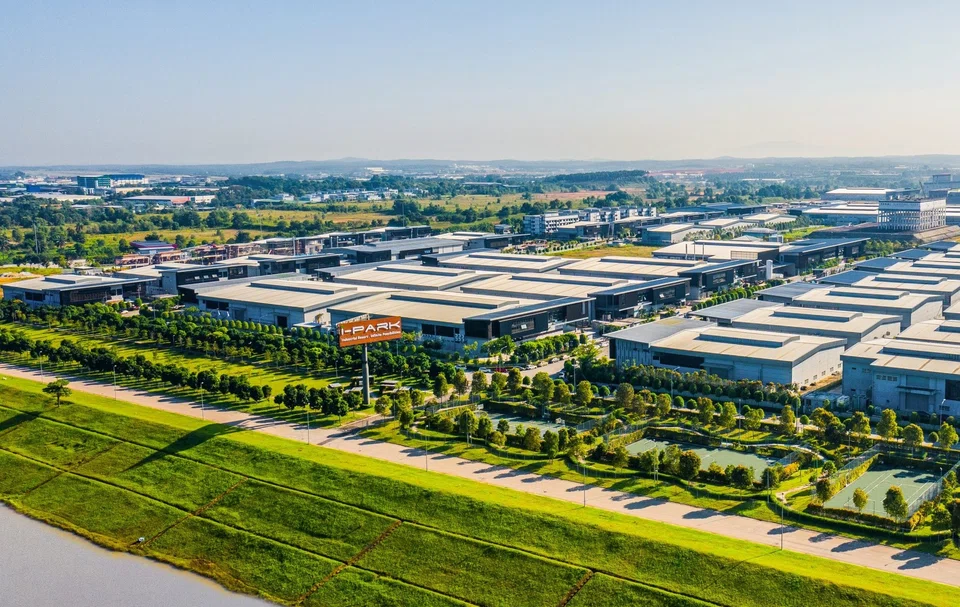
[KUALA LUMPUR] Singapore-based companies and multinational corporations are increasingly looking to Johor’s Senai as part of an integrated cross-border industrial ecosystem, as the Johor-Singapore Special Economic Zone (JS-SEZ) gathers momentum and strengthens economic ties between the two neighbours.
Rather than merely chasing lower costs, companies are splitting operations – pairing Singapore’s finance, innovation and management hubs with Senai’s established manufacturing and logistics infrastructure to build an integrated cross-border ecosystem.
Yong Su-Lin, CEO of CapitaLand Malaysia Reit Management, manager of CapitaLand Malaysia Trust (CLMT), said: “Singapore remains a leading hub for headquarters, finance, innovation and talent, while Johor provides additional capacity for manufacturing, logistics and supply-chain activities.”
CLMT is seeing growing interest from Singapore-based companies and multinationals, with regional operations in the city-state evaluating expansion opportunities in Johor, including in Senai, she said.
The trust has acquired three freehold industrial properties in Senai Airport City as part of its expansion into Johor.
Its enlarged Johor portfolio is valued at about RM320 million (US$78.3 million), and CLMT is keen to expand its presence in the state.
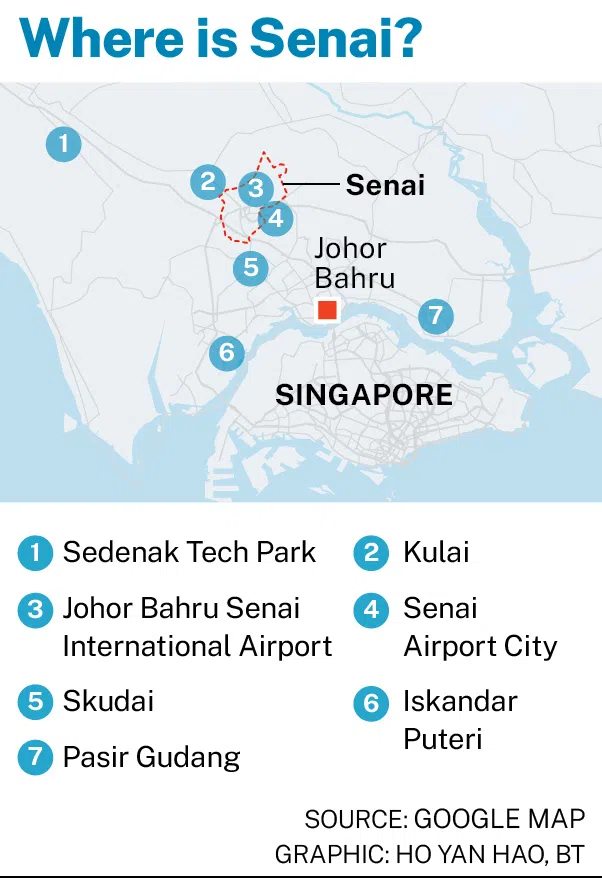
Samuel Tan, founder and CEO of Olive Tree Property Consultants, said Senai has experienced a clear “Singapore extension” effect, with Singapore-linked manufacturers and logistics operators increasingly seeking additional capacity north of the Causeway.
“Singapore-based and Singapore-linked manufacturing and logistics firms are actively migrating or expanding operations northward,” he said, estimating potential savings of 40 to 60 per cent in rental and labour costs.
The trend is gathering momentum following the signing of the JS-SEZ agreement in January 2025, which positions Johor as a production and business base, complementary to Singapore. Senai-Skudai is among the designated areas, with manufacturing among its targeted activities.
Singapore manufacturers such as Venture, Fu Yu and Beyonics established labour-intensive and space-intensive operations in Senai a while ago.
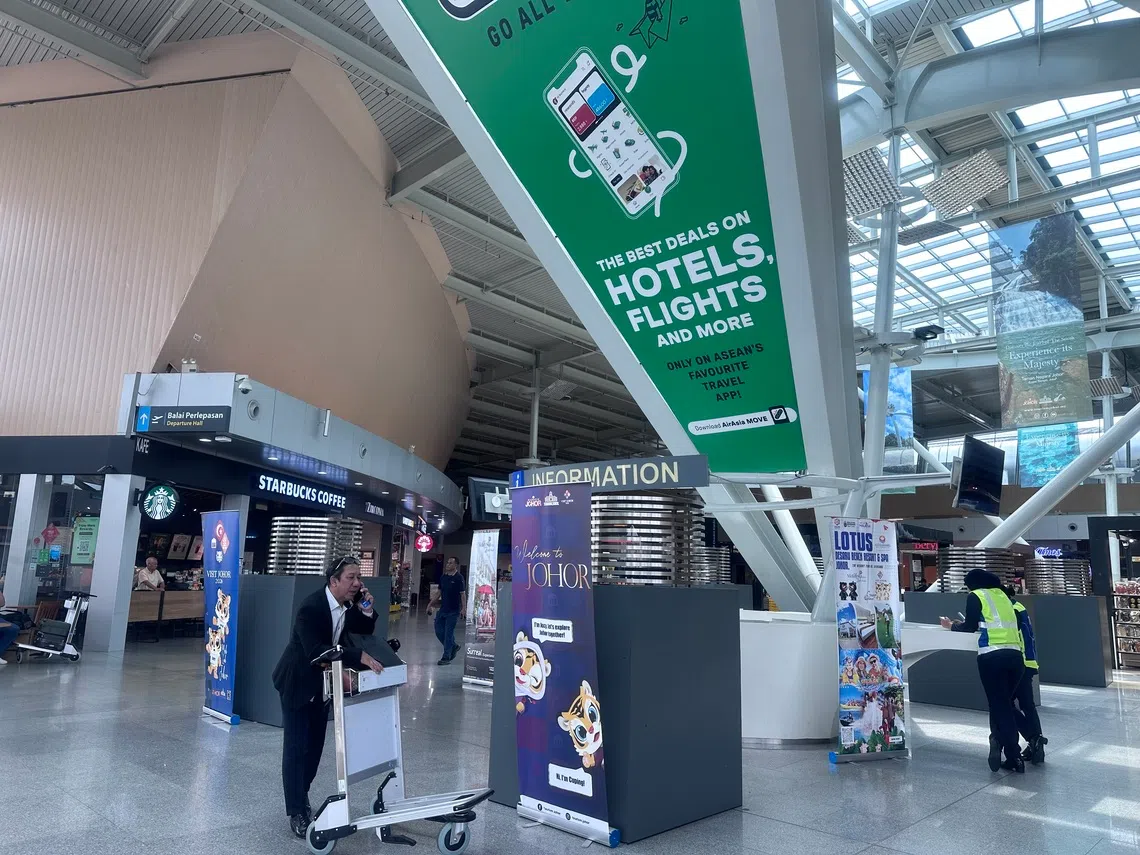
Daniel Ma, managing director of property consultancy Nawawi Tie, noted that as local infrastructure and industrial ecosystems mature, Senai has evolved beyond hosting conventional assembly and electronics manufacturing services into a diversified hub for advanced manufacturing, medtech, precision engineering and logistics.
He cited the presence of multinational companies such as Mercedes-Benz, Supermicro, SICK Sensor and DHL as evidence of a broadening industrial base.
More than a cheaper alternative
It would be too simplistic, however, to view Senai merely as Singapore’s cheaper industrial backyard.
Dylan Tan, CEO of Johor-based industrial park developer AME Elite Consortium, said Senai’s industrial ecosystem has been built up over decades, giving it a foundation as Malaysia pushes manufacturing further up the value chain.
Johor’s industrial base has evolved in waves, from suppliers serving Hewlett-Packard’s computing supply chain in the 1990s to companies clustered around Dyson in the following decades.
Today, he sees a broader mix spanning medical devices, artificial intelligence infrastructure and advanced engineering. “(In) the past five years, we have seen the economy moving up the value chain,” he noted.
That evolution is also showing up in demand for property. Average rents at AME Elite’s i-Park@Senai Airport City have risen to around RM3 per square foot (psf), from about RM1.50 three years ago, he added.
Amid global supply chain diversification, tenants increasingly want infrastructure-ready facilities and faster delivery, he said, noting that criteria such as access to local talent, reliable power and green-building standards are also becoming more important.
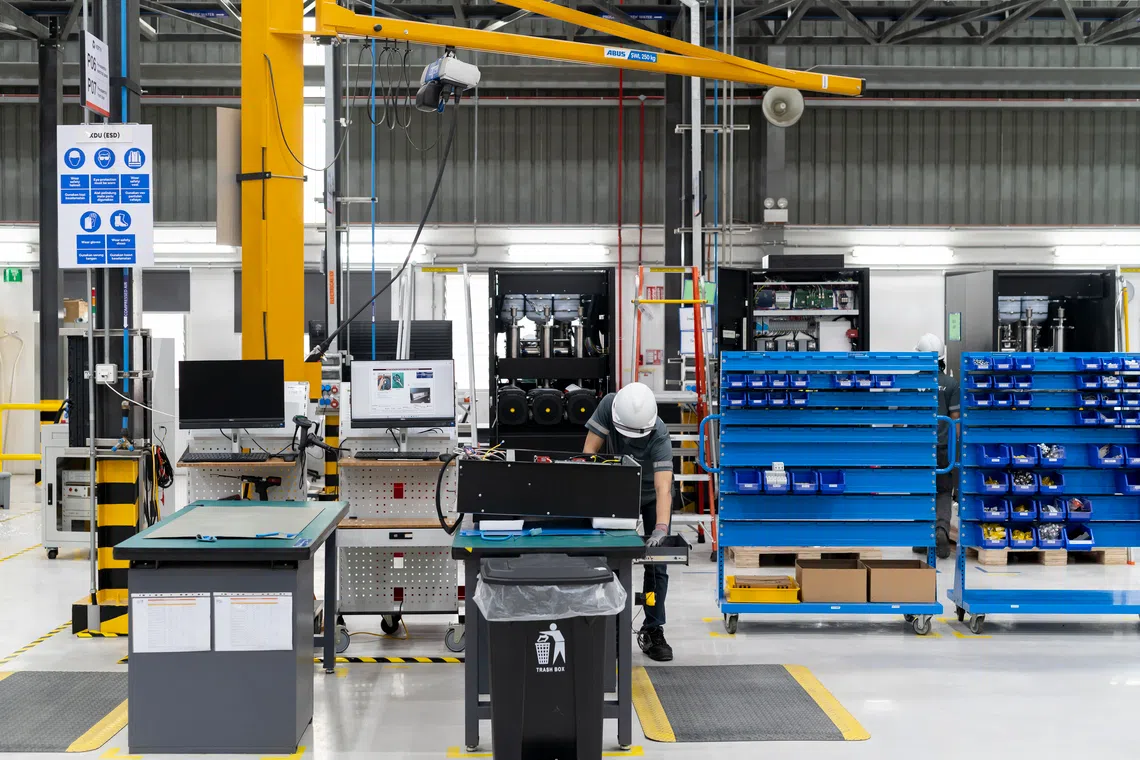
For companies familiar with Johor, the transformation is visible on the ground.
Andrew Whall, vice-president and general manager for Asia at critical digital infrastructure company Vertiv, recalled that when he was based in Singapore years ago, Johor was largely somewhere he passed through while driving to Kuala Lumpur.
“Today, it’s completely different. It’s not just the data centres; it’s the entire industrial ecosystem that’s growing around them,” he said. “Around Senai, you can see new factories and industrial developments in many different sectors.”
Vertiv itself is part of that change. The US-listed company opened a 236,000 square foot manufacturing facility in Senai this year to produce power and cooling infrastructure for data centres in Malaysia and the region.
Whall said that undertaking manufacturing near customers reduces lead times; it also enables them to inspect production and test the product without travelling to the US, Europe or China.
Competitive advantages
Senai is one of Johor’s primary industrial centres, competing with Iskandar Puteri’s Southern Industrial and Logistics Clusters (SiLC) and the established industrial belt around Pasir Gudang and Tanjung Langsat.
“While SiLC captures the premium-tier corporate profiles, Senai outperforms on sheer volume and multimodal logistics,” said Olive Tree’s Tan, citing Senai International Airport, the North-South Expressway and master-planned industrial parks such as Senai Airport City.
He added that industrial land values in Senai have appreciated by between 35 and more than 50 per cent cumulatively in the last five years, depending on tenure and proximity to infrastructure.
Transacted land prices currently range from RM60 to RM110 psf, with smaller freehold plots near the airport commanding the highest premiums, he said.
Southern Johor’s surge in new industrial parks gives occupiers more options, but Nawawi Tie’s Ma notes this does not diminish Senai’s appeal.
Location decisions now hinge on connectivity, labour, utilities and access to Singapore, rather than on price alone.
Yong of CapitaLand Malaysia Reit Management echoed this point, observing that Senai’s airport, highway and seaport links continue to attract advanced manufacturing, medtech, precision engineering and aerospace firms.
The double-edged data-centre boom
Although big-ticket data-centre land deals have grabbed market attention, demand for manufacturing space remains firm as geopolitical risks drive “Plus One” supply-chain diversification.
AME Elite’s Tan said that while multibillion-ringgit data-centre investments can produce “lumpy” investment figures, manufacturing inquiries have persisted.
Companies are taking longer to evaluate investments than during the height of global supply chain disruptions, he said, but diversification outside China remains a longer-term priority.
Olive Tree’s Tan similarly said Senai’s underlying demand remains anchored by precision engineering, electrical and electronic sub-assemblies, pharmaceuticals, food manufacturing and logistics – independent of the data-centre boom.
Yet, the data-centre rush is also creating a challenge for conventional manufacturers: a two-tier land market.
While conventional industrial land has appreciated steadily, sites capable of supporting hyperscale digital infrastructure have commanded significantly higher prices, creating what Samuel Tan described as a “two-tier pricing ecosystem”.
In 2025, the average industrial land transaction value in Johor reached about RM86 psf, up 8.4 per cent from around RM79 psf in 2024, going by data from Malaysia’s National Property Information Centre.
By comparison, data-centre-ready land has fetched between RM120 and RM160 psf, said Samuel Tan.
Nawawi Tie’s Ma cautioned against directly comparing the two. Data-centre sites often incorporate substantial investments in power-grid connectivity, water supply, telecommunications and other infrastructure, which are reflected in their transaction prices.
Even so, the premium commanded by such sites can lift landowners’ expectations for surrounding properties, adding pressure on conventional manufacturers who require large land parcels. However, they cannot justify data-centre-level prices.
Samuel Tan said some manufacturers are responding by considering secondary industrial locations where land remains more affordable.
Ma noted: “The JS-SEZ and data-centre boom have accelerated this transformation and contributed to upward pricing pressure. But the longer-term sustainability of values will depend on genuine manufacturing, logistics and technology demand.”
TRENDING NOW

Unhealthy air quality in Singapore enough to trigger haze pollution law; NEA is monitoring situation

Once staunchly pro-China, Malaysian Chinese businesses are now distancing themselves from Beijing

Could stablecoins be the future of money?
Johor’s investment boom is real, but actual contribution from JS-SEZ unclear

