



Vietnam’s island megaproject races towards Apec deadline, but demand test looms
Sun Group is betting big on Phu Quoc infrastructure to sustain visitor momentum beyond the summit
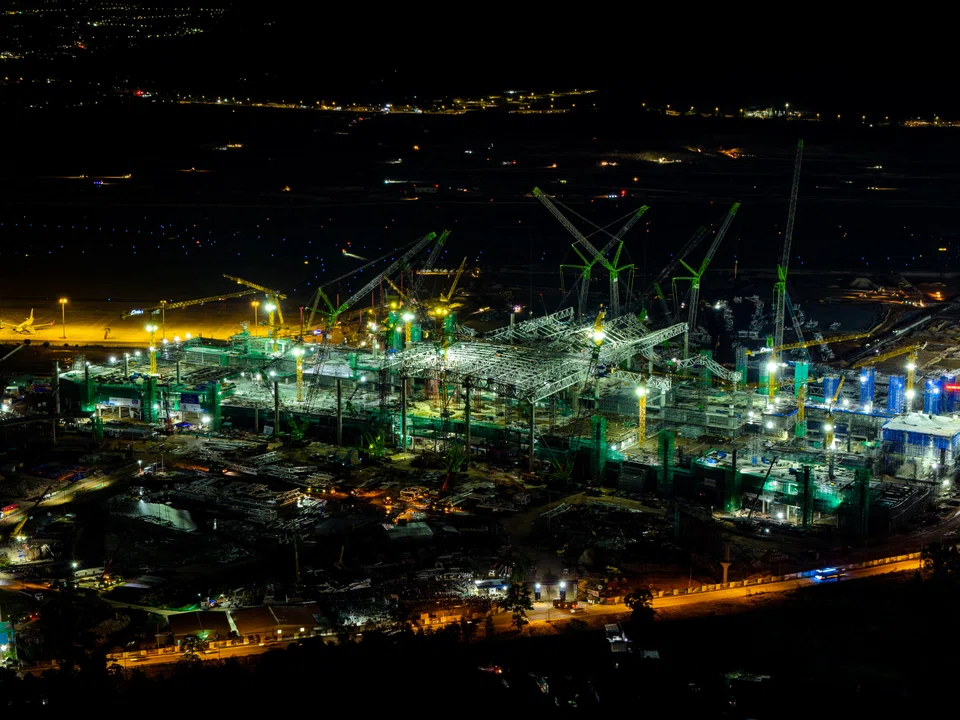
PHU Quoc has long been pitched as Vietnam’s answer to Bali or Phuket. Vietnamese real estate and hospitality developer Sun Group now wants to turn it into something more ambitious: a regional tourism, conference and entertainment hub built around an integrated island economy.
The stakes are rising ahead of the Asia-Pacific Economic Cooperation (Apec) summit, which Phu Quoc will host in 2027.
Apec gives Phu Quoc a deadline and Vietnam, a diplomatic showcase. But the real test is whether a private conglomerate can build enough infrastructure, connectivity and spending demand to keep the destination viable after the global delegates leave, on an island where forest covers roughly two-thirds of its natural area.
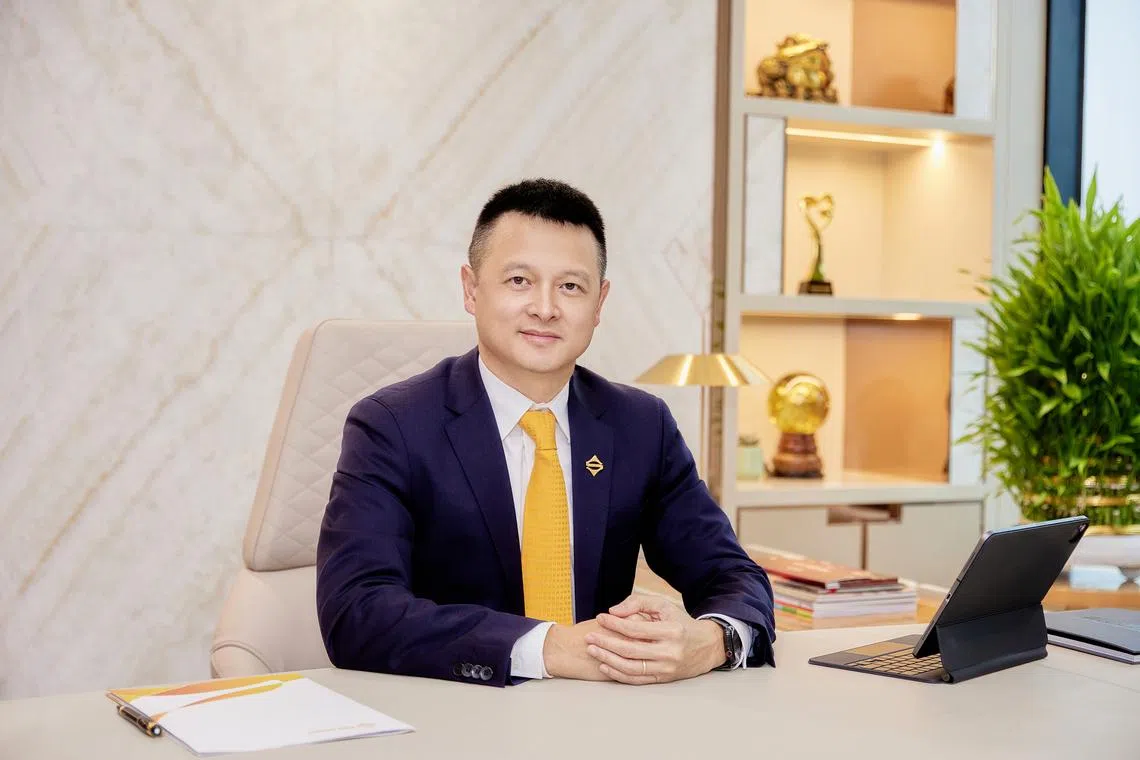
“Sun Group is not investing to capture a slice of an existing market,” its chairman Dang Minh Truong said in an interview with The Business Times. “We are investing in infrastructure to create a new market with Phu Quoc.”
An island built as a system
Phu Quoc, Vietnam’s largest island, is part of the southern province of An Giang and lies about 400 km southwest of Ho Chi Minh City.
The island is about a two-hour flight from major South-east Asian capitals. It covers nearly 600 square kilometres, comparable in size to Singapore before land reclamation.
A 150 km coastline and white sandy beaches have made it one of Vietnam’s best-known tourist destinations.
The challenge is that an island cannot be developed in fragments, Truong said. A hotel, cinema or shopping street cannot function properly if power, water, roads, airport capacity and visitor flow are not planned together.
“Phu Quoc is a highly specific development problem,” he added. “For an island, every piece has to be part of one unified system.”
SEE ALSO



Apec now gives the island urgency. Sun Group is involved in infrastructure and destination projects linked to the 2027 summit there, including airport, convention, hospitality and cultural facilities.
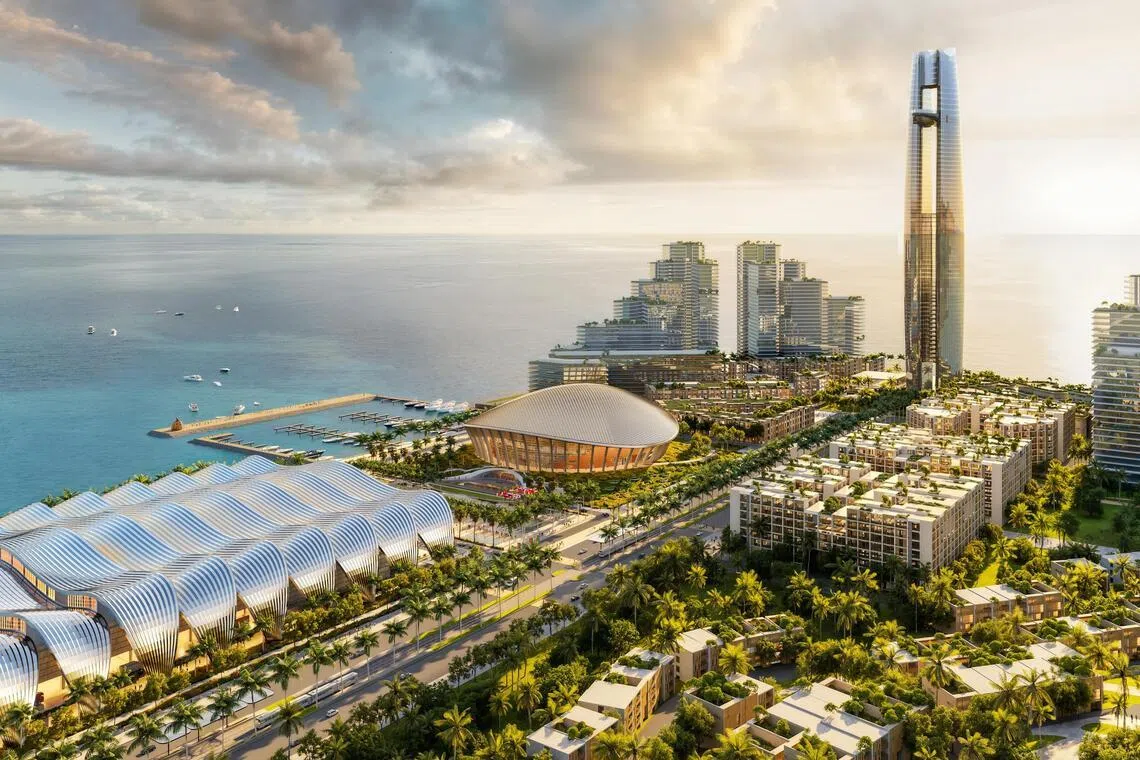
“What was considered the peak in 2017 is now only the basic standard,” Truong said, referring to Sun Group’s experience in Da Nang during Vietnam’s previous Apec year, which he described as the first milestone in shaping the group’s capacity to manage national-scale projects.
It is now not simply adding standalone attractions in Phu Quoc, but building what Truong called “a complete ecosystem of experiences”.
He pointed to Sun Group’s Sun Paradise Land as the clearest expression of that model – a bundled destination platform in southern Phu Quoc that connects accommodation, entertainment, cable-car access, water parks, dining, performances and resort brands into one controlled tourism circuit.
The logic is to lengthen stays and raise spending per visitor, turning Phu Quoc from a beach destination into a repeatable, all-day-and-night consumption ecosystem.
Truong compares parts of the approach with Singapore’s Sentosa for its integrated planning, and with South Korea’s Jeju and Japan’s Okinawa for the way island destinations have tried to balance tourism growth with local identity.
“We have distilled their management philosophy and applied it to Phu Quoc with significant room for growth, especially as the island approaches a historic milestone,” he noted.
Demand will not arrive by itself
The biggest risk is not whether Phu Quoc can build more, it is whether the island can generate enough year-round demand for the new facilities.
Truong acknowledged that concern. “If you only look at Phu Quoc in the short term, the question of oversupply pressure is completely reasonable,” he said.
But he argued that South-east Asia still has too few integrated resorts that combine Mice – meetings, incentives, conferences and exhibitions – with large-scale leisure offerings capable of competing with destinations such as Bali or Phuket.
Truong pointed to airport data as evidence of demand pressure. Phu Quoc International Airport was designed for four million passengers a year, but handled more than 4.5 million in 2024 and nearly 5.2 million in 2025.
Sun Group is investing in a major expansion project of the airport to raise its capacity to 24 million passengers annually upon completion. In March, it announced a partnership with Singapore’s Changi Airports International to upgrade the airport to meet “Changi standards”.
The benchmark is associated with the “airport destination” model that combines transport infrastructure with attractions, iconic architecture, retail, entertainment and large-scale events.
The company’s long-term vision is for the island to become a high-quality Asian destination capable of receiving 40 million to 50 million visitors annually by 2045.
Last year, Vietnam welcomed a record nearly 21.2 million international arrivals. This year, the country’s H1 2026 figure rose 15 per cent year on year to 12.3 million.
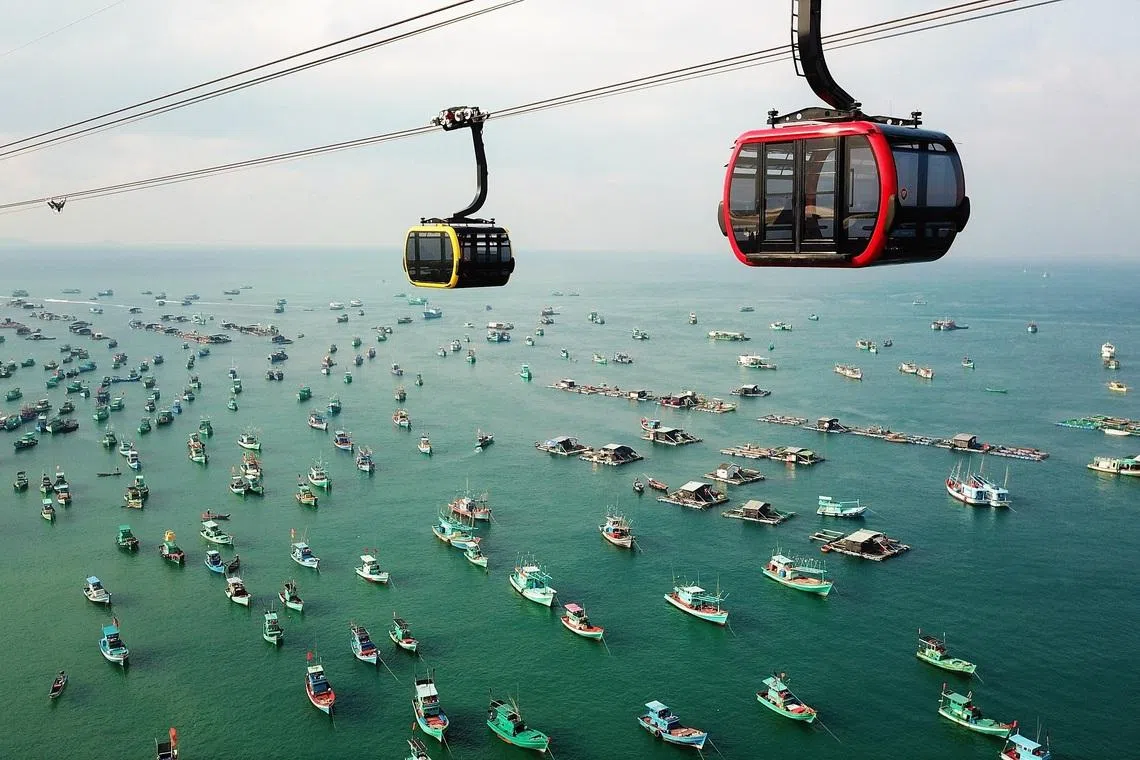
The conglomerate’s strategy is to proactively expand the market, not simply wait for it. Sun PhuQuoc Airways (SPA), the group’s leisure-focused carrier, is being positioned as a demand engine for the island, feeding visitors directly into its hotels, resorts, entertainment venues and conference infrastructure.
SPA, one of Vietnam’s newest carriers, began operations in the final months of 2025. It launched the Singapore-Phu Quoc route in June and plans to start the service on Jul 25, using Airbus A321 aircraft daily between Changi Airport and Phu Quoc.
One-way promotional fares start from about 1.8 million dong (US$68).
The route expansion extends far beyond Singapore.
SPA aims to launch new routes from Vietnam to South Korea, China, Japan, Thailand, Russia, Mongolia and Kazakhstan in 2026, mostly from Phu Quoc. The airline is also targeting the Philippines and Australia in 2027 and plans to begin adopting wide-body jets for long-haul routes to the Middle East and Europe in 2028.
A test of financing and execution
Sun Group’s Phu Quoc push is not happening in a vacuum. It sits inside Vietnam’s broader attempt to leverage private groups to accelerate strategic infrastructure.
Recent State Bank of Vietnam guidance allows commercial banks to exclude new lending to 18 megaprojects, totalling roughly US$28 billlion, from their annual credit-growth quotas, after proposals from the country’s key developers Vingroup, Sun Group and Masterise.
Sun Group’s eligible project pipeline alone exceeds US$10 billion, spanning its Apec 2027-linked developments in Phu Quoc and the Rach Chiec National Sports Complex in Ho Chi Minh City.
Truong framed public-private partnership as the key to creating the “economic miracles” seen in Asia’s fastest-growing economies. “When the private sector is given the mechanism and trust, it can optimise capital flows and dramatically shorten the time needed to build infrastructure,” he stated.
However, another test for developers is to manage execution risk, at a time when Vietnam’s infrastructure boom and rising public investment are intensifying competition for materials, island logistics capacity and skilled labour.
Truong said Sun Group is studying modular construction, design for manufacturing and assembly, prefabricated steel structures, lightweight panels and early applications of 3D printing in construction.
These methods would shift more work from the island’s building sites into factories, reducing reliance on labour-intensive construction.
“Pressure creates diamonds,” he added, describing the Apec deadline as a test of Sun Group’s execution capacity. “The biggest challenge is always maintaining a harmonious balance between business efficiency and the paramount interests of the nation and the community.” THE BUSINESS TIMES
Decoding Asia newsletter: your guide to navigating Asia in a new global order. Sign up here to get Decoding Asia newsletter. Delivered to your inbox. Free.
Share with us your feedback on BT's products and services






