

Bessent downplays worries on rising US Treasury yields, AI bubble concerns
He argues that ripple effects of the Iran war are masking underlying US economic strength
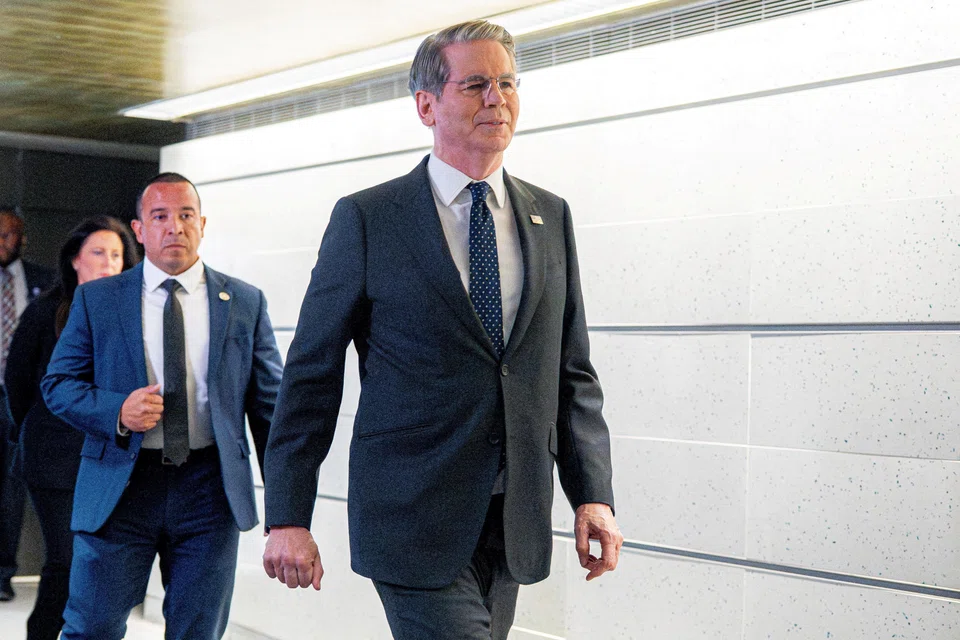
US TREASURY Secretary Scott Bessent said the recent rise in US Treasury yields was in line with global trends and did not warrant consternation, even as worries about persisting price pressures pushed some benchmark rates to their highest in more than two decades.
“I would be concerned if we were having some kind of idiosyncratic rise,” Bessent said during an interview with Axios published on Saturday (Oct 3). “We’re not seeing people selling treasuries to buy German bonds or Japanese bonds.”
“I can’t control the bond market. What I can do is get people to slow down and think,” he said.
Bessent also touted the US financial intervention to rescue Argentina and left the door open to similar rescues in the future.
“I would submit that the stabilisation of Argentina has led to a sea change in Latin America, something generational or maybe the first time in history, that we’ve never had this many Latin American countries allied with the US,” he said. “So could we do that again? Sure.”
The Trump administration in 2025 bought the peso and provided the government of Javier Milei – a Trump ally – with a US$20 billion swap line, which helped Argentina defend its currency and ward off a full-blown economic crisis.
The US has also helped Japan prop up its currency, including the two countries’ first coordinated yen-buying intervention since 1998.
Though Friday’s soft US jobs data brought some relief, Treasuries have suffered from a months-long rout that briefly pushed the benchmark 10-year rate to its highest since 2002 on Sep 29.
Elevated fuel prices from a protracted Iran war, worries about US fiscal health and surging artificial intelligence spending have combined to push borrowings costs higher.



Cost of living has been a key issue for US voters, who are bearing the brunt of record diesel prices and mortgage rates that now stand well above 7 per cent. That is heaping pressure on President Donald Trump and the Republican Party, who are facing the growing risk of a rout in the November midterm elections that puts the Democrats in control of both chambers of Congress.
Bessent argued that ripple effects of the Iran war are masking underlying US economic strength, pointing to “strong” consumer spending and median wage growth that is in line with headline inflation.
The secretary also dismissed concerns about an AI-driven bubble, arguing that key players such as Microsoft, Alphabet’s Google and Meta Platforms are investing substantial capital and generating significant revenue growth for the likes of Anthropic and OpenAI.
“We’ll get to the other side of this Iran conflict, I think oil is going to be more well-supplied,” he said, referring to a conflict now in its eighth month. “The energy shock will fade away.” BLOOMBERG
Decoding Asia newsletter: your guide to navigating Asia in a new global order. Sign up here to get Decoding Asia newsletter. Delivered to your inbox. Free.
Share with us your feedback on BT's products and services






