

Can Carney’s ‘middle powers’ stand up to the US and China in a G-2 world?
The question returns to the fore in the wake of the latest Trump-Xi summit
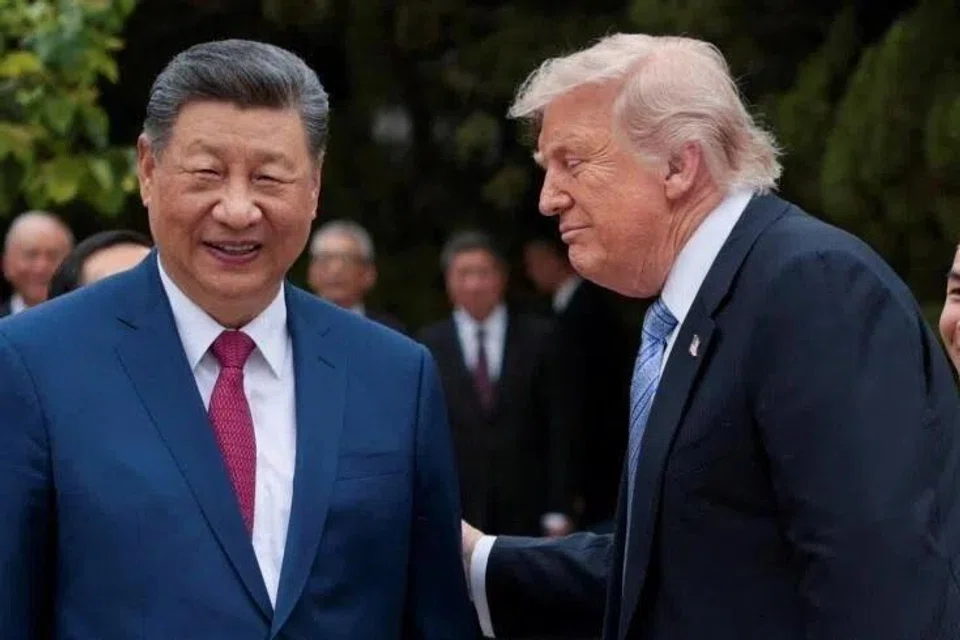
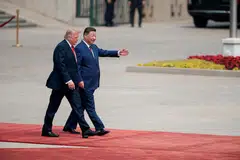
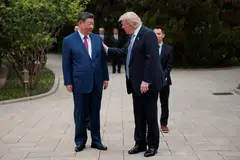
“IF YOU’RE not at the table, you’re on the menu.” That is how many Europeans feel after the latest summit between presidents Xi Jinping and Donald Trump.
That sense of unease is not limited to Europe as other US allies and partners sift through the tea leaves of the outcome of last week’s summit in Beijing, from Trump’s remarks on arms sales to Taiwan to the still fuzzy outcome of the “3B” deals on Chinese purchases of Boeings, beef and soya beans.
But whatever transpires from this opaque summit, one implication is by now clear enough: The United States is finally ready to treat China as its equal in world affairs. The question is no longer whether the leaders in Beijing and Washington will cooperate but, rather, what they are likely to cooperate on, and what this means for the interests of many other nations.
The fear is that the two leaders intend to create a “G-2” world in which other nations are reduced to the status of tributary powers. The anxiety is acute in Europe, the continent Trump loves to deride. But what can the Europeans – or, indeed, other key nations that used to rely on their alliance with the US – do about this trend?
In January this year, Canada’s Prime Minister Mark Carney offered a seemingly bold answer: He appealed to what he called a group of “middle powers” that feel both abandoned by the US and squeezed by a rising China to pluck up courage and band together to defend open trade, multilateral institutions and liberal norms, as well as stand up to both the US and China.
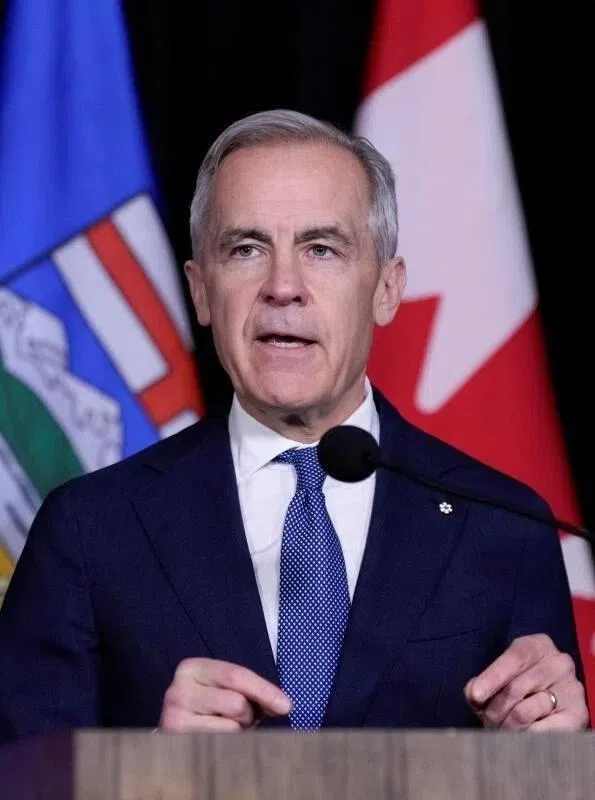
Carney’s so-called “values-based realism” continues to attract praise; hardly a day goes by without some European politician citing the Canadian leader’s vision as guidance. But although claiming to offer a coherent approach to the massive strategic transformations we are currently witnessing, Carney’s recipe provides only limited reassurance for Washington’s neglected old allies. It will most certainly not lead to a cohesive, system-shaping bloc of nations wishing to navigate the ruptured global order now about to be dominated by the US and China.
An appealing prophet
Visionary ideas which succeed in gaining prominence are those delivered at the right time, to the right audience and by the right person. Carney’s speech ticked all these boxes.
It came at a time when the Trump administration was not only poking fun at Canada’s independence and dismissing its military commitments to defend Europe, but was also shocking everyone by refusing to rule out a US seizure of Greenland, the Arctic island which is part of Denmark.
America’s closest allies were looking for reassurance, and Carney duly provided it.
The Canadian leader also chose his audience carefully. He addressed the world’s richest and most influential men and women, who at the start of each year take their private jets to the exclusive Swiss resort of Davos to bemoan a world that is no longer to their liking; Carney’s ideas gave them new hope.
Few people were better equipped to make a pitch for the benefits of globalisation than Carney, who managed the national bank of his native Canada and the Bank of England prior to becoming the Canadian prime minister. And no one is better proof that it is possible to stand up to the United States than Carney, who took over a ruling Canadian party heading for a wipe-out and led it to a major victory within a period of two months, largely by pushing back against President Trump’s trade and political bullying.
A grand vision
Yet it would be wrong to suggest that Carney’s concepts are all about good presentation and perfect timing, for they also contain appealing ideas to America’s rattled allies.
Carney argues that the changes they are witnessing in the US are not only about Trump. The current US President’s behaviour and opinions may be outlandish. Still, he represents a broader US trend of moving away from old alliance obligations and rejecting old-established norms of behaviour.
More significantly, Carney hopes to persuade America’s allies that although the abrupt change in US behaviour may weaken them, they have an inherent strength in numbers. In his speech, he invoked the words of Vaclav Havel, the anti-communist writer and dissident in the Czech Republic, who in the late 1970s penned a famous essay entitled The Power Of The Powerless, arguing that by standing upright and united, people can face down any political odds. Today’s European nations should be aware of their inner strengths rather than be paralysed by their weaknesses.
And, just as importantly, he reassured his European counterparts that although the world they knew was collapsing, most of the benefits of multilateral cooperation could still be preserved.
Carney advocates a “values-based realism”, implying that it is possible to both stand for principles and act as a realist in a world in which the US and China are bound to do more or less as they please. What he is urging is a flexible club of nations that can stabilise multilateralism by offering a “third path” between the current US-China squeeze.
Unclear definitions
Carney never defined what he means by the “middle powers”. The general assumption is that this group includes states that have economic, diplomatic or political clout but are seen to be in the “second tier” of the geopolitical hierarchy.
Canada and most European nations fit this category. The same goes for Australia, Japan and South Korea, as well as for Argentina, Brazil and Indonesia. But would India be content to be classified as a “middle power”? And who speaks for the many nations of Asia and Africa in such a concept?
It is true that the larger middle powers collectively account for a very substantial share of global GDP and trade, and that many of these nations enjoy a good reputation and strong administrative capacity, giving them leverage over supply chains and trade regulation, which can compensate for the hard power which Washington and Beijing enjoy. And it is equally true that many middle powers do share the same vulnerabilities of energy supplies, rare earth resources and exposed trading and sea lines.
But much of the cooperation which Carney wants is already taking place in what are increasingly referred to as “minilateral” institutions, structures which seek to uphold international trading norms and principles without aspiring to universal representation. The Comprehensive and Progressive Agreement for Trans-Pacific Partnership (CPTPP) or the G-20 association of nations are examples of such structures.
Further CPTPP-style agreements, digital trade standards, and supply-chain arrangements, especially among European and Indo-Pacific states, are perfectly feasible. And further coordination between countries in various United Nations agencies, international financial institutions and other standard-setting bodies can blunt attempts by the US or China to hollow out or reshape these organisations to suit their interests.
Cruel realities
Still, when all is said and done, the fact remains that today’s so-called middle powers are too diverse in their interests and regional priorities to cooperate beyond narrowly defined objectives.
For European nations, Russia is now seen as a fundamental and critical threat which must be opposed at all costs, while China is regarded as a strategic challenge that can be managed.
But for countries such as Australia, Japan or South Korea, the perspective is different: They regard China as the key strategic challenge and view Russia, at worst, as a problem to be managed.
And then, there are plenty of Asian nations – including most of the Asean member states – who reject the very idea that they face a binary choice between the US and China, or that they must take part in the games Europeans are now playing to keep Russia and China apart.
This does not mean that strategic coordination across continents remains out of the question. Australia is a strong supporter of Ukraine’s fight against the Russian invasion. Japan is cooperating with Britain and Italy in building a new generation of fighter jets precisely because it does not wish to rely entirely on the US. And South Korea is rapidly becoming one of Europe’s biggest weapon suppliers.
Still, it is noticeable that the more President Trump questions US security guarantees, the less America’s Asian allies are willing to cooperate with Europe on security matters. Just a few years ago, the leaders of Australia, Japan, South Korea and New Zealand used to attend the summits of Nato, the US-led military alliance in Europe, where they talked grandly about how that alliance should extend its activities to Asia. Now, all this talk has died out, and none of the Asian leaders is expected to attend the forthcoming Nato summit in July. Far from bringing middle powers together, Trump’s policies are – at least for the moment – keeping them further apart.
One explanation for this seemingly paradoxical outcome is that countries are rushing to provide for their own national or regional security and have less time to engage in institutional building.
But the more important explanation is that not all countries are affected by the reduction in US global commitments and the rise of China in similar ways.
Carney’s vision of a globally coherent middle-power alliance also underestimates continued US military supremacy in both Europe and the Pacific and the sheer extent of China’s economic importance for many nations, both of which mean that, regardless of what they feel or think, a majority of so-called middle powers either cannot or have little incentive to snap out of their current dependency on both superpowers.
And finally, the Canadian leader may be overstating the consensus among middle powers about the values they wish to promote or defend. Sure, many countries are appalled by what Trump is advocating, or by what China and the US may be doing. Yet this does not mean that middle powers are a collection of virtuous states, a coalition of good guys pledged to defend global order.
Just ask poor nations in Africa or the Caribbean what they think of, say, the European Union’s trading policies, and you won’t get an encouraging answer.
Carney deserves credit for framing the current global security debate. But as a solution for the current predicament of America’s allies and for those who fear China’s growing influence, the Canadian leader’s proposal is, sadly, of limited value.
For, in practice, middle-power multilateralism remains just an aspiration. Middle powers will struggle to keep their seats at the table where decisions are made. And they will continue being “on the menu” of any Sino-US summit. THE STRAITS TIMES
Decoding Asia newsletter: your guide to navigating Asia in a new global order. Sign up here to get Decoding Asia newsletter. Delivered to your inbox. Free.
Share with us your feedback on BT's products and services
TRENDING NOW

LTA proposes combining car COE categories, adding rebate-surcharge system

StarHub to acquire MyRepublic’s mobile business amid ongoing telco consolidation

DBS, OCBC, UOB rout lops billions off STI as inflation, rate concerns spook investors

Grab CEO’s wife Chloe Tong on life with Anthony Tan and finding her purpose

