China’s economy loses steam at start of Q2 as consumption, output disappoint in April
The April figures offer early signs that Q1 momentum is already fading
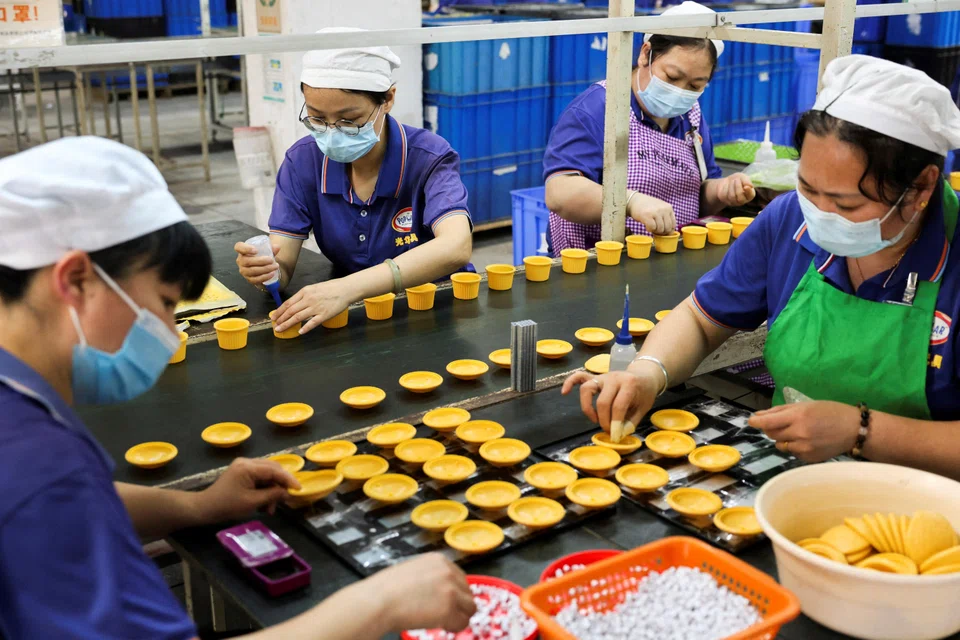
[BEIJING] China’s growth lost momentum in April, with industrial output cooling and retail sales sinking to over-three-year lows as the world’s second-biggest economy wrestled with higher energy costs from the Iran war and persistently weak domestic demand.
Better-than-expected exports and China’s domestic fuel-pricing controls have helped weather the energy shock, but higher input costs threaten to squeeze already weak factory margins and further dampen consumer spending if the conflict drags on.
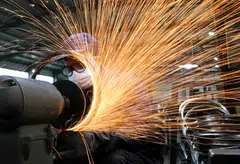
Factory output grew 4.1 per cent from a year earlier last month, compared with a 5.7 per cent rise in March, data from the National Bureau of Statistics (NBS) showed on Monday (May 18). The figure missed a Reuters poll forecast for 5.9 per cent growth and marked the slowest growth since July 2023.
“The strong performance of the exporters helped to mitigate the weaknesses in domestic demand, but not enough to fully offset it,” said Zhiwei Zhang, president and chief economist at Pinpoint Asset Management.
Exports gathered pace in April as factories raced to meet a wave of orders from artificial intelligence-related industries and other buyers seeking to stockpile components amid fears that the Iran war could push global input costs even higher.
Zhang did not expect the government to change its policy stance on just one month of weak data, adding that Beijing will likely reassess its policy stance in July when second-quarter GDP data is available.
Retail sales, a gauge of consumption, rose just 0.2 per cent in April, cooling sharply from 1.7 per cent in March and sliding to their weakest gain since December 2022. The figures were also well below forecasts centred on a 2 per cent increase.
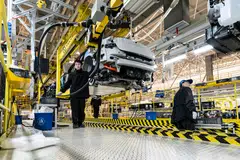
The fragility of household consumption was underscored in April domestic car sales, which dropped 21.6 per cent in April from a year earlier for their seventh straight month of declines, even as carmakers ramped up efforts to expand in overseas markets to offset weakness at home.
Yuhan Zhang, principal economist at the Conference Board’s China Center, said that retail sales growth in the first four months of the year “points to still-weak household demand, with consumers concentrating spending on selective discretionary and upgrade categories rather than broad-based consumption”.
SEE ALSO





He added that the split highlights a two-speed recovery: steady spending on small lifestyle and tech upgrades, but weak appetite for big-ticket, credit-driven purchases tied to housing and income.
The nationwide survey-based jobless rate nudged down to 5.2 per cent in April from 5.4 per cent in March.
Adding to the gloom, fixed-asset investment (FAI) contracted 1.6 per cent in the first four months of 2026, compared with a 1.7 per cent rise in the January-to-March period and a 1.6 per cent expansion forecast.
Domestic crude steel output echoed the weak investment data, falling 2.8 per cent from a year earlier.
“We believe weaker credit demand and heavy rainfall in southern China may have contributed to the April FAI decline compared with the first quarter,” Lisheng Wang, economist at Goldman Sachs said in a note, cautioning that the occasional NBS “statistical correction” of previously reported data may have amplified the volatility.
China stocks looked past the weak data and were broadly flat, as investors turned their focus to escalating tensions in the Middle East and a global bond sell-off.
Few surprises from Trump visit
The April figures offered early signs that China’s first-quarter momentum was already fading and came after US President Donald Trump finished his state visit to China.
The summit delivered few surprises even as it helped ease tense relations between the world’s two biggest economies. China and the US have agreed to expand agricultural trade through tariff reductions and tackle non-tariff barriers and market access issues, but substantive progress across trade and investment remained elusive.
Top Chinese leaders have pledged to strengthen the country’s energy security, accelerate technological self-sufficiency and seek greater control of supply chains in response to external shocks.
China’s economy expanded 5 per cent in the first three months of the year, at the upper end of Beijing’s full-year target range of 4.5 to 5 per cent. However, analysts have warned that the recovery is running on uneven ground as industrial output continues to outstrip domestic demand.
While a protracted downturn in the property market remains a drag on growth, the Middle East conflict has exposed the economy to external risks at a time of fragile consumption at home.
China’s property investment contraction widened in April year on year, but new home prices fell at their slowest monthly pace in a year, offering some signs of stabilisation as local governments deploy measures to boost sales and shore up sentiment.
ING expects that a Q2 eonomic slowdown is on the cards given a soft start in April.
“Weaker growth and rising inflation could complicate policymaking in the coming months,” said Lynn Song, ING’s chief China economist. “We’ve seen limited urgency for stimulus so far this year, but if data continues to deteriorate, this could change soon.” REUTERS
Decoding Asia newsletter: your guide to navigating Asia in a new global order. Sign up here to get Decoding Asia newsletter. Delivered to your inbox. Free.
Share with us your feedback on BT's products and services