

China’s K-shaped economic divide is extending to another quarter
Stabilising trade ties with the US, likely reinforced by Trump’s visit to Beijing, further bolster the outlook

[BEIJING] Chinese consumption probably expanded far slower than the pace of industry in April, as trade remained a notable bright spot despite the global reverberations from the Iran war.
Data due on Monday (May 18) will show retail sales rose 1.9 per cent last month from a year earlier, according to the median forecast of economists surveyed by Bloomberg. That would follow a 1.7 per cent rise in March, extending one of the worst starts to any year outside the pandemic.
Industrial production likely expanded 6 per cent, up from 5.7 per cent in the prior month. Previously reported data showed exports surged 14.1 per cent last month. Taken together, the monthly figures would show a similar pattern to China’s economy in the first quarter, when it had a surprise acceleration in growth.
“We expect the K-shaped divergence to extend into April,” Citigroup economists led by Xiangrong Yu wrote in a note previewing the data. “Industrial production remains buoyant” but that’s “contrasting with sluggish domestic demand,” they said.
While the “K-shaped” discussion in the US centres on lower-income households getting left behind, in China the issue relates to domestic consumers as a whole. Similar discrepancies have emerged across Asia, in countries such as South Korea – especially as the spoils of a global boom in artificial intelligence bypass large parts of the workforce.
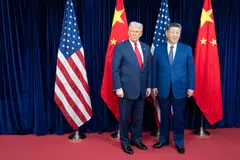
China’s exports are expected to remain strong, supported by the global AI investment cycle and robust demand for renewable-energy products amid disruptions to the oil and gas industries because of the war in Iran. Stabilising trade ties with the US, likely reinforced by President Donald Trump’s visit to Beijing, further bolster the outlook.
In contrast, chronic weakness in the jobs market has been a major obstacle for Beijing’s efforts to revive confidence among households in the face of a prolonged property crisis. The Middle East conflict is also squeezing corporate profits as firms struggle to pass on higher costs to customers, adding to uncertainty around hiring.
Chinese policymakers have appeared to be taking a wait-and-see approach to the two-speed growth phenomenon, after years of consumer‑boosting measures delivered only marginal gains. The government pulled back on fiscal spending in March, while the central bank has steered clear of hinting at any further loosening in policy, amid ample market liquidity and weak demand for credit.
“China’s April activity data will keep the spotlight on stark imbalances in China’s economy – strength on the supply side, weakness on the demand side,” Bloomberg Economics analysts Chang Shu and David Qu said. “Industrial production remains underpinned by resilient exports. On the other hand, consumption remains sluggish due to consumer caution, private investment is softening and construction activity is starting to stumble.”
SEE ALSO

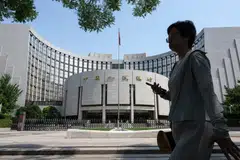
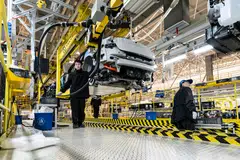

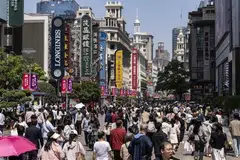



Here’s further context for the National Bureau of Statistics data due at 10 am in Beijing on Monday:
Consumption
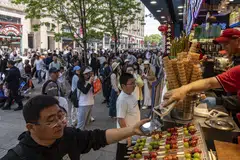
Reflecting sluggish sentiment, average daily spending by Chinese tourists within the country fell to 114.1 yuan (S$21.48) per trip during the Labor Day holiday earlier this month, according to Bloomberg calculations based on government data. That’s the least among the four public breaks so far this year, and compares with 114.8 yuan a year earlier.
The muted figures during the holiday could have been partly led by some consumer activities being moved forward to April due to government guidance to spread out short breaks from school and work.
“Higher energy prices may have boosted petrol sales value growth, and the nationwide promotion of spring breaks this year – in late April – may have frontloaded some dining-out demand to April from May,” Goldman Sachs Group economists including Lisheng Wang said in a report.
“These factors should have more than offset still-subdued automobile and home appliance sales growth, which reflects weakening effectiveness of the ongoing consumer goods trade-in programme.”
Manufacturing sector
The 6 per cent increase in industrial output expected for April would mark the biggest gain since September.
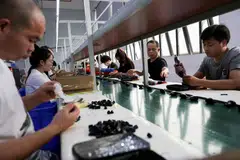
Export figures for last month beat expectations, rebounding to double-digit growth and underpinning the nation’s manufacturing sector. Sales of semiconductors, computers and other AI-related goods accounted for about half of April’s growth in overseas shipments, economists estimate.
A sustained AI boom will likely spare Beijing from having to turn to stimulus to lift domestic demand, Macquarie Group economists including Larry Hu wrote in a Wednesday report.
“The main risk is that the Iran crisis eventually takes over, causing a sudden collapse in China’s tech exports,” they said. “In that scenario, Beijing would quickly pivot to stimulating domestic demand.”
Investment
Fixed-asset investment is forecast to increase 1.7 per cent for the first four months compared with the same period a year before. That would be the same pace as recorded for March.
A gauge of construction activity hit its weakest reading since February 2020 last month, previously released data showed – suggesting a likely slowdown in infrastructure and property development.
Among the factors likely holding investment back has been the availability of funding. Morgan Stanley economists see little relief ahead, removing their calls for “fiscal top-ups” and more monetary easing in the second half.
“Strong exports reduce the urgency for stimulus,” the US bank’s economists led by Robin Xing wrote in a mid-year outlook earlier this week. “The Middle East conflict may reinforce supply-side priorities on energy security and tech self-sufficiency, with rebalancing of consumption proceeding gradually.” BLOOMBERG
Decoding Asia newsletter: your guide to navigating Asia in a new global order. Sign up here to get Decoding Asia newsletter. Delivered to your inbox. Free.
Share with us your feedback on BT's products and services
TRENDING NOW

DBS, OCBC, UOB rout lops billions off STI as inflation, rate concerns spook investors

Grab CEO’s wife Chloe Tong on life with Anthony Tan and finding her purpose

OCBC sheds S$8 billion in value as shares close nearly 6% down; analysts cautious on banks

Deal between tycoon friends sparks scrutiny of Philippine power sector

