


AI chips, rare earths and trade: 5 US-China questions looming over Shenzhen Apec CEO summit
Observers have low expectations for big changes
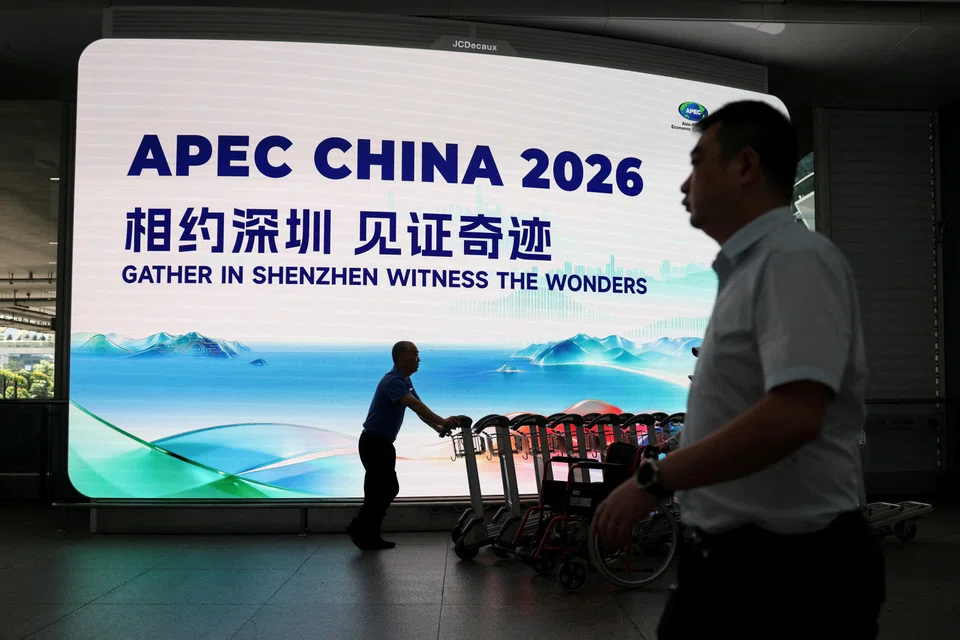
US-CHINESE business relations were thrown a curveball ahead of a major CEO summit in Shenzhen, China, on Nov 17 and 18. On Thursday (Nov 12), Jensen Huang resigned as the chief executive of Nvidia after it was revealed that he had affairs with an executive at the company and a woman suspected of being a Chinese spy.
One of the architects of the artificial intelligence boom, Huang was also perhaps the strongest proponent in Washington for US companies selling AI hardware to China – an issue that has become central to the countries’ fraught economic relationship. Huang, who has a close relationship with US President Donald Trump, has also promoted open AI models, an approach favoured by many Chinese firms.
China hawks in Congress have already seized on the scandal, using it to push for three Bills that would put more restrictions on technology exports to the country.
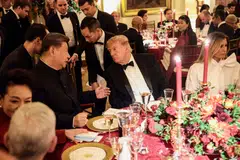
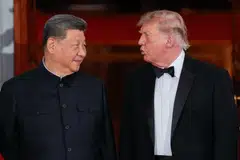
Next week’s summit, which is hosted by the Asia-Pacific Economic Cooperation (Apec) forum, has the potential to advance policy talks. Trump and the Chinese leader Xi Jinping (and perhaps President Vladimir Putin of Russia) are expected to meet. On the sidelines, US Treasury Secretary Scott Bessent will take part in a bilateral dialogue on AI.
But observers have low expectations for big changes. “The Chinese would like to prolong this fragile stability for as long as they can,” Ryan Hass, a senior fellow at the Brookings Institution who advised President Barack Obama and White House officials on US policy toward China, told The New York Times.
Still, amid a stalled trade war, expanding export controls, legal tussles and suspected spy games, the conversation may have just gotten a little more complicated. Here are the biggest questions looming about the world’s most important economic relationship.

1. Does America clamp down further on the export of advanced chips?
The US has banned its most advanced AI chips, like Nvidia’s Blackwell, from reaching China – though, given reports of chip smuggling operations in Singapore, Taiwan and elsewhere, perhaps to limited effect.
In designing and manufacturing advanced semiconductors, China’s capabilities still lag those of the US and Taiwan. Hawks want to keep it that way. But Trump has been less than resolute. In January, his administration allowed sales of Nvidia’s less powerful H200 to China, a move that is now being scrutinised by Congress in the wake of Huang’s resignation.
On Capitol Hill, a handful of proposed pieces of legislation could severely restrict China’s access. “Given how vocal Congress has been on this topic, and given the fact that Congress is going to be more empowered post-midterms, it’s less likely we get a loosening of chip rules and more likely we get a tightening,” said Chris Miller, author of Chip War: The Fight for the World’s Most Critical Technology.
On the other side of the chip coin are foreign data centres, which have largely escaped Washington’s attention. That may soon change, too. Lawmakers in Congress have been pushing for tighter limits on Chinese companies’ renting computing power abroad, whether from US-owned data centres or facilities running American chips.
In November, the US firm Oracle cancelled a roughly US$7 billion contract that gave Tencent, a Chinese company, access to advanced AI chips in data centres in South-east Asia, after US officials raised concerns, according to The Financial Times.
In 2027, US cloud giants like Microsoft and Amazon could face similar scrutiny for hosting open-weight models from Chinese labs such as Moonshot and Z.ai, said Paul Triolo, partner at DGA-Albright Stonebridge Group, a global advisory firm.
If the US further restricts access to chips, China would probably retaliate by restricting access to rare earths and the powerful magnets made from them, which go into products as varied as electric vehicles and fighter jets. “We’re sort of on the brink here,” Triolo said. “If the Chinese escalate further on rare-earths export controls, we’re in uncharted territory.”
2. Does China further barricade its tech economy?
In Shenzhen, US tech executives will probably press for more leniency for their companies in China. On the whole, observers said, they are unlikely to get it.
In May, Bloomberg reported that China had begun requiring senior AI researchers and executives at private firms like Alibaba and DeepSeek to get approval before travelling abroad, with some surrendering their passports.
The authorities also barred the two Chinese founders of Manus, an AI startup based in Singapore, from leaving China after the company was acquired by Meta, then ordered Meta to unwind the deal.
In November, Chinese regulators blocked SoftBank’s US$5.4 billion acquisition of a robotics firm on national security grounds. And China’s own export control list – which includes not just rare earths but also batteries and industrial machinery related to solar panels and tunnel boring – is lengthening.
3. Can America make progress on rare earths?
China dominates the market for rare earths. In 2025, Beijing responded to US tariffs and semiconductor controls with a series of sweeping export restrictions on these elements, which forced the Trump administration to back down.
US policymakers have since scrambled to erode that dependence. So far, more than US$2.5 billion in federal loans and equity has flowed into American rare earth companies like MP Materials, which operates the country’s only producing rare earth mine, and USA Rare Earth, which is building a mine-to-magnet supply chain in Texas and Oklahoma.
Washington is also striking mining deals abroad, in Australia, Brazil, Saudi Arabia and elsewhere. Still, experts said such efforts would take years to bear fruit.
“Until new rare-earths processing facilities and permanent magnet manufacturing capabilities come online, it will continue to feature as a bargaining tool by the Chinese,” said Gracelin Baskaran, a director of the Critical Minerals Security Program at the Center for Strategic and International Studies.
4. Does the trade war truce hold long term or disintegrate?
In April 2025, after “Liberation Day” set off a tit-for-tat escalation with Beijing, tariffs on Chinese goods reached as high as 145 per cent. A month later, after bilateral talks in Geneva, those fell to 30 per cent. In October 2025, on the sidelines of an Apec summit in Busan, South Korea, Trump and Xi struck a truce. Washington agreed to lower the rate further while Beijing paused its rare-earth export controls and agreed to buy American agricultural products and Boeing jets.
China, according to industry observers, has not followed through on its promises. In November, the White House voiced its displeasure with Beijing, a move officials might reiterate in Shenzhen. On Jan 10, 2027, the Busan agreement is set to expire. Instead of extending it, the Trump administration may take new offensive measures, such as financial sanctions against Chinese companies.
“The current US-China detente could come apart,” Doshi said.
In 2027, the trade war could resume in earnest. Would that mean decoupling continues? This year, American exports to China barely recovered from a 26 per cent plunge in 2025, the steepest in recent history.
Chinese exports to the US were down about 11 per cent through September, though they have been climbing since the spring, as China’s global trade surplus surpassed US$1 trillion. Washington has also continued to restrict Chinese technology. Still, Bessent said this week that Washington’s intent is to “de-risk, not to decouple” with China.
In September, the countries announced a 30-for-30 deal: China would lower barriers on US$30 billion of US exports, and the US would lower barriers on US$30 billion of Chinese imports. The sides have exchanged product lists, but the deal still awaits domestic legal confirmation.
5. Does a black swan take flight?
Some years ago, Xi ordered his military forces to be ready for a successful invasion of Taiwan by 2027. The Chinese leader will be 74 next year and presumably contemplating his legacy. With a new term likely beginning and a Trump presidency waning, will he give the order? Or will a conflict finally erupt over contested territories in the South China Sea? A great power war is the blackest of black swans.
But there is also the potential for an AI-enabled cyberattack that wreaks havoc in either China or the US, Triolo said. Or the semiconductor market could implode in some way, Miller added. As Xi warned Communist Party cadres in October, “Be ready at all times to withstand the major tests of high winds, choppy waters and even stormy seas.” NYTIMES
Decoding Asia newsletter: your guide to navigating Asia in a new global order. Sign up here to get Decoding Asia newsletter. Delivered to your inbox. Free.
Share with us your feedback on BT's products and services
TRENDING NOW

Higher rates, weaker spending: Is the Philippines entering stagflation?
Malaysia’s BN and ally PN declare victory in Melaka state polls in a blow to PM Anwar
Ex-Nvidia CEO misled top lawyer on affair with Chinese businesswoman, sources say

Demand, tech capabilities position Apac and AI as Skyscanner’s next growth frontiers: CEO Bryan Batista

