



Beyond hugs and goodwill, leaders of Russia and Iran return home from Brics empty-handed
Both governments sought to portray their presence as an indication that they can bypass the diplomatic isolation erected against them by the West
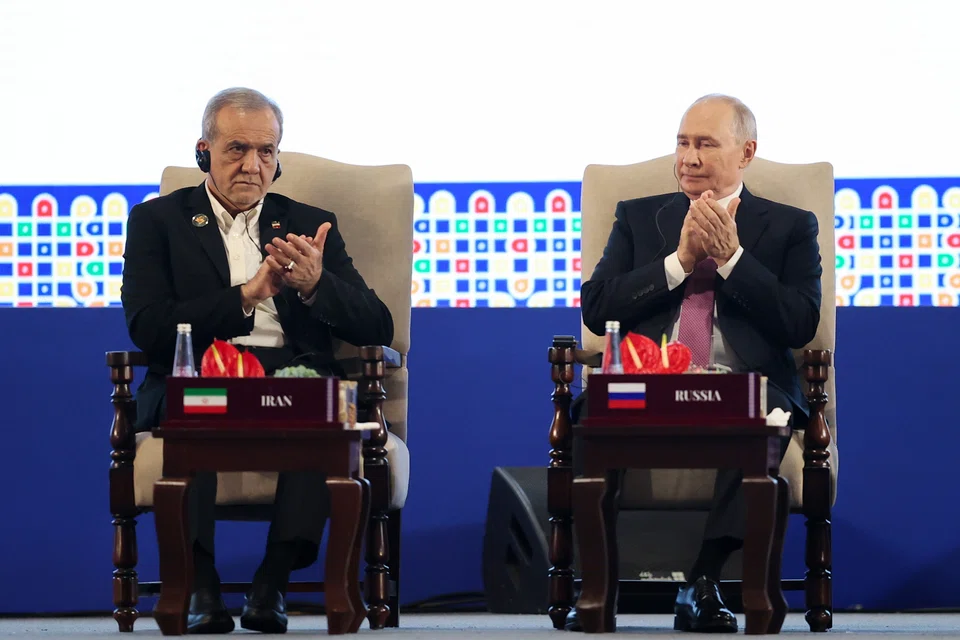
[BRUSSELS] The Brics grouping was designed as an alternative to a world dominated by a handful of powerful Western nations led by the United States.
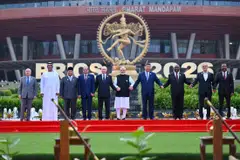
Its member states account for a combined 40 per cent of the world’s total economic output compared with the G7 Western-dominated 29 per cent. They are pledged to transform the old “pyramid of privilege” – as Indian Prime Minister Narendra Modi, the host of this year’s summit, put it – “into a platform of partnership”.
Nothing highlights the Brics’ unique advantage better than the presence at the summit of Russian President Vladimir Putin and Iranian President Masoud Pezeshkian. There are few other international forums apart from the Brics that these two leaders can now attend. And yet, no peace in either Europe or the Middle East is feasible without their engagement.
Predictably, therefore, both the Russian and Iranian governments sought to portray their presence at the Brics summit as an indication that they can bypass the formidable walls of economic sanctions and diplomatic isolation erected against them by the West.
But, just as predictably, Putin and Pezeshkian left the summit largely empty-handed. “We have tried to push inclusive global growth,” Modi claimed. Perhaps, although not much of this will prove useful to either Russia or Iran.
“Putin was greeted like a rock star,” Russia’s state-controlled TV told its viewers on Friday (Sep 11), as its leader landed in New Delhi for the summit. Kirill Dmitriev, Russia’s top trade envoy, was even more gushing, observing that his president “really is extremely popular in India, Brics, and the whole world”.
Yet, Putin did less well in advancing his two key summit objectives: the creation of an alternative currency payment system to the one dominated by the US dollar, and a diversification of Russia’s economic partnerships.
The 45-page-long New Delhi Declaration adopted on the summit’s opening day did mention the need for the creation of alternative payment systems that are “fast, low cost, more accessible, efficient, transparent and safe”.
But the document then caveated the clause by declaring that there is “no one-size-fits-all approach” to alternative payment structures, pointing out that national priorities must be respected. This is a politer way of saying that the alternative payment structures Russia proposed when it hosted the Brics summit in 2024 remain just paper exercises.
And that’s less because of US President Donald Trump’s standing threat to impose a 100 per cent trade tariff on imports from any Brics state that wishes to unseat the US dollar’s supremacy, and more because there are genuine differences between Brics countries over the feasibility and reliability of an alternative financial structure.
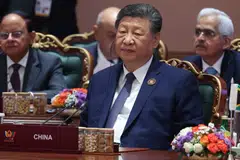
For some Brics nations, the creation of a new payment system in which China – due to the sheer size of its economy – will inevitably play a key role is not that much of a better option than the current global structure dominated by the US currency and regulators.
So, instead of being a de-dollarisation manifesto as the Russians hoped, the New Delhi Declaration offered an opt-out for any Brics member-state whose exports to the US matter more than the rallying cry of opposition to US financial domination.
That was a disappointment for Putin, whose country suffers most from the West’s enduring ability to shut Russia out of global financial networks.
Nor did Putin advance his other objective to expand Russia’s trade partners. Putin sees India as one of his country’s best opportunities. On the eve of Putin’s arrival in New Delhi, RT International, Russia’s global broadcaster, launched an extensive Hindi-language channel.
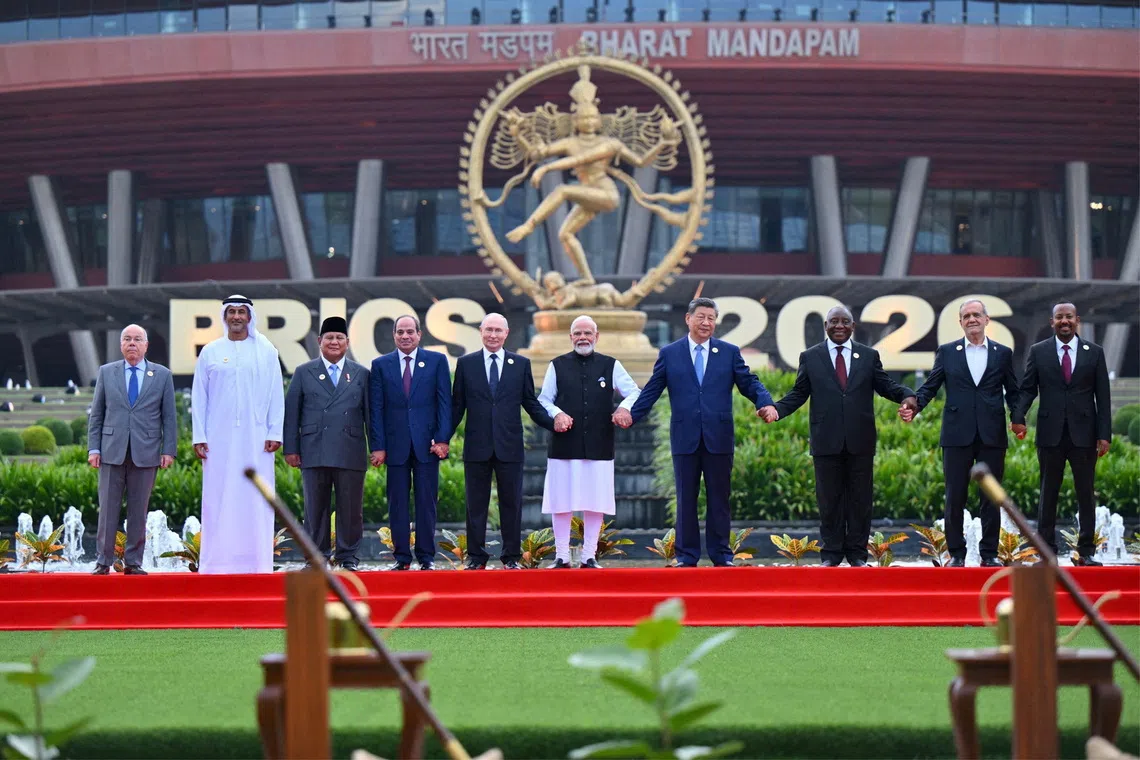
And during his stay in New Delhi, Putin skipped a bilateral meeting with Chinese President Xi Jinping; instead, the Russian leader lavished his time and attention on Modi.
Russia and India duly pledged to hit US$100 billion in bilateral trade by the end of the decade. But as Modi pointedly noted, US$60 billion of this consists of Russian oil deliveries, while India “is not yet a major exporter to Russia”. In short, if the Russians want to expand trade, this must mean more Russian purchases of Indian products.
But that’s easier said than done for Russia, which increasingly lacks the convertible currencies to import manufactured goods. Just as Putin arrived in the Indian capital, Russia’s finance ministry announced that the country’s oil and gas revenues for the first eight months of 2026 came to only US$59.1 billion, 17 per cent below the same period in 2025 and a third below the figure for 2024. The Brics summit provided Putin with no respite from the harsh economic realities of his Ukraine war.
Pezeshkian fared no better. At 2025’s Brics summit held in the Brazilian city of Rio de Janeiro, the organisation issued a “strong condemnation” of the US strikes on Iran that took place at that time. But in New Delhi now, seven months into the current Gulf war, all that Brics leaders agreed to was to express “deep concern over the continued escalation of tensions in the Middle East”, without singling out any culprit.
That’s hardly surprising, for Iran went to a New Delhi summit of 11 states, three of whose members it has hit with missiles or drones in 2026. The only genuine deliverable of the Iranian leader’s trip came on the summit’s margins, when Pezeshkian met Sheikh Khaled bin Mohamed bin Zayed Al Nahyan, the Crown Prince of Abu Dhabi; this was the highest-level Iranian-Emirati contact since the war began on Feb 28. Otherwise, no Brics nation rushed to offer the Iranians active support.
“The power of Brics lies in our diversity and cooperation,” Modi said at the end of the summit. But the rule of thumb for every international institution is that the more it expands its membership and the longer its summit communiques grow, the less meaningful its actions are. And that is very much the Brics’ current affliction.
Still, the latest summit has been a boon for Modi, who deftly handled the event, carefully offering each participant something to be happy about, while not allowing the organisation to descend into an anti-US sloganeering jamboree.
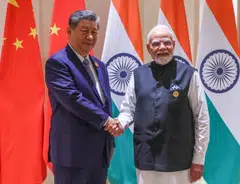
The images of Modi holding the hands of both Xi and Putin will also enhance India’s international stature and its role as a global mediator and stabiliser.
But apart from diplomatic hugs and expressions of general goodwill, the leaders of Russia and Iran, who needed this summit more than the other participants, went home empty-handed. THE STRAITS TIMES
Decoding Asia newsletter: your guide to navigating Asia in a new global order. Sign up here to get Decoding Asia newsletter. Delivered to your inbox. Free.
Share with us your feedback on BT's products and services
TRENDING NOW

DBS, OCBC, UOB rout lops billions off STI as inflation, rate concerns spook investors

Grab CEO’s wife Chloe Tong on life with Anthony Tan and finding her purpose

OCBC sheds S$8 billion in value as shares close nearly 6% down; analysts cautious on banks
Deal between tycoon friends sparks scrutiny of Philippine power sector

